
Best Solar Proposal Software in India for Faster Quotes & Higher Sales Conversions
Key Takeaways
- Solar proposal software India streamlines the sales process for solar installers, enabling faster, accurate proposals.
- Integrated solar design software, shading analysis, and energy yield modeling simplify system design and site surveys.
- Automated financial analysis and financing options boost productivity, reduce errors, and help solar companies close more deals.
- An easy-to-use interface, CRM integration, and real-time updates make project management and task tracking more efficient.
- Customizable features and Aurora Solar-style modeling ensure solutions are suited for both residential and commercial projects.
Solar proposal software for Indian installers needs three things generic tools don't: dynamic BOM pricing tied to local component and distributor costs, built-in subsidy and net-metering modeling that updates as state policies change, and EMI/financing comparisons customers can understand without a finance background.
Every solar business knows fast proposals win deals; the real question is how to make that happen when a quote request still means chasing engineers for sizing, digging through spreadsheets for panel specs, and hunting through emails for current pricing.
The bottleneck isn't a staffing problem; it's a workflow one, and it gets worse as India's solar market grows and subsidy rules keep shifting.
This guide breaks down what solar proposal software actually needs to do for the Indian market specifically, how to evaluate vendor claims against real performance, and what separates a properly localized platform from a global tool with India features bolted on.
What 2026 Means for the Indian Solar Business?
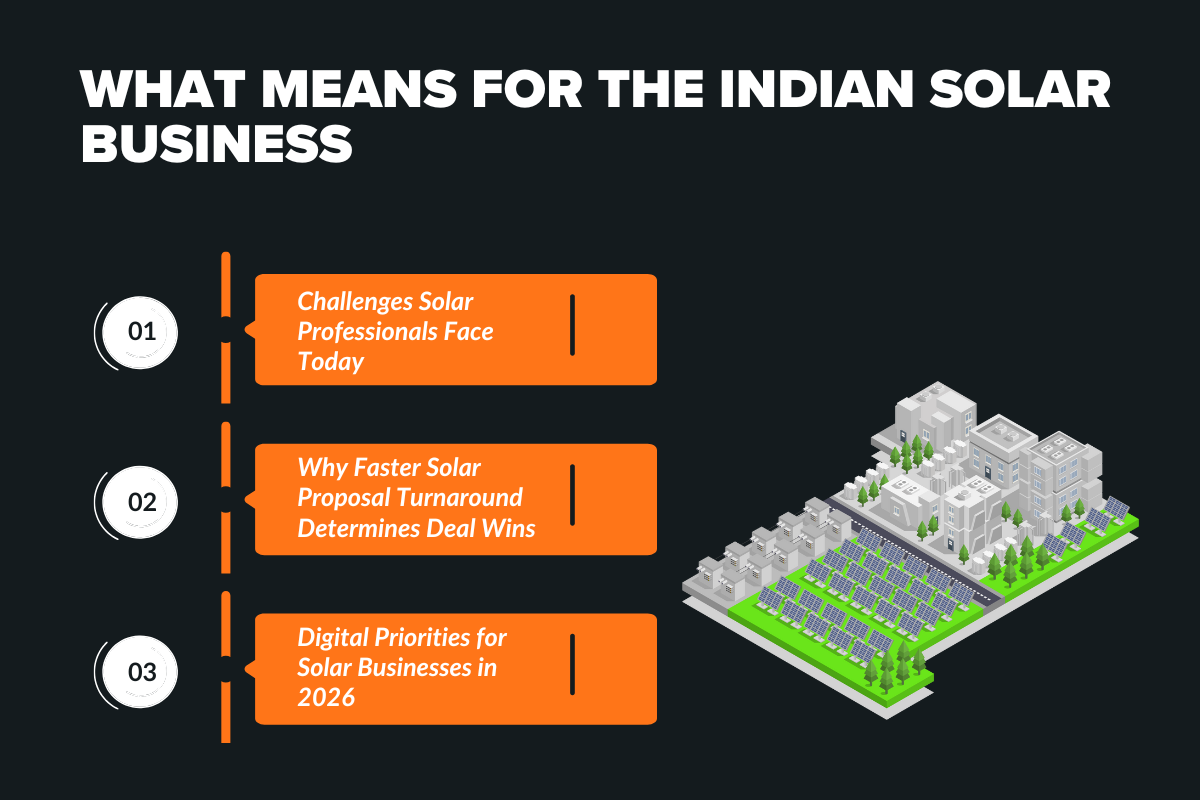
Before understanding which solar proposal software India should adopt, it’s essential to examine the market forces reshaping how solar installers sell, design, and deliver projects.
1. Renewable Energy Growth Is Accelerating
India’s solar market is expanding rapidly, and businesses relying on manual tools struggle to keep up with demand for faster, accurate proposals.
2. Compliance & Pricing Rules Change Constantly
Frequent policy and subsidy updates require solar companies to maintain accurate BOMs and documentation using automated, regulation-ready proposal tools.
3. Customers Expect Speed & Transparency
Modern buyers want instant proposals, clear savings forecasts, and professional designs; delays push them straight to competitors offering faster turnaround.
What are the Challenges Solar Professionals Face Today
If you’re in solar, you know the real struggle isn’t installation; it’s the slow proposal process, scattered data, manual calculations, and communication delays between sales and engineering that kill deals.
Here are the challenges modern solar companies face every day:
- Manual Excel/Word workflows slow down proposal creation, leading to repeated data entry, errors, and delayed responses to leads.
- Communication gaps between sales and engineering teams lead to confusion, outdated system-sizing details, and pricing inconsistencies.
- Shading analysis, energy modeling, and solar layout planning are often split across multiple tools, making the entire process harder to manage and track efficiently.
- Lack of real-time visibility into proposal status or site survey progress makes it difficult to coordinate teams and maintain project timelines.
- Customers now expect fast, accurate, professional proposals with financial clarity; slow responses lead to lost deals and stronger competitors winning first.
These shifts are forcing installers to rethink not just tools, but how fast they can move from inquiry to commitment.
Why Faster Solar Proposal Turnaround Determines Deal Wins?
In 2026, speed is a competitive advantage. Customers compare multiple solar installers simultaneously, and the company that sends the first accurate proposal usually earns their trust and the deal.
When quotes take days instead of minutes, prospects assume the process will be slow and unreliable, leading them to drop the inquiry or choose faster competitors.
With automated proposal tools and integrated BOM pricing, solar companies deliver professional proposals for both residential and commercial projects in minutes, dramatically improving close rates.
Digital Priorities for Solar Businesses in 2026
- Automated quote generation and dynamic BOM updates eliminate manual spreadsheet work.
- Professionally designed proposals with EMI and ROI comparisons help customers make faster decisions.
- Integrations with solar design tools, CRM systems, and field survey apps enable real-time collaboration.
- End-to-end workflow from site survey to final approval improves speed and consistency.
Why Upgrading Your Proposal Workflow Matters in 2026?

In 2026, staying competitive in the solar business means more than just offering panels; it’s about speed, accuracy, and professionalism.
Upgrading your proposal workflow helps your team generate faster quotes, reduce errors, communicate transparently with customers, and ultimately close more deals with higher ROI.
1. Stay Ahead of Competition
Solar markets are crowded, and many installers offer similar equipment and pricing. What separates winning teams is execution speed.
When one company sends a clear, professional proposal the same day and another takes three days, the faster team often wins by default. An upgraded proposal workflow ensures your sales team responds while buyer interest is still high, instead of giving competitors room to step in.
2. Speed Up the Sales Process
Manual proposal creation introduces delays at every step: data re-entry, formatting, approvals, and revisions. Automation removes these bottlenecks.
When designs, pricing, and customer details flow directly into proposals, sales reps can move from site assessment to proposal delivery without stopping to “rebuild” information. Faster proposals keep conversations active and reduce drop-offs.
3. Improve Costing Accuracy
Spreadsheets and manual calculations often hide small errors that quietly erode margins. Inconsistent pricing, outdated material costs, or incorrect system sizing can turn a profitable deal into a risky one.
A centralized proposal workflow keeps BOMs, labor costs, and pricing logic aligned, ensuring every proposal reflects real costs and realistic margins.
4. Deliver Transparent Communication
Customers hesitate when proposals feel confusing or incomplete. Clear layouts, accurate production estimates, and visible financing options make it easier for buyers to understand the value of the system.
Real-time updates also reduce unnecessary emails and follow-ups, creating a smoother, more professional buying experience.
5. Close Deals Faster with Better ROI
When proposals arrive quickly, reflect accurate numbers, and explain ROI clearly, customers are more confident moving forward.
E-signatures and integrated financing options remove friction at the final step, helping teams close deals faster without discounting or margin pressure.
What Makes Modern Solar Design Software Truly Future-Ready?
Modern solar design software is no longer just a drawing tool for panel layouts. Future-ready platforms act as the backbone of a solar business, connecting design, pricing, proposals, and sales activity into one coordinated system.
As project volumes grow and customer expectations rise, this level of connectivity becomes essential for speed, accuracy, and scalability.
- Unified processes across teams ensure that design outputs flow directly into pricing and proposals without manual re-entry. This keeps system sizing, costs, and savings aligned, even as projects move quickly through the pipeline.
- Real-time dashboards give managers instant visibility into quotes, proposals, and active projects. Rather than waiting for reports or updates, teams can spot delays, adjust priorities, and make decisions while opportunities are still live.
- Customizable templates allow companies to maintain consistency without sacrificing flexibility. Whether it’s residential rooftops or commercial installations, proposals stay professional while adapting to different project types.
- Finally, API integrations ensure the software fits into a growing tech stack. By syncing with CRM, ERP, and inventory systems, future-ready platforms keep data accurate and connected as the business scales.
What Solar Proposal Software Actually Does?
Modern solar proposal software in India is more than a quoting tool; it’s a game-changer for solar businesses that want to streamline operations, improve sales accuracy, and close deals faster.
It helps solar installers, sales teams, and solar professionals move from slow manual work to real-time, automated workflows that deliver professional proposals in minutes.
A Future-Ready Platform That Automates and Streamlines:
- System sizing & solar design modeling with accurate energy yield calculations and shading analysis/shadow analysis for rooftop and ground-mount installations
- Load profiling & consumption mapping to align every solar system design with real customer usage
- BOM creation & dynamic pricing with real-time updates based on local components, solar panels, and regional pricing factors
- Proposal & financial analysis generation, including ROI, payback period, bill savings, and financing options
- Equipment, layout & financing comparisons for residential and commercial solar projects
- Full sales process tracking, CRM integration, and pipeline visibility to help sales teams close more deals faster
Who Benefits the Most From Solar Proposal Software?
Solar proposal software does not benefit every role in the same way. Its real value becomes clear when you examine how it changes day-to-day work for sales teams, engineering teams, and management.
Each role experiences different operational improvements, but together they create a faster, more predictable solar sales process.
Sales Teams: Faster Quotes, Higher Conversions
Solar proposal software allows sales teams to generate accurate, professional proposals without waiting on engineering or back-office inputs.
Because system design, pricing, and financial estimates are automatically calculated, sales reps can respond to inquiries while customer interest is high. Faster, clearer proposals reduce drop-offs, improve trust, and directly increase conversion rates.
Engineering Teams: Fewer Revisions, Accurate Designs
For engineering teams, proposal software reduces repetitive rework caused by late-stage changes or incorrect assumptions.
Designs, shading analysis, and system sizing are standardized and automatically updated when inputs change, improving accuracy from the start.
Managers: Visibility Into Margins, Pipeline, and Performance
Managers benefit from real-time visibility into proposal pipelines, pricing consistency, and deal-level margins.
Because all proposals follow structured pricing and design logic, it becomes easier to monitor performance, identify bottlenecks, and protect profitability. This data-driven visibility supports better forecasting and more informed business decisions
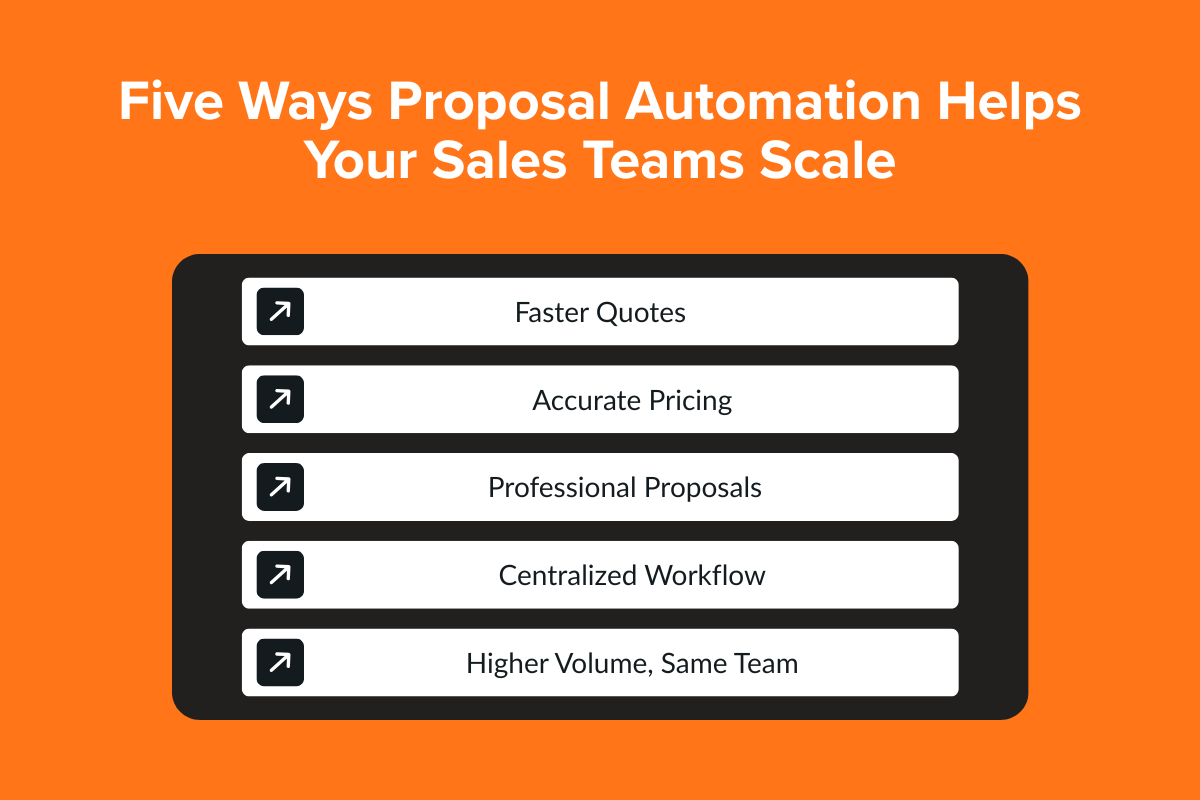
Five Ways Proposal Automation Helps Your Sales Teams Scale
In a competitive solar market, scaling efficiently is about equipping your team with the tools to work smarter.
It’s about removing friction from the sales process so teams can move faster without sacrificing accuracy or professionalism.
Proposal automation does exactly that by replacing manual steps with structured, repeatable workflows.
How Automation Transforms Your Solar Sales Process
Manual proposal workflows quietly slow teams down. Spreadsheets, back-and-forth approvals, and last-minute corrections cost time, deals, and margins.
Proposal automation changes how sales teams operate by turning proposals into a strength instead of a bottleneck.
1. Faster quotes = higher conversion
Speed wins deals, and Automated proposals reduce turnaround time from 3 days to 20–30 minutes, significantly boosting closure rates.
2. Precise pricing & margin protection
Dynamic BOM pricing prevents underquoting or manual errors. Costs stay aligned with system design, preventing underquoting and manual calculation errors. Over time, this consistency directly improves margin control.
3. Professional proposals build trust
Branded proposals that include energy yield, ROI, and financing options help customers make confident decisions, thereby increasing perceived reliability and credibility. When information is presented cleanly and transparently, buyers feel more confident moving forward.
4. Centralized workflow for engineering + sales
All project data, site survey inputs, layouts, and updates stay in one place, no more scattered WhatsApp messages or Excel chaos. This eliminates scattered messages, version confusion, and rework between teams.
5. Handle higher proposal volume without increasing headcount
When manual tasks disappear, teams can manage 3–5x more proposals per month without expanding staff, improving productivity and profitability. Productivity increases without burnout, supporting sustainable growth.
Those five gains are exactly what break down when design, pricing, and proposals live in separate tools.
How to Evaluate Vendor Claims vs Real Performance?
Before choosing any proposal or design software, it’s essential to look beyond marketing promises. Many tools sound impressive on paper, but real value is proven only when accuracy, speed, and financial clarity show up in day-to-day operations.
Here’s how to evaluate claims vs. actual performance:
| Evaluation Area | What to Check in Real Usage |
|---|---|
| Design Accuracy | • Shading accuracy across seasons • Correct stringing logic and inverter limits • Rooftop layouts that reflect real obstacles and setbacks |
| Pricing & BOM Reliability | • Live panel, inverter, and BOS pricing • Auto-updated BOM tied to design changes • No manual recalculation after revisions |
| Financial Modeling | • Clearly visible IRR, ROI, and payback period • Assumptions shown, not hidden • Financials update automatically when designs change |
| Mobile & Field Access | • Full proposal and design access on mobile • Offline data capture for site visits • Syncs automatically once connectivity returns |
| Operational ROI Proof | • Documented time saved per proposal • Reduction in revision or rework cycles • Verifiable customer or installer case studies |
Preparing Your Solar Company for 2026
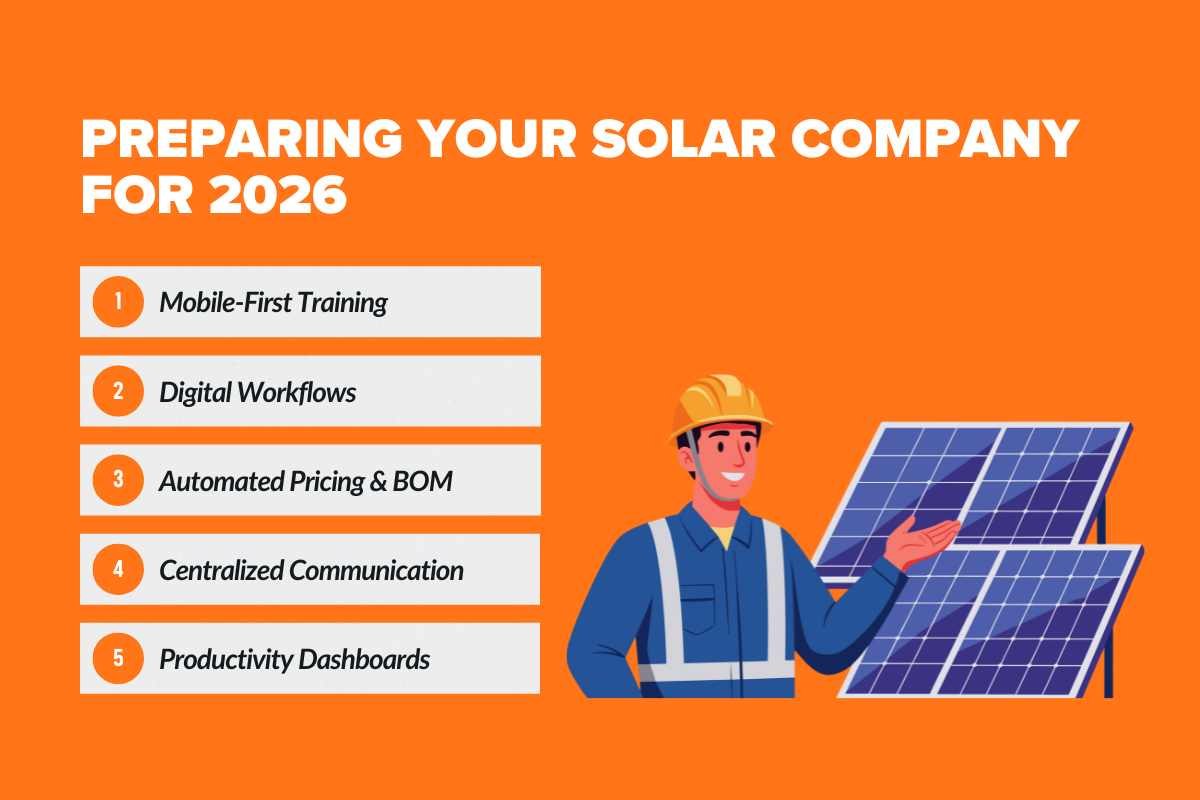
Modernizing your workflow is essential as solar businesses shift toward automation, digital proposals, and mobile-first field operations.
To stay competitive, close more deals, and deliver accurate designs faster, now is the time to upgrade how your solar company manages sales, site surveys, and engineering collaboration.
- Train sales teams and installers on mobile-first tools to simplify site surveys, shade analysis, and proposal generation on the spot.
- Digitize system design and proposal workflows for real-time access to layouts, bill data, pricing models, and customer approvals.
- Implement automated pricing and BOM generation to reduce manual errors and produce accurate solar proposals in minutes, not days.
- Centralize communication and project history so engineering, sales, and operations stay fully aligned from lead to installation.
- Use productivity automation and dashboards to improve forecasting, track margins, and handle more projects without increasing headcount.
Best Solar Proposal Software in India (2026)
1. Sunbase
What It Is: Sunbase is an India-focused solar proposal and CRM platform designed to combine solar design, dynamic BOM pricing, financial modeling, and proposal generation into a single workflow. It eliminates Excel-based quoting and reduces the gap between sales and engineering.
Key Features:
- Automated Solar Design & Energy Modeling: Generates accurate rooftop layouts, stringing logic, and energy yield simulations. Designs automatically update when inputs change, eliminating manual recalculation.
- Dynamic BOM & Local Pricing Engine: Automatically builds a bill of materials linked to the system design. Panel, inverter, and BOS pricing can be updated centrally, protecting margins in real time.
- Built-in Financial Modeling (ROI, IRR, EMI, Subsidy): Auto-calculates payback period, IRR, and EMI scenarios. Helps sales reps clearly explain savings and improve close rates.
- Mobile-First Site Survey Workflow: Sales reps can capture site details, shading inputs, and customer data directly from the field, accelerating same-day proposals.
- CRM & Pipeline Visibility: Tracks proposals, approvals, and project stages in one dashboard. Managers gain real-time visibility into margins and deal flow.
- Branded Proposal Templates: Generates professional, customer-ready PDFs with system specs, performance forecasts, and financing comparisons.
Limitations
- Primarily built for the Indian market (less global utility-rate coverage).
- Advanced 3D modeling depth may be lower than that of highly specialized international design platforms.
Pricing: Starts from $59/user/month.
2. Solargraf
What It Is: Solargraf is a cloud-based solar design and proposal platform primarily used in North America. It focuses on simplifying remote system design and quick proposal creation for residential installers.
Key Features
- Remote Solar Layout Creation: Allows installers to generate rooftop layouts using satellite imagery without visiting the site initially.
- Basic Shading & Production Estimates: Provides automated energy output estimates based on roof orientation and location data.
- Proposal Generation with Savings Summary: Creates customer-facing proposals, including basic financial savings calculations.
- Integrated Financing Options: Supports US-based financing integrations for residential projects.
Limitations
- Primarily US-focused (limited Indian tariff and subsidy handling).
- Less depth in CRM and operational workflow tracking.
- BOM pricing automation is not strongly localized for India.
- Better suited for residential, not complex commercial installations.
Pricing: Subscription-based. Pricing varies by team size. Custom quote required.
3. Pylon
What It Is: Pylon is a solar design and proposal software designed mainly for residential installers. It emphasizes simplicity and quick proposal turnaround.
Key Features
- Automated System Design: Generates rooftop panel layouts based on satellite mapping and system sizing logic.
- Instant Proposal Builder: Produces proposals with estimated production and savings projections.
- Financial Modeling Tools: Includes payback and cashflow summaries for homeowner presentations.
- Cloud-Based Access: Enables remote collaboration between sales and design teams.
- CRM: Pylon includes a built-in CRM designed to manage leads and convert proposals. It features lead management, two-way SMS/email communication, and deal pipelines.
Limitations
- Not deeply optimized for Indian component pricing.
- More residential-focused than utility-scale or commercial.
Pricing: While it is subscription-based, its most famous feature is its "No Monthly Fee" pay-per-project model. Users typically pay a small fee (approx. $4–$10) per project rather than a fixed high monthly overhead.
Common Mistakes Installers Make When Choosing Solar Proposal Software
Many solar installers invest in proposal software expecting faster quotes and smoother operations, yet still face delays, errors, and low adoption. In most cases, the problem isn’t the idea of using software, it’s the choice and implementation. Below are the most common mistakes installers make when selecting solar proposal software.
1. Choosing Generic Proposal Tools Without Solar-Specific Modeling
Generic proposals or CRM tools are not built to handle solar-specific requirements such as energy yield calculations, shading analysis, or system sizing logic.
2. Ignoring Local BOM Pricing and Subsidy Support
Solar component pricing and government subsidies vary by region and change frequently. Software that does not support local BOM pricing, regional taxes, or subsidy structures forces teams to update costs manually, increasing the risk of underquoting, margin loss, or incorrect financial projections.
3. Paying for Complex Features Teams Never Use
Some platforms offer advanced features that look impressive but are rarely used in day-to-day operations. Overly complex tools increase costs, slow adoption, and overwhelm sales teams, leading them to fall back on spreadsheets and manual processes instead of using the software consistently.
4. Not Involving Both Sales and Engineering in the Decision
Proposal software impacts both sales and engineering workflows. When decisions are made by only one team, the tool often fails to meet the needs of the other, resulting in workarounds, delays, and resistance to adoption. Successful implementation requires input from both roles from the start.
5. Underestimating Onboarding and Training Requirements
Even the best software fails if teams are not properly trained. Installers often underestimate the time needed for onboarding, data setup, and user training, leading to partial adoption or misuse. Structured onboarding ensures teams use the platform correctly and consistently from day one.
Avoiding these mistakes helps solar installers reduce operational friction, improve proposal accuracy, and protect revenue as they scale their business.
Trends Shaping Solar Proposal Software in India 2026
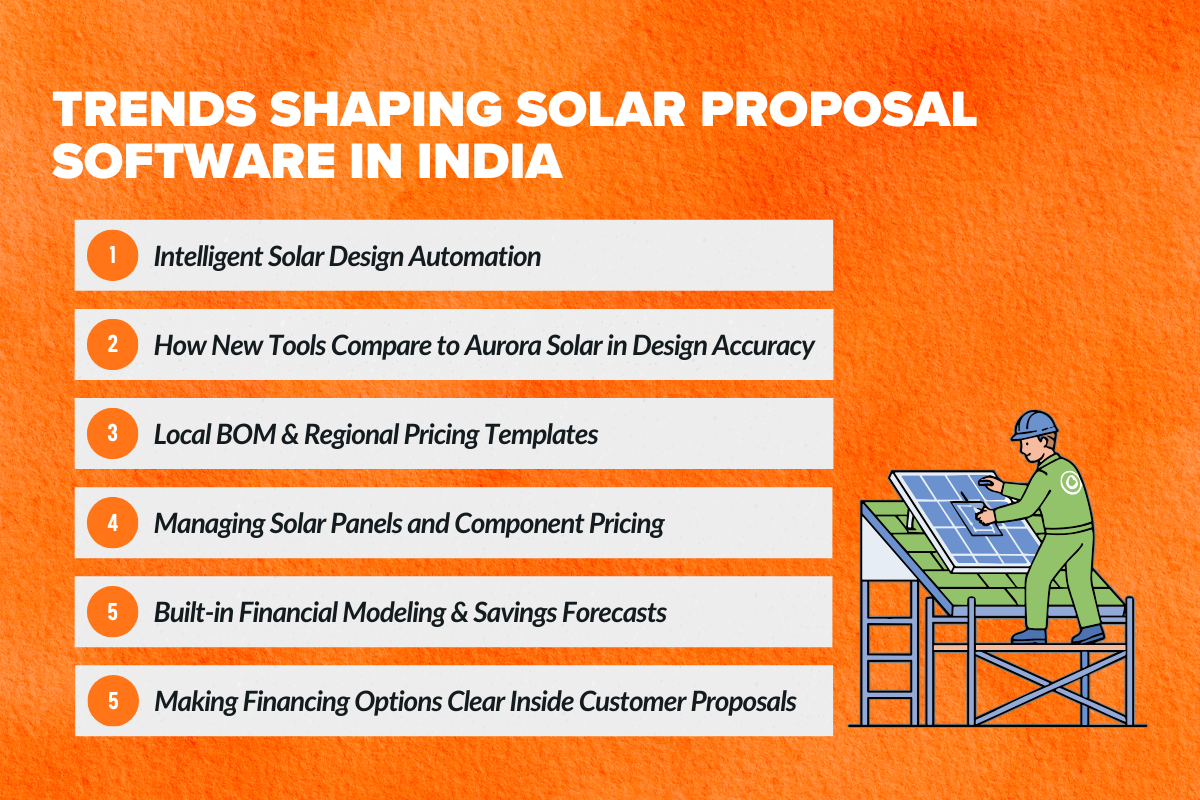
Complex design work no longer needs hours of engineering time. Automated solar layout and performance modeling now produce accurate, data-backed results instantly, drastically reducing proposal delays.
1. Intelligent Solar Design Automation
Ever wish solar system design could happen in minutes instead of hours? Intelligent design automation makes it possible.
What modern design automation enables:
- Stop manual system sizing and layout guesswork; auto-generate design, layout, and stringing based on rooftop space & shading limits.
- No more switching between multiple tools; get real-time energy yield and performance simulations in one platform.
- Eliminate long survey-to-proposal delays, cut proposal creation time from 2–3 days to under 30 minutes.
The result: Solar installers deliver accurate proposals faster and win more projects.
2. How New Tools Compare to Aurora Solar in Design Accuracy
Aurora Solar set global standards for precision, but new India-focused tools like Sunbase are catching up quickly, thanks to better local ecosystem support.
Where advanced solar platforms make a real difference:
- AI-powered shading analysis & shadow modeling built for Indian rooftops.
- More flexibility for AutoCAD imports, drone surveys, and manual layout adjustments.
- Local terrain, irradiance data & real-time geographic mapping for improved accuracy.
For solar professionals, this means global-level accuracy optimized for local pricing and installation models.
3. Local BOM & Regional Pricing Templates
Still editing component costs manually in Excel? That era is ending.
How local pricing templates help your team:
- Automatic BOM (Bill of Materials) generation with components, inverters, batteries, and structures.
- Dynamic updates when solar panel or inverter prices fluctuate.
- Regional pricing variations based on state or distributor catalog.
Instead of guesswork, proposals become consistent, transparent, and trusted.
4. Managing Solar Panels and Component Pricing
Component pricing changes frequently, and slow updates create proposal errors and margin leakage.
What modern solar proposal platforms enable you to do:
- Manage panel, inverter, mounting system, and cabling price libraries in one place.
- Update costs in real time and apply them instantly across proposals.
- Track impact on margins and profitability before sending a proposal.
Accurate pricing = stronger negotiations, higher conversion, and protected margins.
5. Built-in Financial Modeling & Savings Forecasts
Customers never buy solar panels; they buy savings & ROI. That’s why built-in financial modeling is becoming a must-have.
What advanced financial tools bring to the table:
- Automated payback period, IRR, cash flow, EMI, subsidy calculations.
- Real-time comparisons across loan, upfront, and hybrid.
- Transparent calculations that increase trust and speed up decision-making.
When numbers are clear, customers say yes faster.
6. Making Financing Options Clear Inside Customer Proposals
Financing can make or break deals, especially in residential and SME segments.
Modern proposals now include:
- Side-by-side payment plan comparison
- EMI breakdown, government incentives & savings projection.
- A straightforward explanation that makes decision-making simple for non-technical customers.
Why Sunbase is a Strong 2026-Ready Option
As the solar industry becomes more competitive and operationally complex, installers need platforms that support speed, accuracy, and scalability simultaneously.
Sunbase solar proposal software is designed specifically around these requirements, making it a strong option for solar companies preparing for growth in 2026.
One of Sunbase’s key strengths is its ability to combine solar design and proposal creation into a single workflow. It is also built with India-specific pricing and policy realities in mind.
Let's take a look at its key features:
Key Advantages
- Automated design and proposal creation that helps sales reps sell more projects with accurate layouts, grid modeling, and real-time performance estimates.
- Local BOM, government subsidy support, pricing accuracy, and financing options tailored to solar proposal software requirements in India.
- Mobile-first workflows with an easy-to-use interface for running shading tests, solar system configuration, and consumption-based pricing directly on site.
- Measurable gains in conversions, faster proposals, improved accuracy, and stronger customer trust across the entire sales process.
- Centralized platform to track every project, support multi-location operations, integrate CRM, and enhance team productivity without difficult training or complex licensing.
Conclusion
The short answer: the best solar proposal software for Indian installers isn't the one with the most global recognition; it's the one that keeps BOM pricing, subsidy rules, and financing math accurate as they change by state, while still generating a proposal in minutes, not days.
Global design-first tools like Solargraf or Pylon are strong on layout speed but weaker on India-specific tariff and subsidy handling; that gap is exactly where local platforms earn their place.
Sunbase solar proposal software
runs solar design, dynamic BOM pricing, subsidy-aware financial modeling, and CRM on one connected system built around Indian market realities, so a proposal's numbers stay accurate without a separate spreadsheet tracking policy changes on the side.
FAQs
1. How long does it take to implement solar proposal software?
Implementation timelines vary by platform and team size, but most solar proposal software can be set up within 2–4 weeks. This typically includes data setup (components, pricing, templates), user onboarding, and basic training.g details?
2. Can one tool handle both residential and commercial solar projects?
Yes, modern solar proposal software is designed to support both residential and commercial projects. These platforms use customizable design rules, pricing logic, and proposal templates that adapt to different system sizes, consumption patterns, and financing structures.
3. How important is India-specific subsidy modeling?
India-specific subsidy modeling is critical for accurate proposals. Government incentives, net-metering rules, and tariffs vary by state and change frequently. Software that supports local subsidy structures ensures savings estimates and ROI calculations remain realistic.
4. What integrations should installers prioritize?
Installers should prioritize integrations with CRM systems, site survey tools, and inventory or pricing databases.
One Platform.
Zero Chaos.
Run Your Entire Business in One Platform
Sunbase replaces your CRM, proposals, scheduling, job tracking, and reporting tools — all inside one clean, connected platform.
About Sunbase
The All-In-One Platform to Run Your Entire Business
Sunbase helps you organize operations, streamline daily workflows, and manage everything - from first customer contact to final project deliver- in one connected system.
Our Mission
- Organize your business.
- Optimize your workflow.
- Automate your dailytasks
Why Businesses Choose Sunbase
One Connected Workflow
Replace scattered tools and manual processes with a single platform that brings together your team, tasks, customers, jobs, and performance data.
🌎 Global Presence
Serving the United States, Canada, India, LATAM, Australia, and 10+ international markets.
👥 11,000+ Users
Trusted by contractors, installers, project managers, sales teams, and field technicians.
🏗️ Built for All Sizes
From small contracting teams to fast-growing enterprises, Sunbase adapts to your workflow.
Stop Managing Your Business Manually. Automate It.
Sunbase automates workflows, reduces mistakes, and helps your team get more done - without hiring extra staff or juggling multiple tools.
Still Managing Your Business Across Multiple Tools?
Bring your CRM, proposals, projects, and operations into one platform built for contractors.