
You know this already! The solar industry loves to obsess over lowering the cost per watt. However, most teams lose money in an often overlooked area: time, which they rarely track.
Because, yes, homeowners still want solar. They still believe in clean energy and a greener future. They’re still signing contracts.
What’s changed is their patience. The biggest threat to your revenue today isn’t competition, pricing, or even financing.
It’s the quiet gap between a signed contract and the first day of installation. Every extra week allows doubt to grow, excitement to fade, and competitors to enter. Momentum dies quietly, and once lost, deals often don’t survive.
For years, slow installs were seen as normal, with permits taking time and crews busy, so customers waited. Now, delays cost solar companies money. And at the center of this shift is the most overlooked growth lever in the modern solar business: efficient solar project management.
Solar Project Management Strategy: Why Faster Installs Are the New Advantage
If your solar installs still take 60–90 days, you’re losing margin, even if sales look healthy. Because solar is undergoing the speed shift! A tight 30-day install window reduces cancellations, improves cash flow, and turns operations into a real growth driver.
This guide breaks down how top installers are rethinking solar fulfillment strategy using modern solar project management systems to streamline permitting, scheduling, inventory, and handoffs between sales and ops.
In this guide, you’ll understand why faster installs aren’t just about customer experience; they’re your new profit margin, competitive edge, and survival tactic in a tighter, incentive-light market.
Key takeaways
- Slow fulfillment reduces profit. Each day a project is delayed results in lost revenue, increased cancellations, and cash flow setbacks.
- 30-45 days is the new standard. Contract-to-PTO timelines of 60-90 days are no longer acceptable to customers, banks, or your bottom line.
- Speed generates referrals. Fast installations lock in customer excitement, boost online reviews, and trigger word-of-mouth growth while momentum is highest.
- Operational excellence drives speed. The actual obstacles to slow project management are waste, manual processes, and fragmented tools, rather than permitting delays.
- You need to take ownership of your platform. Using integrated solar project management software removes handoffs, minimizes confusion, and turns fulfillment into a profit engine.
Quick Question: Where Delays Actually Hurt Your Solar Business?
Let's be direct: most solar companies have no idea how much money slow fulfillment costs them. They blame the AHJ (Authority Having Jurisdiction). They blame equipment delays. They blame bad luck.
What they don't see is the silent killer working behind the scenes. Click here to: Uncover the solution and exact stage where you're losing days and thousands in profit!
The Harsh Truth: How Slow Solar Fulfillment Is Killing Your Margins?

Most cancellations don’t happen because customers change their minds about solar panels. They happen because nothing seems to be happening at all. Let's begin with:
Why the Old 60–90 Day Model No Longer Works
- Cancellations spike when installs drag:
Long gaps between contract (M1) and install (M2) kill momentum. Excitement disappears, doubt grows, and deals quietly die. - Waiting fuels buyer’s remorse:
The more time customers have, the more they question the decision and shop with competitors. - Slow installs choke cash flow:
Delayed M2 payments create cash gaps, limiting your ability to hire, reinvest, and scale with confidence. - Referral energy fades fast:
Referrals peak right after signing. Long timelines waste that window and leave growth on the table.
Simply put: Homeowners are no longer patient observers. They’re cautious buyers in a changing energy market. Equipment availability, regulatory bottlenecks, and competition have compressed expectations.
Long timelines expose projects to risk. Aggressive competitors move faster. Customers compare experiences. And when fulfillment is delayed, trust declines.
Everyone knows: Speed has become strategy. But that strategy now lives inside operations.
Why 30–45 Day Solar Installs Change Everything
Here's your opportunity to change the game:
1. Fewer Cancelations:
First, cancellations drop. When progress is visible and project milestones are hit on time, confidence replaces hesitation.
Because customers don’t cancel systems they’re already watching come to life.
2. Faster M2 Payments
High cancellation rates between M1 and M2 aren't a sales problem. They're a fulfillment problem. And every cancellation is profit walking out the door.
That's where quicker installations enable faster M2 payments. This directly stabilizes cash flow and safeguards your budget, helping teams plan more effectively rather than react too late.
3. Higher Review Rates
Reviews tend to improve because when expectations are met quickly, clients are much more likely to share positive experiences while their excitement is still high.
4. More Referrals While Excitement Is High
Speed also fuels referrals. Momentum matters when panels go up while the decision still feels right, conversations with neighbors happen naturally, and trust transfers instantly.
5. Stronger Team Confidence
Internally, teams operate with more assurance. Clear planning, predictable materials delivery, and realistic timelines reduce stress across sales, ops, and install crews.
And when solar systems start producing electricity sooner, customers feel they’re actively reducing their carbon footprint rather than waiting for it. Shortening timelines isn’t about rushing work; it's about removing the friction that silently ends deals.
In a nutshell: Hitting 30-day installs isn’t luck. It’s solar project management done right. Get a complete overview of Solar Project Management Tools, Mistakes, and ROI Case Studies.
The 5 Stages Of Solar Fulfillment (And How To Accelerate Each One)
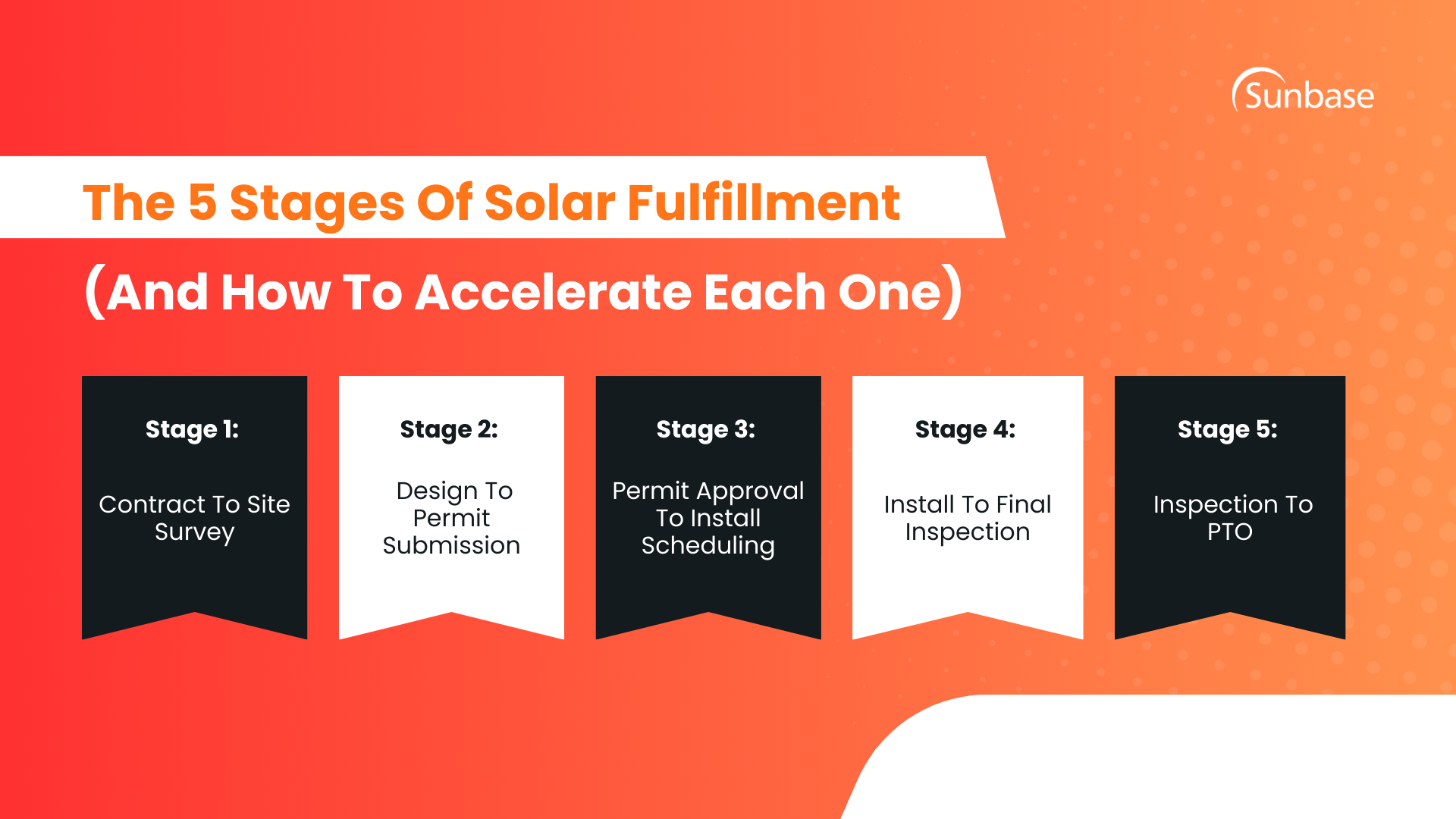
One thing you can't deny about modern solar fulfillment is that it isn’t disorganized; instead, it’s structured. The most efficient companies don’t merely put more effort; they create systems that advance projects easily.
Here’s how the five stages work when done right:
Stage 1: Contract To Site Survey
- Old model: wait days, lose momentum.
- New rule: survey within 48 hours.
High-performing teams automatically activate ops notifications the moment a contract is signed. Using drones and remote tools speeds up site checks, even on complex solar projects, and reduces early guesswork around land acquisition. This early momentum sets a reliable project status from day one.
Stage 2: Design To Permit Submission
The goal is simple: submit your permits within five business days.
Standardized design templates and jurisdiction-specific checklists help solar project managers meet regulatory requirements without internal back-and-forth.
Strong document management keeps drawings, specs, and forms aligned, preventing errors that lead to cost overruns.
Stage 3: Install Scheduling
Top teams schedule solar installations before land approvals. Holding tentative dates and using software to track permits reduces idle time and cuts weeks from the timeline.
Stage 4: Install To Final Inspection
Inspection dates are locked in before the install wraps. A dedicated coordinator ensures field operations stay aligned and nothing stalls due to missing paperwork.
Stage 5: Inspection To PTO
Customers are updated every 48 hours. Proactive utility communication and centralized project data eliminate silence, because silence is where anxiety grows.
At every stage, workflow automation reduces delays and keeps approvals moving. Faster installations require not only effort but also clear systems. Want to see how this works end-to-end in real life?
Here's the Complete Solar Project Lifecycle: Mapping Software from Site Survey to Warranty. See how top installers connect proposals, design, CRM, and fulfillment to remove delays at every stage.
What Are the Solar Project Management Mistakes That Quietly Destroy Speed
You might have noticed this: most fulfillment delays don’t come from big failures; they come from small operational habits that slow everything down.
1. Manual Processes Create Confusion and Doubt
Relying on spreadsheets and scattered systems forces teams to jump between other tools that don’t coordinate. This quickly reduces efficiency.
When updates live in different sites, communication breaks down, timelines are confused, and teams lose confidence in what’s actually happening.
2. Unowned Dependencies Slow Everything Down
Heavy reliance on external contractors or third-party vendors introduces risk you can’t control. When installs, scheduling, or data are outside your core platform, delays multiply.
The same happens when companies depend on outside lead providers to dictate pipeline flow. If you don’t fully manage the journey from site assessment to PTO, speed becomes unreliable.
3. Waste in Ops Leads to Lost Profit
Repetitive admin roles, double data entry, and unclear handoffs quietly drain resources. Advanced project systems reduce this friction by automating task ownership, improving visibility, and helping teams manage work without back-ups.
Here's where to reduce cancellation rates: you don’t just sell better; you operate better.
Operational Excellence: What Is The New Growth Strategy In Solar
> Why Efficiency Is the New Profit
In the solar market, growth doesn’t come from doing more; it comes from doing less and better. Lean teams consistently outperform bloated ones because wasted labor quietly drains margin.
Every delayed handoff, rescheduled installation, or unclear responsibility results in revenue loss. That’s why top-performing companies treat time like money.
Advanced automation and AI now play a critical role here, helping reduce “soft costs,” which can account for nearly 40% of total project expenses. When operations are tight, cash flow improves, installs move faster, and profitability stops leaking automatically in the background.
> Build a Culture Obsessed With Speed and Clarity
Operational excellence isn’t a toolset, it’s a mindset. Teams that win share ownership, understand exactly where each project stands, and follow simple, repeatable processes.
Clear task assignments, disciplined timelines, and fewer handoffs allow teams to do more without inflating overhead. When construction management is streamlined and supported by modern solar technology, companies can reduce costs while delivering a better customer experience.
When everyone knows what happens next and who owns it, work moves faster, errors drop, and compliance documents don’t become bottlenecks. This is where technical expertise matters: clarity isn’t guesswork, it’s designed.
Now let’s connect fulfillment speed with revenue and referrals.
How to Reduce Solar Cancellation Rate by Compressing Time-To-Install
So, how exactly is it possible?
1. The 30-Day Timeline Stops Buyer’s Remorse
Long gaps invite second thoughts. When your contract-to-install window is 30 days instead of 90, something fundamental shifts:
- Less time to reconsider. Doubt needs time to grow. A short timeline doesn't give it the oxygen it needs.
- Less exposure to competitor poaching. Fast installation means less time for competitors to circle and pitch alternative solutions.
2. Faster Installs Trigger Referral Compounding
Excitement peaks right after signing and again on install day. When systems are tested, commissioned properly, and delivered smoothly, customers share the experience while enthusiasm is still fresh, turning speed into social proof.
The companies winning today aren't those with the biggest marketing budgets. They're the ones with the fastest installs and the highest referral rates. Referrals are the sole growth channel that becomes more cost-effective and efficient as your scale increases.
Here's where you bump into the question: If speed creates profit, what powers speed?
Why Your Platform Determines Whether 30-Day Installs Are Possible
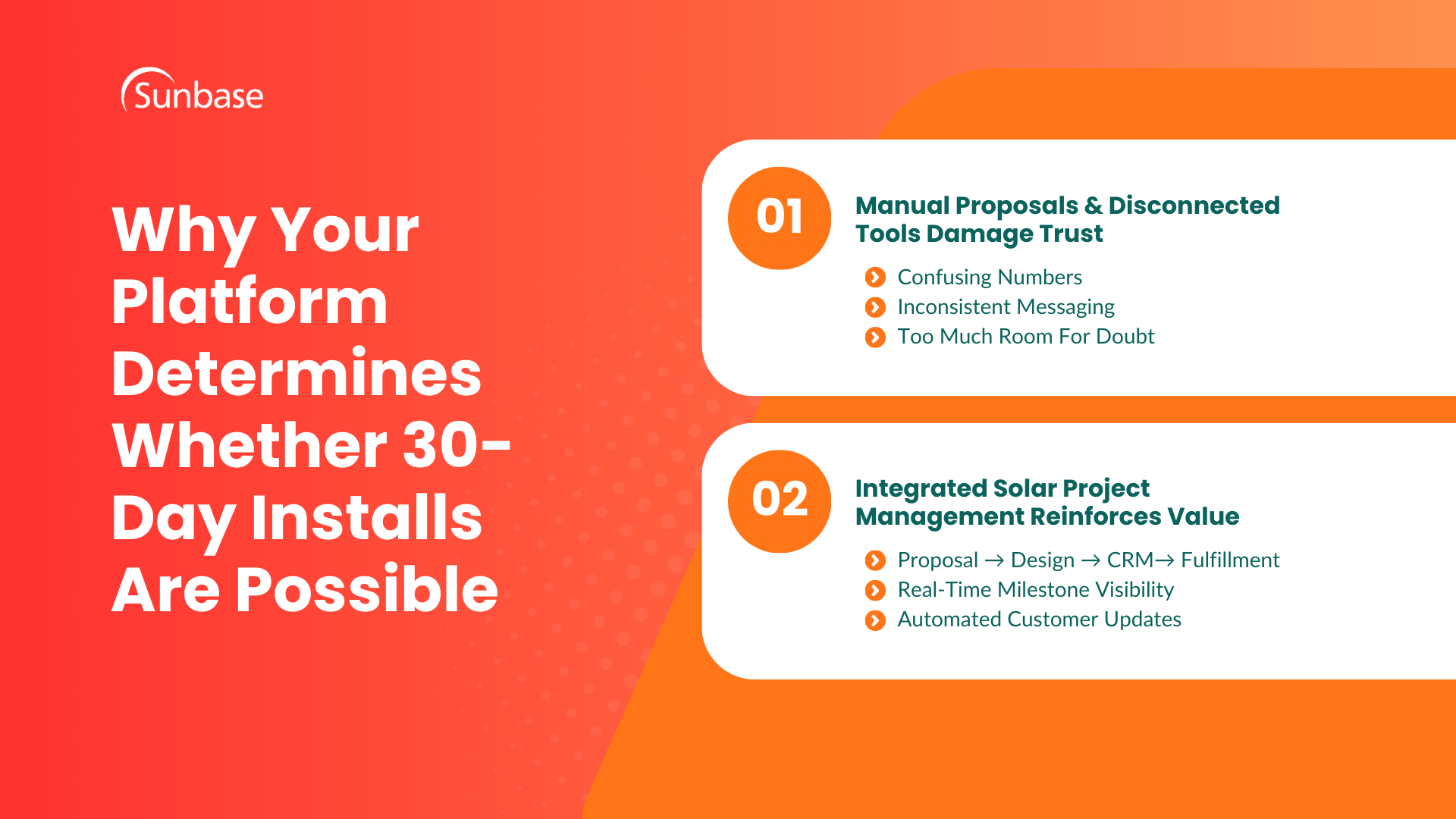
Manual Proposals & Disconnected Tools Undermine Trust
When proposals are stored in spreadsheets and updates are communicated via phone, there's a high likelihood of miscommunication, even if you deny it could happen.
Confusing numbers, inconsistent messaging, and gaps in basic knowledge leave customers questioning the progress of their project.
Teams spend more time explaining than executing, and doubt comes in long before commissioning.
How Integrated Solar Project Management Reinforces Value
- An integrated platform connects proposal, design, CRM, and fulfillment into one flow.
- With real-time visibility, everyone, from sales to engineering, can stay updated without tracking information.
- Cloud-based systems provide mobile access for field teams, enabling instant updates and stronger collaboration across departments.
- This approach supports multiple projects simultaneously while tracking milestones, tasks, and deadlines as the business evolves.
You reach this stage: when customers see movement at every step, and confidence replaces doubt.
This is where Sunbase ties the entire fulfillment flywheel together.
This Is Part 4 of the Solar Shift Series, Your Operational Playbook
If Part 1 showed why the solar market changed and Part 2–3 explained how selling must evolve, Part 4 is where theory turns into execution.
The Solar Shift Series is built as a step-by-step guide, and this chapter focuses on one thing modern solar companies can’t ignore anymore: operational speed.
Because in today’s market, strategy without execution doesn’t protect margins; systems do.
But surviving this shift requires understanding more than an operational shift. Here's the Complete Picture: The Solar Shift: How installers Survive 2026.
How Sunbase Project Management Enables 30–45 Day Contract-To-PTO Execution
This is where strategy finally becomes reality!
If Part 4 showed you why speed matters, Sunbase is how you execute it consistently, at scale, and in a structured way. Here's how:
A Single Operating System for Solar Fulfillment Speed
Having multiple locations with different versions is the main cause of your delays. To prevent this, organize your space with:
- Proposal tools that align expectations from day one.
- Integrated system design tied directly to permitting and execution.
- CRM that talks to sales, ops, and customers
- End-to-end project management dashboards that track every milestone with clear ownership at every stage.
Integrated Accounting & Financing Reduce Friction
Sunbase manages your finances, ensuring you move without losing track of a dollar:
- Centralized invoice management
- Real-time payment tracking
- Clear budget visibility at the project level
- Multiple financing options managed in one place
Automations That Protect Your Profit Margins
It helps your teams complete tasks without demanding additional effort. See how:
- Automated task reminders and follow-ups
- Clean workflow handoffs between teams
- Progress tracking dashboards that surface delays early
Last but not least: Data-driven decision-making helps you analyze, visualize, and interpret datasets, shifting from intuition-based choices to evidence-based strategies.
And that’s how 30-day installs stop being an exception and start becoming your standard.
In A Nutshell
The shift is here, and you have to make a place in this transforming renewable energy market with new strategies!
30-day installs aren't impossible. They're your survival mechanism. They're the difference between customers who cancel and customers who refer.
Between cash flow that's tight and cash flow that's abundant. Between a team that's stressed and a team that's winning. And that's when you realize, it's time to rebuild on the right foundation!
Make 30-day installs your standard, not your exception!
You've learned what fast fulfillment looks like. Now you need the systems to make it real. Most solar companies try to build 5+ tools at once. That never works.
Sunbase is designed to handle the entire fulfillment lifecycle, from site survey to PTO, in one integrated system. See how it compresses your fulfillment timeline by yourself!
Get a personalized walkthrough showing exactly how we eliminate the bottlenecks you identified in this article.
FAQ's
1. How does construction management support real-time project status in solar installs?
When aligned with solar project management, construction management brings structure to schedules and approvals. This clarity supports developing workflows that keep teams accountable, prevent delays, and maintain steady progress across each phase.
2. What should a project manager track daily to maintain real-time project status in solar installs?
A project manager should monitor progress across milestones, crew readiness, and handoffs using mobile access for fast updates. This keeps field teams aligned, reduces rework, and helps teams adjust quickly during commissioning without slowing delivery.
3. How can you realistically hit 30-day installs with permit delays?
Permit delays aren't the main issue for most companies; internal process delays are. Automate design approvals, prefill jurisdiction checklists, and schedule installs before permits are issued to eliminate internal delays. Some permits still take time, but you're preparing for that instead of reacting to it.
4. Does faster fulfillment mean cutting corners on quality?
Speed comes from eliminating delays, not from rushing work. Clean processes, clear ownership, and integrated systems let you move fast without sacrificing quality. That's where solar project management systems improve quality by catching issues earlier and maintaining consistency across teams.
5. Can you hit the timelines with the small solar team?
Absolutely. Smaller teams often move faster because there's less bureaucracy. The key is using project management software and automation to replace headcount. Task automation, automated notifications, and real-time dashboards let small teams punch above their weight.
One Platform.
Zero Chaos.
Run Your Entire Business in One Platform
Sunbase replaces your CRM, proposals, scheduling, job tracking, and reporting tools — all inside one clean, connected platform.
About Sunbase
The All-In-One Platform to Run Your Entire Business
Sunbase helps you organize operations, streamline daily workflows, and manage everything - from first customer contact to final project deliver- in one connected system.
Our Mission
- Organize your business.
- Optimize your workflow.
- Automate your dailytasks
Why Businesses Choose Sunbase
One Connected Workflow
Replace scattered tools and manual processes with a single platform that brings together your team, tasks, customers, jobs, and performance data.
🌎 Global Presence
Serving the United States, Canada, India, LATAM, Australia, and 10+ international markets.
👥 11,000+ Users
Trusted by contractors, installers, project managers, sales teams, and field technicians.
🏗️ Built for All Sizes
From small contracting teams to fast-growing enterprises, Sunbase adapts to your workflow.
Stop Managing Your Business Manually. Automate It.
Sunbase automates workflows, reduces mistakes, and helps your team get more done - without hiring extra staff or juggling multiple tools.
Still Managing Your Business Across Multiple Tools?
Bring your CRM, proposals, projects, and operations into one platform built for contractors.

