
How Solar Proposal Software Streamlines the Proposal Process and Boosts Efficiency
Key Takeaways
- Solar proposal software removes the two biggest sources of manual rework: calculation errors and inaccurate system design.
- Standardized templates by project type speed up proposal creation without sacrificing quality or professionalism.
- Personalizing proposals within your solar proposal software, tailored financing and system details per client, converts better than generic documents.
- Real-time pricing and equipment data keep every proposal accurate as market conditions shift.
- Monitor performance indicators to find areas for improvement and optimize software implementation.
Solar proposal software streamlines the proposal process through seven core strategies: automating calculations, using accurate design tools, standardizing templates by project type, personalizing proposals to each client, pulling in real-time pricing data, leading with clear financial benefits, and enabling digital delivery with e-signatures.
Together, these cut proposal turnaround time significantly while reducing the manual errors that come from disconnected, spreadsheet-based workflows.
During peak solar season, teams drown in paperwork just trying to get one proposal out the door, and every delay is a lead cooling off or a competitor stepping in first.
This is where solar proposal software changes the equation: instead of a manual, error-prone process spread across spreadsheets and emails, it centralizes design, financials, and delivery into one workflow.
This guide breaks down seven concrete strategies for streamlining your proposal process with solar proposal software, so your team spends less time on paperwork and more time actually closing prospects.
Understanding the Key Components of a Solar Project Proposal
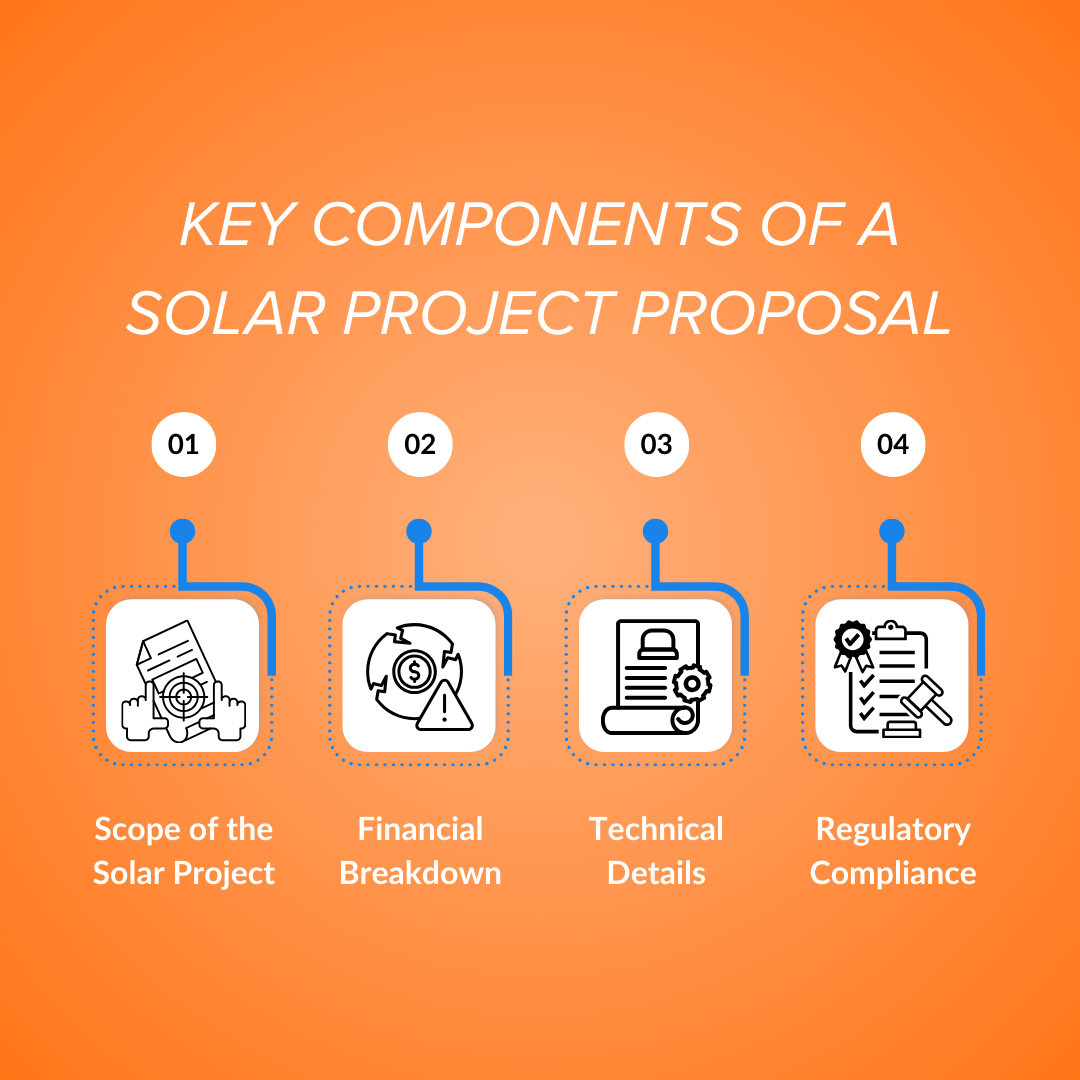
Let’s break down the key aspects every solar professional should focus on:
1. Scope of the Solar Project
Solar enterprises must specify the project's parameters precisely, including the location of the solar panels, the timetable, and the anticipated amount of energy produced.
This aligns objectives with outcomes and sets forth the expectations for clients.
2. Financial Breakdown
Leading solar companies must put forward a reasonable financial overview that includes up-front costs, prospective savings, and ROI.
This breakdown can be automated with solar proposal tools, which can assist solar experts in delivering data quickly and accurately.
3. Technical Details
An in-depth review of the solar systems being installed is necessary, including panel types, inverter specifications, and installation procedures.
A solar proposal tool makes it simple to provide this information, offering clients a clear understanding of the technical issues.
4. Regulatory Compliance
Navigating local and federal rules is fundamental to the success of solar installations.
A compelling solar proposal can assure clients that the project complies with all legal requirements by providing the required permits and demonstrating environmental compliance.
Key Statistic
According to the Solar Energy Industries Association (SEIA), the solar industry in the United States added 9.4 GWdc of capacity in the second quarter of 2024, the highest amount of capacity added in a US quarter in history. Installations increased 29% from a year ago, despite a 21% fall from the previous quarter.
It's expected that as this sector grows, so will the demand for solar proposals. Comprehensive solar proposal software that automates cost estimates, project timeframes, and ROI calculations is becoming increasingly important for developers and clients as more projects conclude.
This is especially crucial as businesses and homeowners seek complete, transparent appraisals before investing in solar installations.
How do you optimize a Solar Project Proposal effectively?
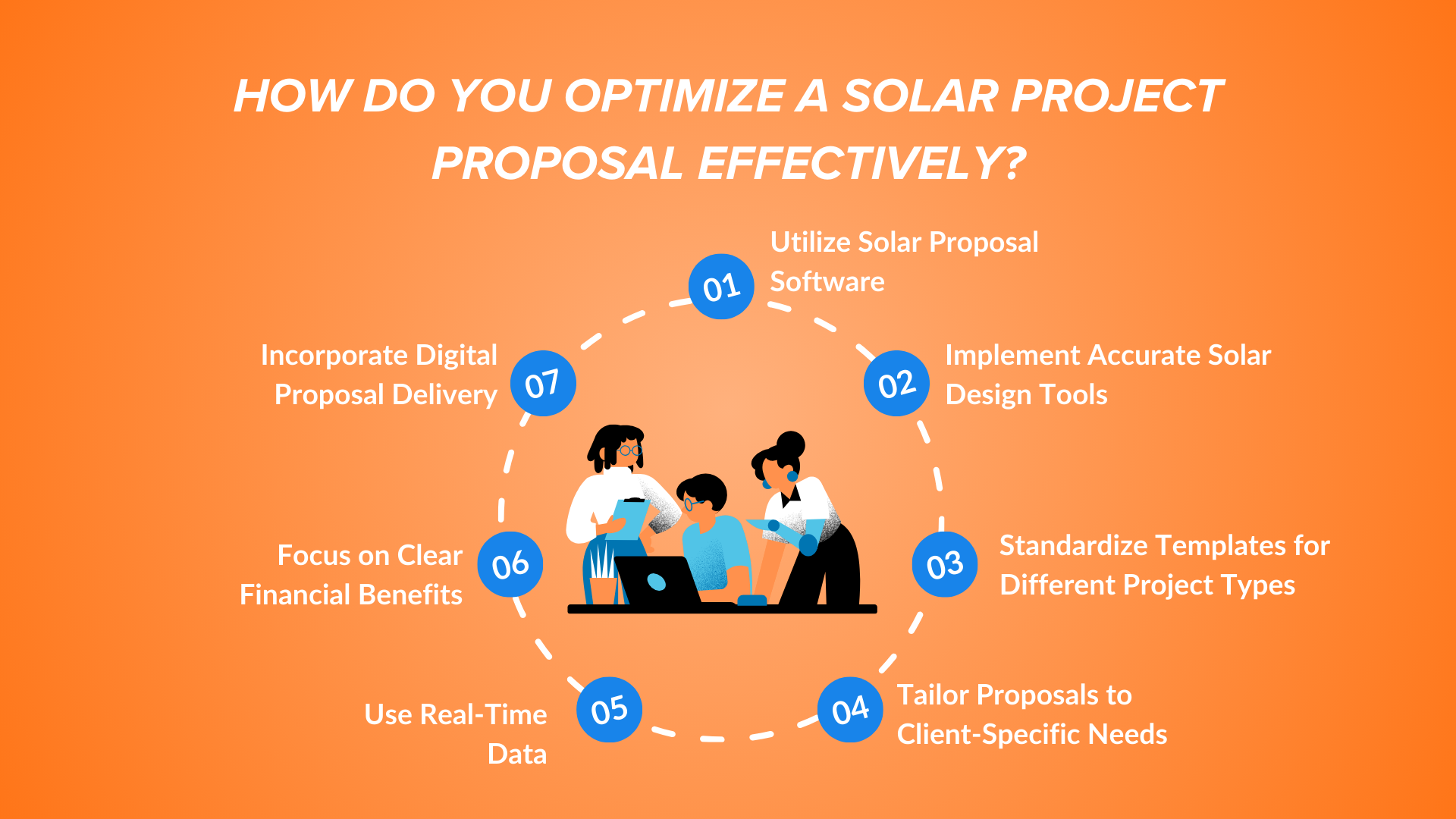
Here’s how you can optimize your solar project proposals effectively:
1. Utilize Solar Proposal Software
Using reliable solar proposal software is the cornerstone of an efficient proposal process.
Solar software helps solar experts streamline their workflow by automating important tasks such as energy estimations, financial projections, and inventory management.
An all-in-one solution reduces manual labor and eliminates the need for different tools by enabling sales representatives to quickly create visually appealing and professional proposals.
2. Implement Accurate Solar Design Tools
For solar proposals to be trusted by clients, accuracy is a necessity.
By incorporating advanced solar design software into your solar proposal system, you can ensure that your solar system layouts and energy production estimates are accurate and suited to the site-specific features of each project.
During the sales process, these tools boost confidence and assist solar specialists in showing realistic system designs, decreasing the likelihood of rework. Sales representatives can respond to customer complaints promptly and make better decisions when they have access to accurate data.
3. Standardize Templates for Different Project Types
Having a collection of standard templates for different project types, residential, commercial, or industrial- can help accelerate proposal creation without compromising quality.
While solar panels may look similar, their underlying system designs vary significantly across sectors. Recognizing how residential and commercial solar designs differ allows teams to leverage targeted templates and tools to make every stage faster, smarter, and more profitable.
Standardizing professional presentations with templates ensures uniformity, allowing sales reps to focus on customization and including all necessary information, providing clients with a thorough and well-structured proposal.
4. Tailor Proposals to Client-Specific Needs
Modern solar clients no longer respond well to one-size-fits-all proposals.
Adapting your ideas to each client's unique energy needs, budgetary constraints, and long-term objectives can significantly boost engagement.
Highlighting how net metering cuts energy bills builds immediate credibility, helping solar businesses close more deals and increase overall ROI.
Personalized proposals ensure clients feel heard and appreciated, offering unique integrated finance options and system features, and allowing solar professionals to provide solutions that align with their priorities.
5. Use Real-Time Data
Whether it's current market rates, updated equipment availability, or live energy usage forecasts, including real-time data allows you to design proposals that reflect current situations.
For example, displaying real-time savings predictions based on local weather patterns and energy prices boosts your proposal's credibility. It also makes it possible to create better schedules, which lowers the possibility of delays or problems with inventory management.
6. Focus on Clear Financial Benefits
Ensure your offers include information on ROI, possible savings, and accessible incentives like tax credits or refunds.
Your proposal will be easier to review and approve if it includes integrated financing options that let potential clients see how they may pay for the project upfront.
These financial computations can be automated by solar software, which solar specialists can use to deliver the results clearly to clients.
7. Incorporate Digital Proposal Delivery
In the modern, rapid-paced world, providing a flawless digital proposal experience is indispensable.
It is simpler for clients to evaluate, approve, and sign proposals while on the go when mobile-friendly formats, e-signatures, and cloud-based document sharing are included.
This streamlines the sales process and lessens the complication that comes with traditional documentation. With digital delivery, sales professionals can send proposals quickly, obtain real-time feedback, and move projects forward without delay.
Most of what's listed above works best when it's running inside a single connected solar proposal software platform rather than stitched together from separate tools.
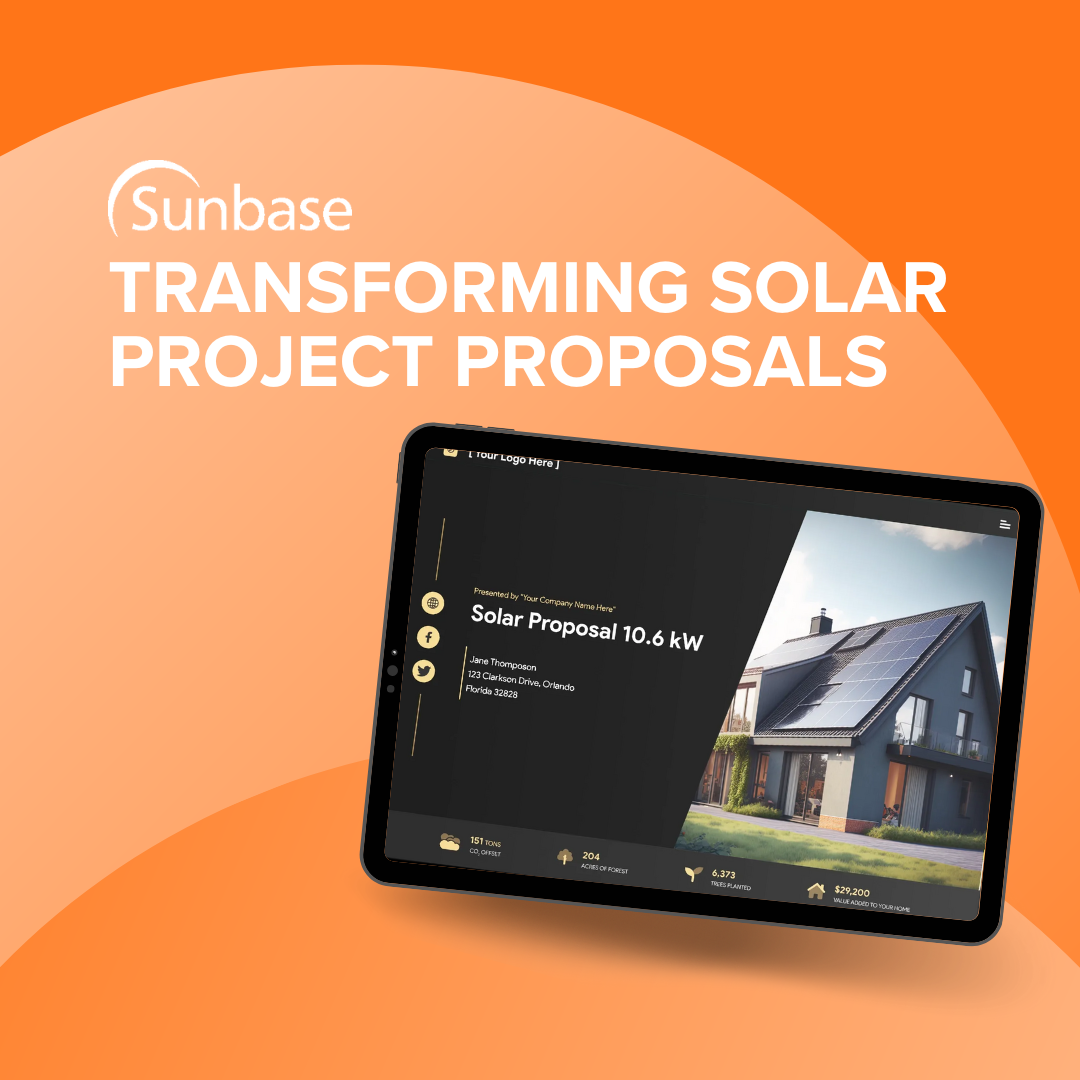
Sunbase: Transforming Solar Project Proposals
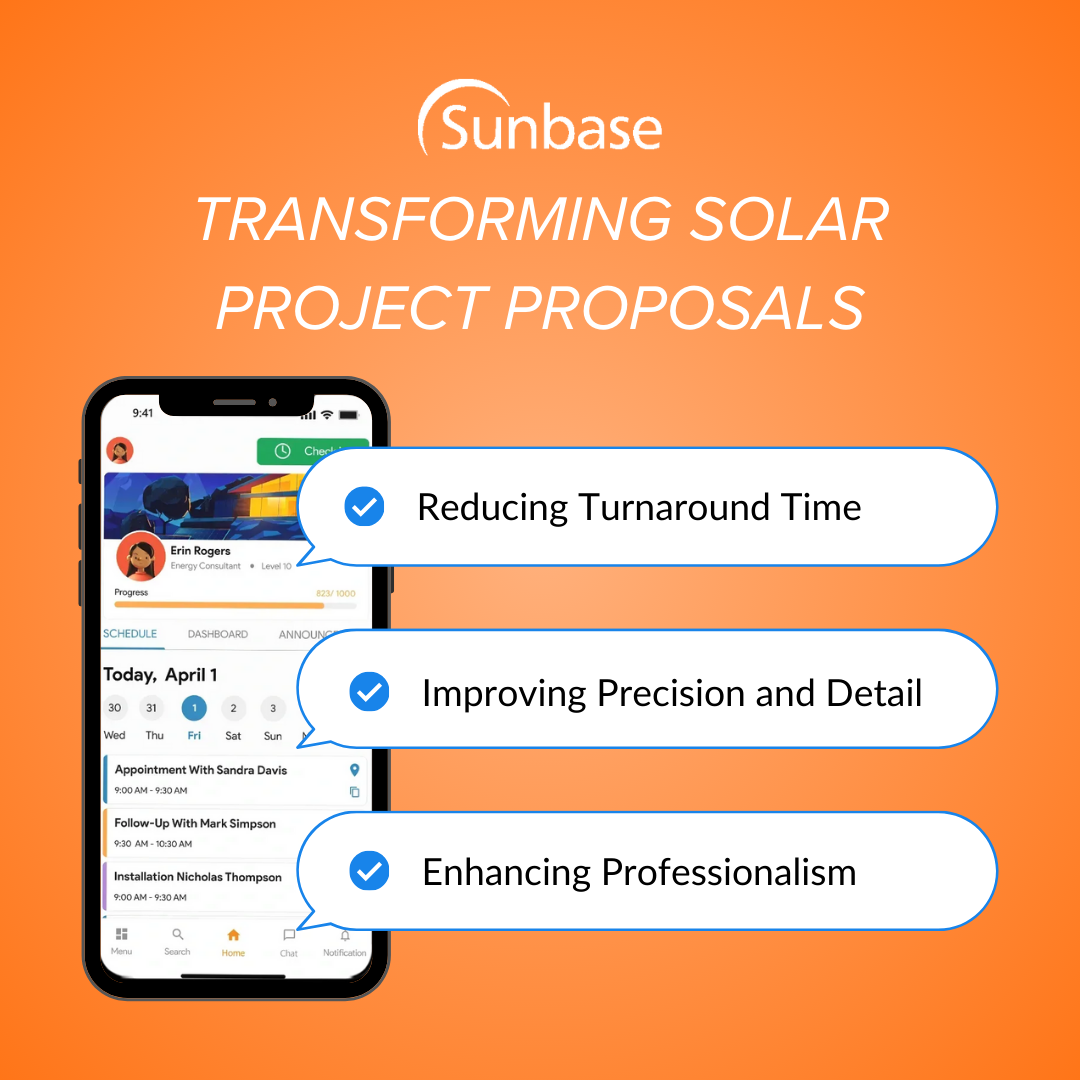
Here's how Sunbase is transforming solar projects through cutting-edge tools and features:
1. Reducing Turnaround Time
Solar experts can prepare complete, precise proposals in a quarter of the time it used to take, thanks to its capabilities for building solar proposals, gathering utility bills from prospects, and performing rapid calculations for PV system production offsets and financials.
Sales representatives may reply to leads more quickly because of this optimized workflow, which accelerates the lifetime of solar projects and increases customer retention.
2. Improving Precision and Detail
With solar projects, accuracy is crucial, and Sunbase makes sure that every proposal has the utmost precision and detail.
Its remote rooftop design tools help produce accurate solar system layouts, eliminating the need for preliminary site visits and simplifying the development of ideas grounded in actual data.
Combining sophisticated energy offset and cost-saving features, Sunbase enables solar industry experts to produce proposals that are not only visually appealing but also remarkably precise.
3. Enhancing Professionalism
Your proposal's appearance is as important as the data supporting it in the cutthroat solar market.
With Sunbase's solar CRM, proposal AND design tools, solar experts can generate flexible, personalized proposals that showcase their brands and include all the necessary project information.
These polished, branded proposals boost client confidence and strengthen the company's reputation. Every element of the proposal, including financial estimates, can be customized to demonstrate professional expertise and help close more business.
In a nutshell
Streamlining a solar proposal process isn't about one big fix; it's the combination of automated calculations, accurate design data, standardized-but-personalized templates, and frictionless digital delivery that compounds into real time savings.
Most of that seven-part list becomes far easier when the tools involved aren't separate systems requiring manual handoffs.
Sunbase's solar proposal software runs design, financial calculations, templates, and digital delivery on one connected platform, so proposal speed doesn't depend on how many tools a rep has to jump between; it's built to be the single system your team runs the entire process through.
FAQ's
1. How quickly can a team start using solar proposal software?
Most teams can get started within days, given straightforward setup and onboarding — the bigger time investment is training reps to trust the automated numbers over manual habits.
2. How does solar proposal software actually improve ROI?
Mainly through faster turnaround and higher conversion — cutting proposal prep time reduces the odds a lead cools off or a faster-responding competitor wins the deal instead.
3. Do templates in solar proposal software limit personalization?
No — standardized templates handle structure and branding consistency, while financing, system details, and pricing still get customized per client on top of that base.
4. Can solar proposal software integrate with pricing and inventory systems?
Yes — integrating proposal software with pricing and inventory data keeps financial estimates accurate and reduces the manual updates that cause quoting errors.
5. Is solar proposal software worth it for smaller solar teams?
If proposal delays are costing deals or a rep's time is mostly spent on paperwork rather than selling, yes — the time saved on even a few proposals a month typically outweighs the cost.
One Platform.
Zero Chaos.
Run Your Entire Business in One Platform
Sunbase replaces your CRM, proposals, scheduling, job tracking, and reporting tools — all inside one clean, connected platform.
About Sunbase
The All-In-One Platform to Run Your Entire Business
Sunbase helps you organize operations, streamline daily workflows, and manage everything - from first customer contact to final project deliver- in one connected system.
Our Mission
- Organize your business.
- Optimize your workflow.
- Automate your dailytasks
Why Businesses Choose Sunbase
One Connected Workflow
Replace scattered tools and manual processes with a single platform that brings together your team, tasks, customers, jobs, and performance data.
🌎 Global Presence
Serving the United States, Canada, India, LATAM, Australia, and 10+ international markets.
👥 11,000+ Users
Trusted by contractors, installers, project managers, sales teams, and field technicians.
🏗️ Built for All Sizes
From small contracting teams to fast-growing enterprises, Sunbase adapts to your workflow.
Stop Managing Your Business Manually. Automate It.
Sunbase automates workflows, reduces mistakes, and helps your team get more done - without hiring extra staff or juggling multiple tools.
Still Managing Your Business Across Multiple Tools?
Bring your CRM, proposals, projects, and operations into one platform built for contractors.