
Audio overview: Listen & Learn
Solar Proposal Software That Helps You Win More Deals in 2026
Key Takeaways
- Proposal speed directly impacts close rates in both residential and commercial projects
- Buyers in 2026 expect clarity, visuals, and fast responses from solar installers
- Proposal software connects design, pricing, and contracts into one smooth flow
- Many solar companies lose deals due to slow quoting, unclear savings, or unprofessional proposals
In most markets, prospects are speaking with multiple installers at once. The difference between winning and losing often comes down to who can translate technical design into a confident, easy-to-understand proposal without friction.
Solar proposal software has evolved from a formatting tool into a sales acceleration system. It connects system sizing, pricing logic, financing options, and incentive calculations into one structured workflow.
Instead of sales reps juggling spreadsheets, design exports, and email threads, everything moves inside a single controlled environment. The result is shorter sales cycles, higher close rates, and fewer stalled deals.
In this blog, we will understand how modern solar proposal software directly impacts close rates, sales speed, and operational efficiency in 2026. You will also learn how to evaluate, choose, and implement the right system to scale your solar business without losing momentum or margins.
Stop losing customers to slow proposals!
Upgrade your solar proposal process and close more deals faster, with clarity and confidence. Take a look at some game-changing proposal features to win more deals.
Why Solar Proposals Are the Deciding Factor in 2026?

For a long time, pricing was seen as the main deciding factor in solar sales. That is no longer true. Today, the buying experience often matters just as much as the final number.
1. The New Reality of Buying Solar
Modern solar buyers are informed, comparison-driven, and cautious. A homeowner might request quotes from three or four solar installers in the same week. A commercial client may involve finance teams, operations managers, and executives before approving a system.
Several things shape decisions faster than before:
- Financing options and incentives influence urgency and confidence
- Clear visualization builds trust faster than long explanations
- Energy production and potential savings must feel realistic, not exaggerated
Buyers want to understand what they are getting, how it fits their property, and how it impacts their monthly costs. If a solar proposal feels vague or takes too long to arrive, they move on.
2. Where Traditional Proposals Fail
Many solar companies still rely on a mix of spreadsheets, PDFs, and disconnected design tools. On paper, it works, but in practice, it creates friction.
Common problems include:
- Delays caused by manual calculations and design handoffs
- Confusing layouts that overwhelm non-technical buyers
- Inconsistent pricing and missing energy production estimates
Each delay creates doubt, each correction chips away at trust, and every extra follow-up increases the risk of losing the deal.
3. The Competitive Advantage of Faster Proposals
Speed changes the psychology of buying. When a proposal arrives quickly, it feels responsive and professional. It keeps momentum alive.
Fast proposals offer real advantages:
- First response often wins in competitive markets
- Buyers stay emotionally invested in the conversation
- Sales teams spend less time chasing cold leads
Solar proposal software turns speed into a repeatable advantage instead of a one-time win.
What Modern Solar Proposal Software Actually Does?
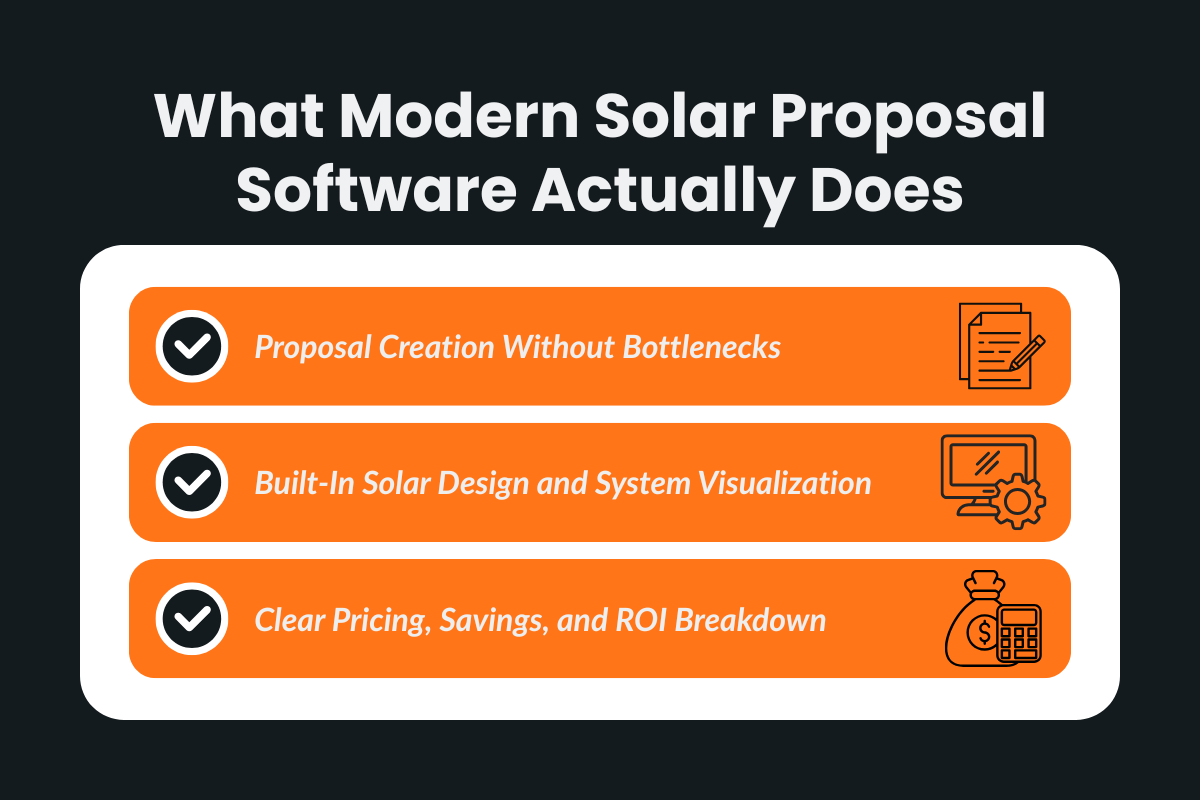
At its core, solar proposal software connects every part of the solar sales process into one streamlined system. It goes far beyond creating PDFs and pricing tables.
1. Proposal Creation Without Bottlenecks
Modern proposal platforms eliminate the friction that traditionally slows solar sales teams down. Instead of re-entering system details, adjusting spreadsheets, or waiting for internal approvals, data flows directly from lead records and system configurations into the final proposal.
When pricing rules, equipment selections, or system sizes change, updates reflect instantly. This reduces back-and-forth between departments, shortens turnaround time, and ensures that proposals are delivered while buyer interest is still high.
2. Built-In Solar Design and System Visualization
Today’s buyers expect clarity, not technical overload. Strong proposal software integrates system layout visualization directly into the quoting process, allowing customers to see how panels fit their roof or property.
The solar design software translates shading analysis, system sizing, and production estimates into visual outputs that are easy to understand. This improves buyer confidence by showing exactly how the system will perform and why it was designed that way.
3. Clear Pricing, Savings, and ROI Breakdown
Financial transparency is one of the strongest drivers of deal conversion. Modern proposal tools automatically generate structured pricing summaries that include equipment breakdowns, installation costs, financing options, and projected savings.
By presenting payback timelines and long-term value in a simplified format, the proposal shifts the conversation from upfront cost to overall return. This clarity reduces objections and makes decision-making easier for both residential and commercial buyers.
How Does Proposal Speed Directly Increase Close Rates?
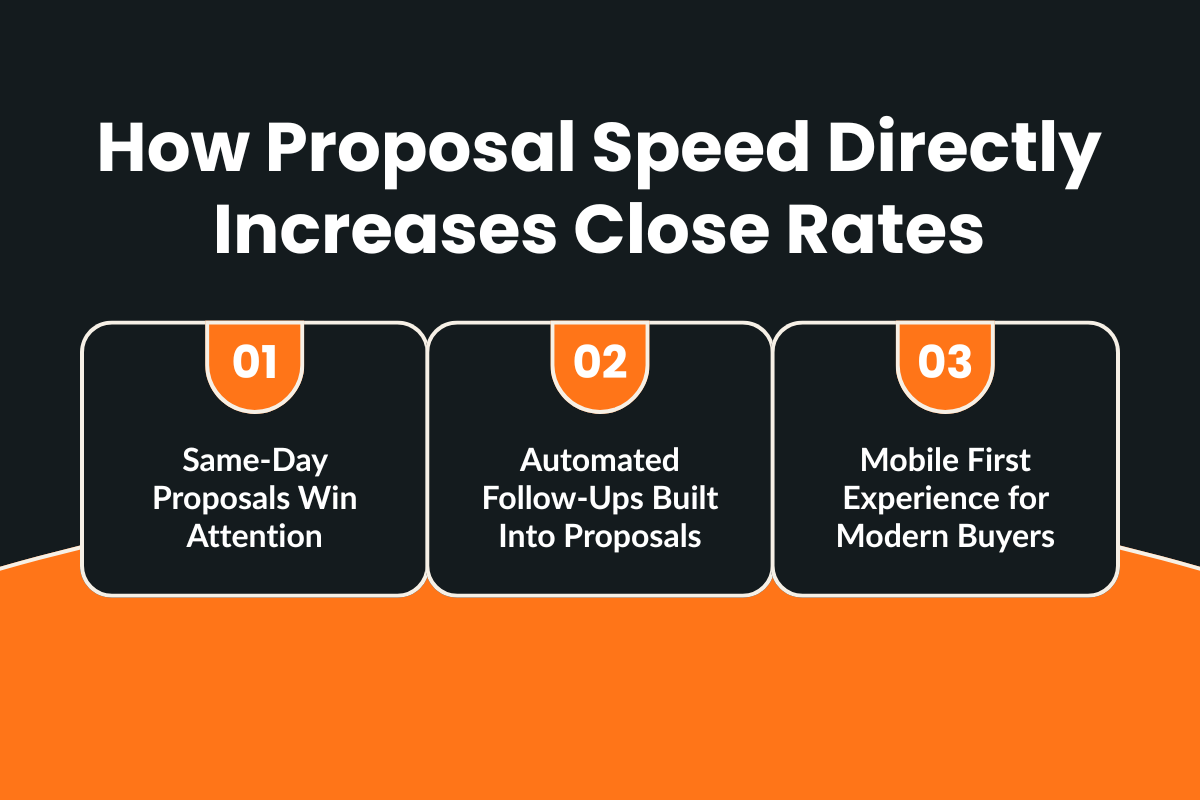
When speed is systematized through software rather than dependent on individual effort, it becomes a predictable driver of growth instead of a one-off advantage.
1. Shorter Sales Cycles
Same-day proposal delivery compresses the time between inquiry and contract. When buyers receive clear information quickly, momentum stays high, and decisions happen faster.
2. Reduced Competitor Comparison
The longer a proposal takes, the more time buyers spend collecting alternative quotes. Faster delivery narrows the comparison window and positions your company earlier in the decision process.
3. Higher Proposal-to-Close Ratios
With automated tracking of proposal views, time spent, and repeat visits, sales teams can prioritize high-intent prospects. Data-driven follow-ups increase engagement and improve conversion rates.
4. Faster Contract Execution
Mobile-optimized proposals and built-in digital signatures reduce friction. When buyers can review and sign instantly, deal progression accelerates, and revenue is realized sooner.
Professional Proposals Build Trust Before the First Call
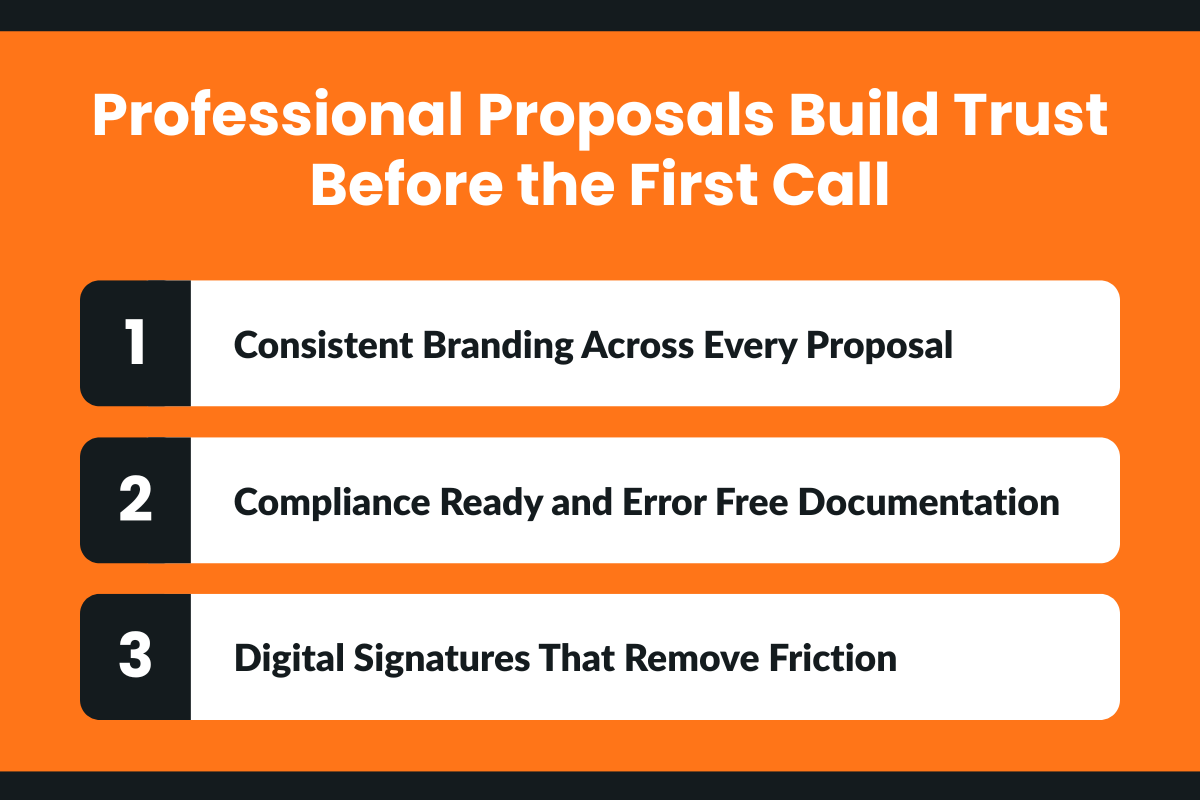
Trust often forms before a conversation even happens. In many cases, the proposal is the first real proof of how organized, reliable, and professional your company truly is.
This is why presentation matters more than many solar professionals realize. A well-structured proposal doesn’t just explain the system- it signals competence and builds early confidence.
1. Consistent Branding Across Every Proposal
Brand consistency signals reliability. When proposals feel cohesive and intentional, customers subconsciously associate that clarity with operational strength.
When proposals look polished and aligned, customers feel more confident. Clean visuals and consistent formatting suggest that the same attention to detail will carry through installation.
Professional proposals include:
- Consistent logos, colors, and messaging: A unified visual identity reinforces brand recognition and makes your company feel established rather than improvised.
- Clean layouts without outdated templates: Modern formatting improves readability and prevents the proposal from feeling recycled or rushed.
- A presentation that feels established and credible: Strong structure and clarity reduce uncertainty and make buyers feel they are choosing a dependable partner.
This matters especially for mid-sized solar companies competing with national brands. A strong proposal can level the playing field by projecting scale and professionalism.
2. Compliance Ready and Error-Free Documentation
Mistakes in incentives, tax credits, or disclosures can quickly derail deals. Even small inaccuracies can trigger hesitation or delay approvals.
Modern software reduces those risks. Automation ensures calculations and documentation remain consistent and compliant across every proposal.
Key benefits include:
- Accurate incentives and financing options: Automated financial modeling minimizes miscalculations and strengthens customer trust in projected savings.
- Reduced miscommunication: Clear, standardized documentation lowers the risk of misunderstandings between sales, customers, and operations.
- Smoother handoff from sales to operations: When proposal data flows directly into execution workflows, teams avoid costly rework after contracts are signed.
Fewer errors mean fewer delays during project completion. Clean documentation at the start protects momentum later.
3. Digital Signatures That Remove Friction
The more complicated the approval process, the greater the chance a customer pauses or reconsiders. Digital approvals simplify the entire sales process. Customers can review and sign immediately, without printing, scanning, or emailing documents back and forth.
With built-in signatures:
- Customers approve instantly: Immediate approvals reduce hesitation and maintain buying momentum while interest is high.
- Contracts move faster to execution: Signed agreements automatically trigger next steps, eliminating administrative lag.
- Teams close deals faster: Sales reps spend less time chasing paperwork and more time engaging active prospects.
Less paperwork means more momentum. Speed and simplicity directly support higher conversion rates.
Proposal Software vs. Manual Tools: The Real Difference
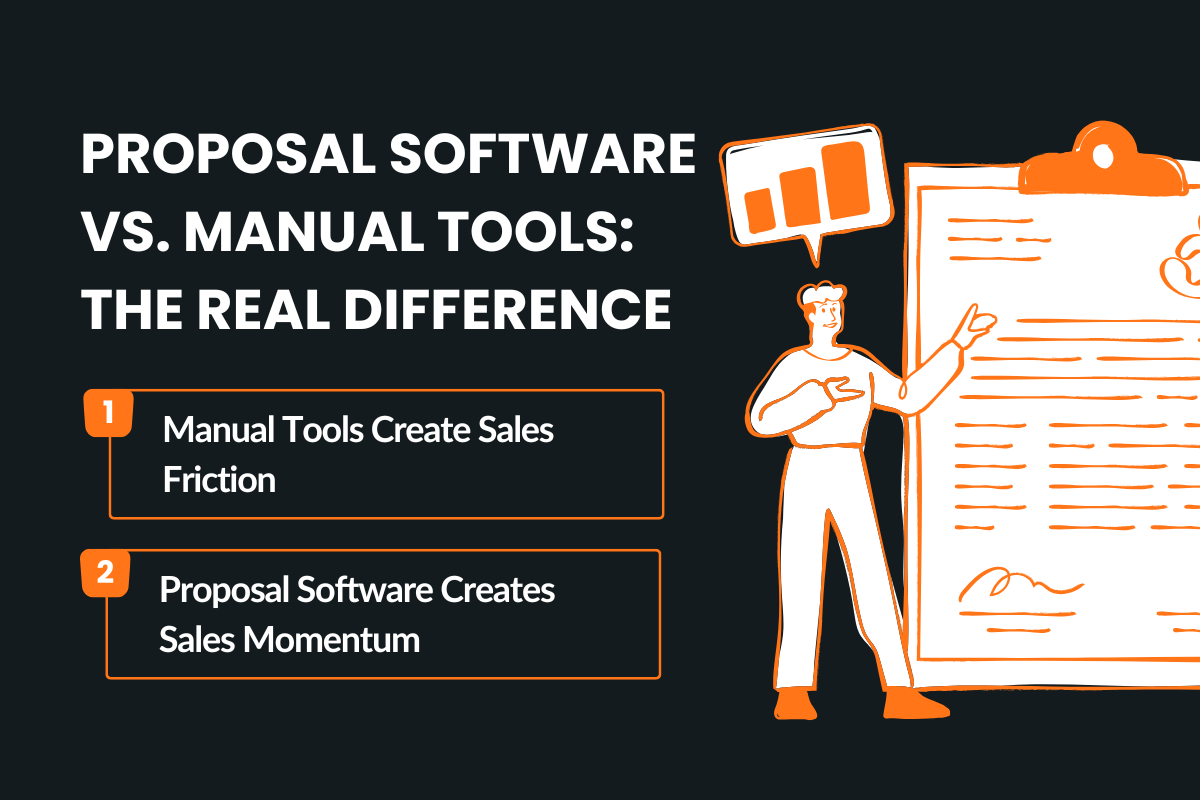
Spreadsheets and PDFs once worked. In 2026, they struggle to support the speed and consistency modern buyers expect.
1. Manual Tools Create Sales Friction
Traditional quoting processes introduce hidden costs. What appears simple on the surface often creates operational drag behind the scenes.
- Repetitive data entry: Sales reps waste valuable time entering the same information across multiple tools instead of selling.
- Higher risk of errors: Manual calculations and copy-paste workflows increase the risk of errors that can delay deals or damage trust.
- Limited scalability as lead volume grows: What works for a few proposals quickly breaks down when lead flow increases, slowing the entire sales process.
These issues hurt close rates and increase burnout. Over time, friction compounds into lost revenue and team fatigue.
2. Proposal Software Creates Sales Momentum
Modern solar software centralizes the entire sales process. Instead of juggling disconnected tools, teams operate inside one structured system.
Teams benefit from:
- Shared data across sales, design, and operations: Everyone works from the same information, eliminating confusion and keeping projects moving smoothly.
- Fewer handoffs and mistakes: With fewer tools and touchpoints, errors drop, and deals move forward without unnecessary delays.
- Repeatable workflows for every sales rep: Proven processes can be followed consistently, helping new and experienced reps close deals faster.
Momentum replaces friction. When systems support the team, speed and clarity become predictable outcomes rather than occasional wins.
| Category | Manual Tools (Spreadsheets & PDFs) | Solar Proposal Software |
|---|---|---|
| Speed | Proposal turnaround depends on manual calculations and team coordination. Delays are common. | Same-day proposal generation using automated system design and pricing logic. |
| Accuracy | Prone to pricing errors, outdated incentive data, and copy-paste mistakes. | Automated validation reduces calculation errors and keeps data consistent. |
| Scalability | Breaks under higher lead volume; processes become inconsistent. | Standardized workflows handle higher volume without sacrificing quality. |
| Team Alignment | Sales, design, and operations work in separate systems. Data must be re-entered. | Shared data environment connects proposal, CRM, and execution workflows. |
| Follow-Up Intelligence | No visibility into proposal engagement. Follow-ups rely on guesswork. | Tracks opens, views, and engagement to prioritize high-intent prospects. |
| Revenue Impact | Longer sales cycles and higher error risk reduce close rates. | Shorter cycles, cleaner approvals, and higher proposal-to-close conversion. |
What to Look for in Solar Proposal Software in 2026?

Choosing the right solar proposal software in 2026 requires more than scanning a feature list. The best platforms are not defined by how many tools they offer, but by how smoothly they support your sales process from first quote to signed contract.
1. Speed Without Sacrificing Accuracy
Fast-growing solar businesses need both speed and precision. Delivering proposals quickly is important, but not at the cost of technical or financial accuracy.
Look for tools that:
- Create accurate system specifications quickly: Generate precise system details without slowing down the sales process or relying on manual calculations. The system should pull structured design and pricing data automatically to reduce delays.
- Update pricing and designs in real time: Make changes on the fly while speaking with customers, keeping proposals accurate and responsive. Real-time updates prevent back-and-forth revisions that stall momentum.
- Reduce errors through automation: Automated workflows minimize mistakes and ensure every proposal stays consistent and reliable. Built-in validation helps avoid costly miscalculations in production or incentives.
2. Sales and Operations Alignment
Winning the deal is only part of the job. Proposal data must flow into execution to prevent breakdowns after approval.
Strong software ensures:
- Seamless transition from sales to installation: Approved proposals move straight into execution without delays, data loss, or manual handoffs. This protects the accuracy of system specifications and pricing.
- No rework after contracts are signed: Accurate proposal data prevents last-minute changes that slow down installation and frustrate teams. Clean data transfer reduces operational friction.
- Better coordination across teams: Sales, design, and operations stay aligned, keeping projects on track from contract to completion. Everyone works from the same structured information.
3. Scalability for Growing Solar Teams
As teams expand, processes must stay consistent. Growth should increase revenue, not create chaos in proposal delivery.
Confidently expand your solar business. Whether you have a small team or a large operation, see how software helps you scale efficiently, manage customers effectively, and adopt best practices for strategic growth.
The right proposal software supports:
- Multiple sales reps and territories: Sales teams can scale across regions while keeping proposals consistent and easy to manage. Centralized control maintains brand and pricing discipline.
- Standardized proposals with flexibility: Every proposal follows best practices while still allowing customization for specific customer needs. This balance keeps quality high without limiting adaptability.
- Growth without operational chaos: As deal volume increases, processes stay organized instead of breaking under pressure. The system should support higher output without sacrificing clarity.
Top Solar Proposal Software That Wins Deals in 2026
1. Sunbase
Best For: Solar companies that want proposals fully connected to CRM, compliance, and post-sale execution.
Sunbase is built as a unified solar sales and operations platform where proposals are not isolated documents but part of a structured end-to-end workflow. It connects design logic, pricing automation, approvals, and installation planning into one controlled environment, helping teams close faster without creating downstream execution problems.
Core Features:
- Automated Proposal Generation: Instantly generates proposals using live system design, pricing rules, and customer data. This eliminates manual entry and shortens turnaround time significantly.
- Incentive & ROI Modeling: Automatically calculates rebates, financing options, and payback periods based on project inputs. This ensures accurate financial clarity without relying on spreadsheets.
- Real-Time Pricing Updates: Allows sales reps to modify system size or equipment during customer discussions. Updates reflect instantly across the entire proposal.
- Digital Signatures & Contract Automation: Enables customers to review and approve proposals without leaving the platform. This reduces friction and accelerates contract execution.
- CRM & Operations Integration: Approved proposals flow directly into scheduling and project workflows. This prevents data loss and removes post-sale rework.
Pricing:
Plans starting from $59/user/month
2. OpenSolar
Best For: Cost-conscious installers who want proposal, design, and basic CRM capabilities in one accessible platform.
OpenSolar positions itself as a free, all-in-one solar sales platform that combines system design, proposals, and light CRM functionality. It is popular among smaller installers and growing teams looking for a centralized solution without heavy upfront software costs.
Core Features:
- Integrated System Design Tool: Enables quick layout creation directly inside the platform. This removes dependency on separate design exports.
- Dynamic Proposal Builder: Automatically builds customer-ready proposals with savings breakdowns. This speeds up quoting while maintaining consistency.
- Financing & Incentive Modeling: Incorporates loans, rebates, and local incentives into financial projections. This improves ROI transparency during sales discussions.
- Basic CRM Functionality: Tracks lead stages and proposal status in one dashboard. This reduces reliance on external CRM systems.
- Online Proposal Sharing: Sends interactive proposals that customers can review digitally. This increases engagement compared to static PDFs.
Pricing:
OpenSolar offers a free core platform with proposal and design capabilities included.
Revenue is generated through integrated financing partnerships and add-on services rather than traditional subscription fees.
3. Solargraf
Best For: Residential sales teams that prioritize speed, simplicity, and visually engaging proposals.
Owned by Enphase Energy, Solargraf is a cloud-based solar design and proposal tool designed primarily for residential installers. It focuses on quick turnaround times and customer-friendly proposal visuals that help sales reps compete in high-volume residential markets.
Core Features:
- Remote Roof Layout Tool: Designs rooftop systems using satellite imagery without immediate site visits. This accelerates early-stage proposals.
- Visual Savings Summaries: Presents projected savings in simple, easy-to-understand charts. This improves clarity for non-technical homeowners.
- Quick Proposal Turnaround: Reduces the time between inquiry and proposal delivery. Faster delivery improves competitive positioning.
- Financing Integration: Displays loan and payment comparisons directly inside proposals. This supports faster buyer decisions.
- Basic CRM Tracking: Monitors proposal progress and customer engagement. This helps sales teams prioritize active leads.
Pricing (Annual Plans):
- Starter – $2,799 USD per year - Includes 240 project credits and access for 2 users; additional projects cost $11 each.
- Small Business – $4,799 USD per year- Covers 480 project credits with 4 user licenses; additional projects cost $10 each.
- Teams – $6,399 USD per year- Offers 720 project credits and 6 user licenses; additional projects cost $9 each.
- Enterprise – $12,999 USD per year- Provides 1,500 project credits and unlimited user access; additional projects cost $9 each.
How to Choose the Right Solar Proposal Software for Your Business?
Choosing the right solar proposal software is not about finding the most advanced platform. It is about selecting the system that matches your business stage, deal size, and operational complexity.
Here is how to think about it:
1. If you're a 2-rep residential installer → choose a speed-focused platform.
You need fast proposal generation, simple financial modeling, and clean visuals that help close rooftop deals quickly. Avoid enterprise-heavy systems that add unnecessary complexity at this stage.
2. If you're scaling across multiple territories → choose a centralized, multi-rep system.
As team size grows, consistency becomes critical. Look for software that standardizes pricing, tracks performance across reps, and maintains brand and margin discipline.
3. If you’re still using Excel or manual PDFs → upgrade when speed and errors start costing deals.
The trigger point is missed, same-day proposals, frequent pricing corrections, or rework after signing. When admin work reduces selling time, structured automation becomes necessary.
4. If your average deal size exceeds $50,000 → prioritize advanced modeling and financial depth.
Larger residential and commercial buyers expect precise production forecasts and detailed ROI projections. Choose software with strong simulation and scenario-based financing tools.
5. If compliance risk is high in your region → prioritize validation and incentive automation.
Markets with complex rebates, tax credits, or permitting rules require built-in safeguards. Software should automatically apply regional logic to reduce post-sale corrections and approval delays.
How Sunbase Powers High-Converting Solar Proposals?
Solar development does not stop at the proposal stage. The real challenge begins after approval, when design accuracy and operational coordination determine whether the project runs smoothly or stalls.
Sunbase connects proposals to real operations. It ensures that what is promised during the sales conversation transitions cleanly into execution without rework or confusion.
Why Proposal Software Must Connect to Operations
Many solar companies win deals only to struggle during execution. When proposal tools are disconnected from project management systems, data gaps create delays, corrections, and unnecessary friction.
Disconnected tools cause rework and delays. Manual data transfers increase the risk of pricing inconsistencies, design mismatches, and scheduling errors that erode margins.
Sunbase focuses on clean data from start to finish, ensuring smoother project completion.
Maintaining a continuous workflow reduces operational breakdowns after contracts are signed.
Key Sunbase Capabilities for Solar Teams
- Integrated proposal creation tied to project workflows
Proposals are not created in isolation. Everything flows directly into project execution, so sales, design, and operations stay aligned from day one. - Automated pricing and system design
Pricing updates and system changes happen instantly with modern solar design software, reducing manual work and eliminating errors that slow down the sales process. - Digital approvals and instant contract generation
Customers can review, approve, and sign without delays, helping sales reps close deals while interest is still high. - Seamless scheduling after approval
Once a proposal is signed, projects move straight into scheduling with no data re-entry or handoffs between teams with project management software. - Dashboards that track proposal-to-close performance
Clear visibility into what converts helps teams refine their sales approach and forecast growth with confidence.
Future Proofing Your Solar Sales Process
The solar market is becoming more competitive and more data-driven. Proposal software in 2026 is no longer just about document generation; it is about building a scalable, intelligent sales system that adapts as buyer expectations evolve.
1. Smarter Personalization Through Data
Future-ready platforms are moving toward dynamic proposal customization. Instead of static templates, proposals will adapt based on customer energy usage patterns, financing preferences, and regional incentive structures.
This level of personalization increases engagement and strengthens buyer confidence by making each proposal feel tailored rather than generic.
2. Integrated Financing and Real-Time Incentive Updates
As financing structures become more complex and incentives change frequently, automated rate and rebate updates will become essential.
Systems that connect directly to financing providers and local utility databases will reduce compliance risk and improve quote accuracy. The companies that win will be those that eliminate manual incentive tracking altogether.
3. Proposal Analytics Linked to Conversion Optimization
Forward-thinking solar companies are beginning to treat proposals as performance assets, not just documents.
Analytics showing open rates, engagement time, drop-off points, and approval delays will guide continuous sales optimization. Over time, this data-driven refinement improves close rates and forecasting accuracy.
4. AI-Assisted Design and Predictive Pricing
Emerging proposal tools are incorporating AI to suggest optimal system configurations based on property data and historical deal performance.
Predictive pricing models will help reps balance competitiveness with margin protection automatically. This reduces reliance on manual judgment while increasing consistency across territories.
Bringing It All Together
In 2026, solar sales will be won by the companies that control speed, clarity, and consistency. Price still matters, but the buying experience often matters more. The installer who responds first with a clear, accurate, and professional proposal usually shapes the decision before competitors even catch up.
Solar proposal software is no longer a formatting tool. It is the engine that connects design, pricing, financing, approvals, and execution into one structured flow. When that system works properly, sales cycles shorten, close rates improve, and operational friction disappears after the contract is signed.
If your team is still juggling spreadsheets, manual calculations, and disconnected tools, the real cost is not just time. It is lost momentum, missed deals, and preventable rework.
The companies growing fastest in 2026 are not necessarily the biggest. They are the most systematized.
If you want proposals that move as fast as your buyers think, it is time to upgrade the system behind them. See how Sunbase connects proposal creation, financial modeling, digital approvals, and project execution into one seamless workflow.
Explore Sunbase solar proposal software today and see how high-performing solar teams are turning interest into signed projects with confidence.
FAQs
1. How quickly can a solar company implement proposal software?
Implementation timelines vary, but most cloud-based platforms can be deployed within days to a few weeks, depending on customization and training needs.
2. How does solar proposal software help win more deals in 2026?
In 2026, buyers expect speed and clarity. Solar proposal software shortens turnaround time, improves presentation quality, and keeps prospects engaged, which directly increases close rates.
3. Can solar proposal software be used for both residential and commercial projects?
Yes. Modern solar proposal tools support residential rooftops, commercial buildings, ground-mounted systems, and complex multi-site projects with flexible design and pricing models.
4. Is solar proposal software better than using Excel or PDFs?
Absolutely. Unlike Excel or manual PDFs, proposal software reduces errors, automates calculations, improves collaboration, and scales easily as lead volume grows.
5. What features should solar companies look for in proposal software in 2026?
Key features include fast proposal creation, accurate system design, clear savings visualization, mobile-friendly proposals, digital signatures, and seamless handoff to operations.
One Platform.
Zero Chaos.
Run Your Entire Business in One Platform
Sunbase replaces your CRM, proposals, scheduling, job tracking, and reporting tools — all inside one clean, connected platform.
About Sunbase
The All-In-One Platform to Run Your Entire Business
Sunbase helps you organize operations, streamline daily workflows, and manage everything - from first customer contact to final project deliver- in one connected system.
Our Mission
- Organize your business.
- Optimize your workflow.
- Automate your dailytasks
Why Businesses Choose Sunbase
One Connected Workflow
Replace scattered tools and manual processes with a single platform that brings together your team, tasks, customers, jobs, and performance data.
🌎 Global Presence
Serving the United States, Canada, India, LATAM, Australia, and 10+ international markets.
👥 11,000+ Users
Trusted by contractors, installers, project managers, sales teams, and field technicians.
🏗️ Built for All Sizes
From small contracting teams to fast-growing enterprises, Sunbase adapts to your workflow.
Stop Managing Your Business Manually. Automate It.
Sunbase automates workflows, reduces mistakes, and helps your team get more done - without hiring extra staff or juggling multiple tools.
Still Managing Your Business Across Multiple Tools?
Bring your CRM, proposals, projects, and operations into one platform built for contractors.