
sunbase solar design software
Solar Design Software
for Accurate PV System Planning
*Contact us for a quote based on your team size
The Platform
WHAT IS SOLAR DESIGN SOFTWARE?
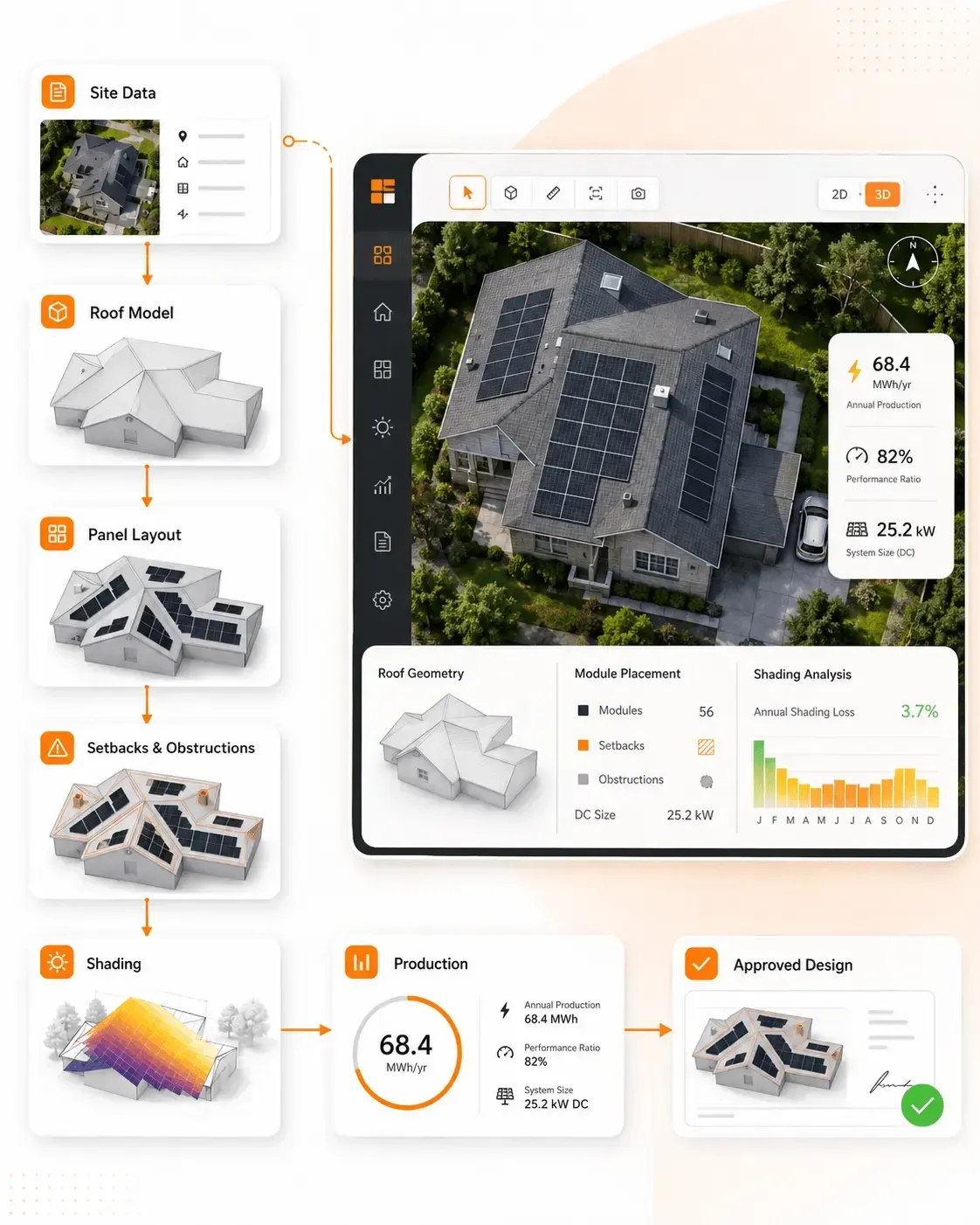
Solar design software is a digital tool that helps solar teams model a site, create PV system layouts, assess shading, configure equipment and estimate expected energy production before installation.
Sunbase Solar Design Software keeps this design information connected to the customer and project record from site modelling through design approval and proposal.
WHERE SUNBASE solar software FITS
Why Solar Design Requires More Than a Panel Layout
A solar design has to account for
where panels can be installed, how the site affects performance and whether the proposed system matches the project's energy requirements.
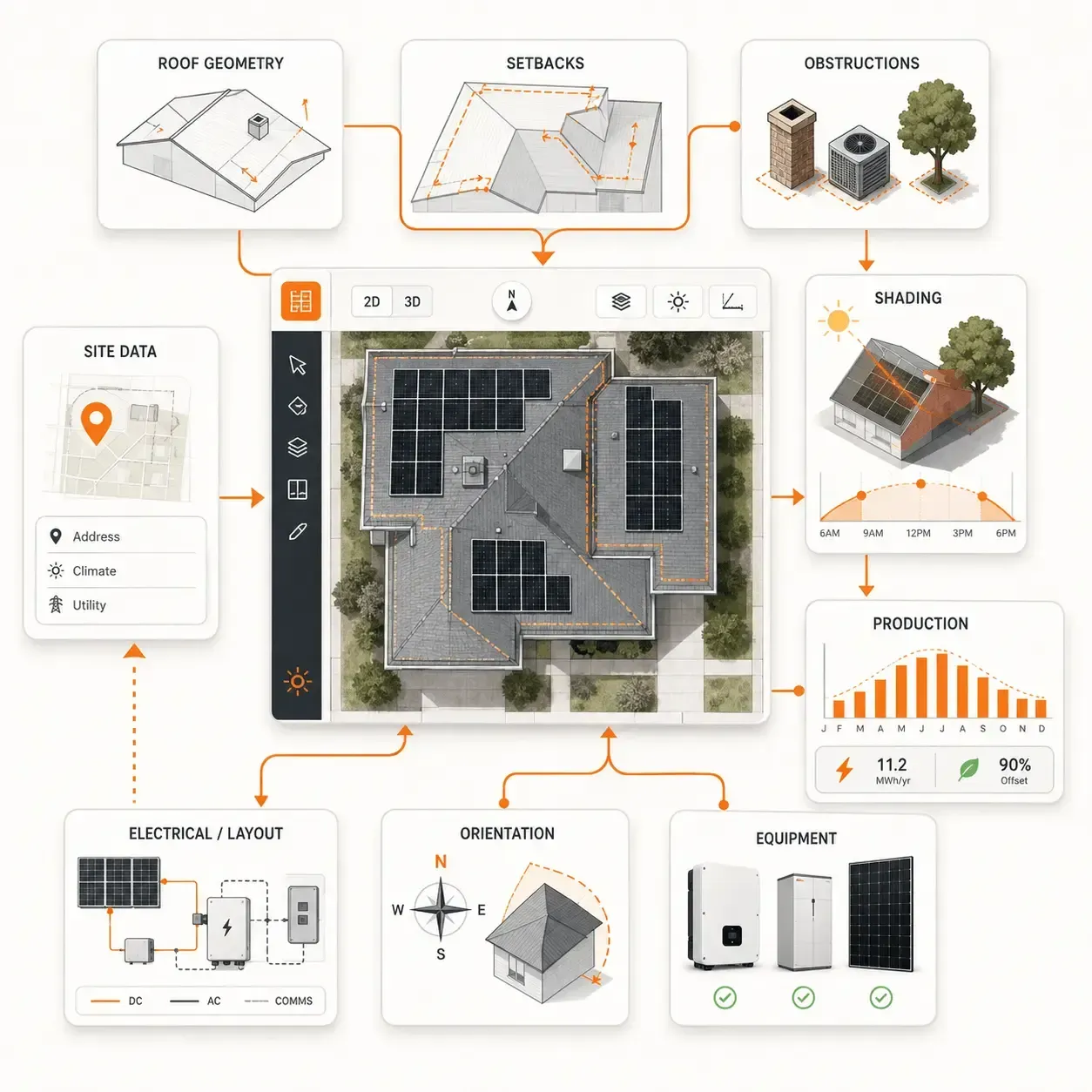
Sunbase Solar Design Software brings these design inputs together, including:
- Roof geometry and usable installation area.
- Ground-mount or canopy boundaries where applicable.
- Setbacks, pathways and restricted zones.
- Trees, HVAC units, parapets, vents and other obstructions.
- Module dimensions, orientation and system capacity.
- Azimuth and tilt.
- Shading and solar access.
- Selected modules, inverters and batteries.
- Estimated energy production.
This helps designers create a system based on the
actual site, equipment and energy requirements, rather than placing panels on a basic roof image.
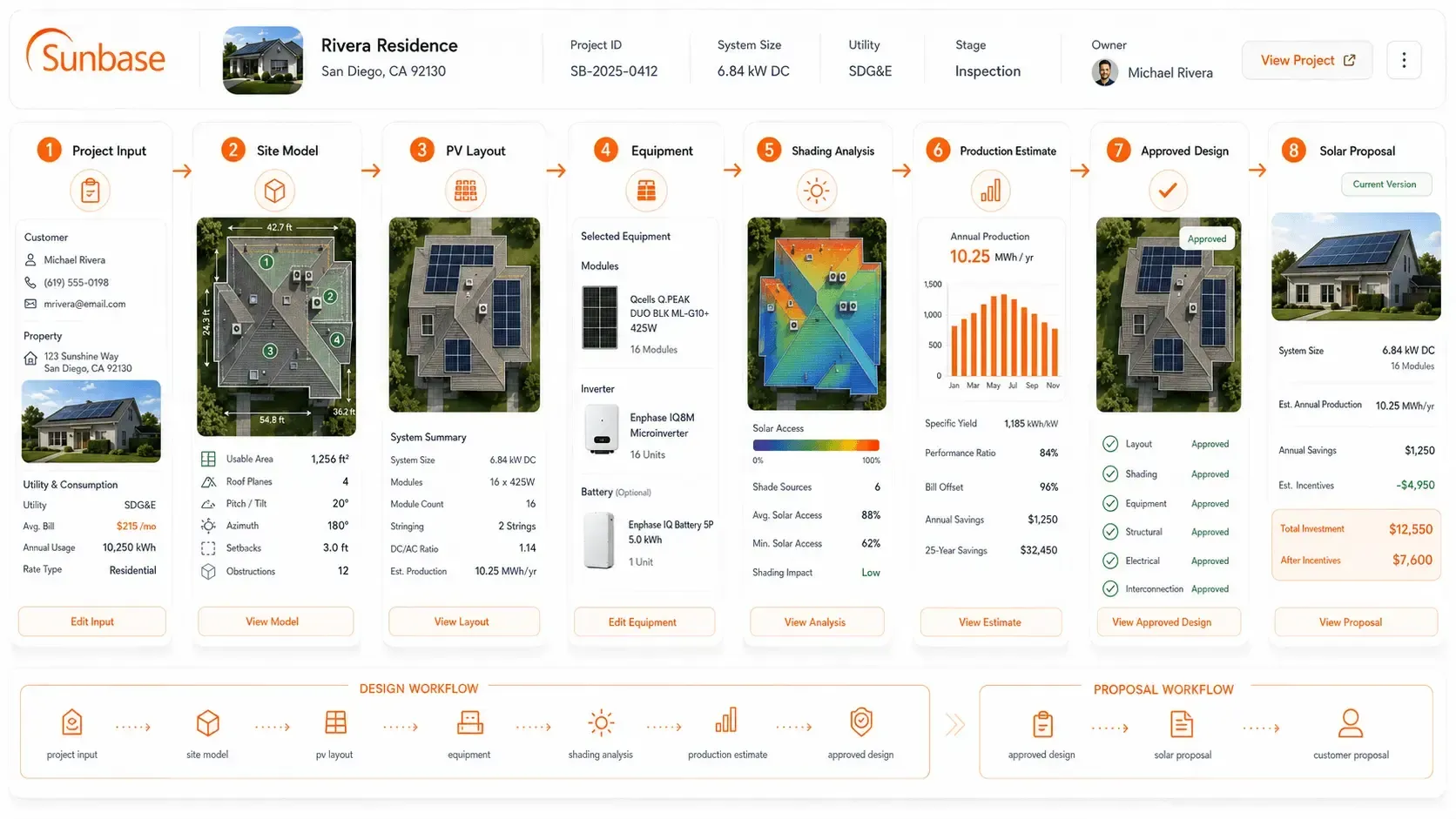
Solar design workflow
Manage the Complete Solar Design Workflow
Project Data → Site Model → Module Layout → Equipment → Shading and Production → Approved Design
Sunbase Solar Design Software Capabilities
Plan the PV System Around the Site and Energy Requirement
Sunbase Solar Design helps teams evaluate the customer’s energy requirement, available installation area and site constraints before finalising the PV system layout.
Property and Energy Requirements
Start with the property address, electricity usage, utility information and target system capacity.
Roof Top or Ground Area
Identify suitable roof planes or ground areas based on dimensions, site boundaries and available installation space.
Roof Geometry
Model each roof plane using its size, pitch and orientation to understand usable area and module capacity.
Obstructions and Restricted Areas
Account for trees, HVAC units, headrooms, chimneys, vents, skylights, parapets, setbacks and access pathways.
Azimuth and Tilt
Automatically calculate azimuth and tilt from the roof geometry, or manually adjust each value to match verified site conditions and array orientation.
Solar Panel Placement
Position modules around usable areas and obstructions while reviewing panel count, layout and total system capacity.
Shading Conditions
Evaluate shading from trees, buildings and rooftop objects to identify module positions with better solar access.
System Capacity and Production
Compare the customer’s energy requirement with the capacity the property can support, then estimate production using the layout, azimuth, tilt, shading and selected equipment.
Design Approval
Review the final layout, equipment, system size and production estimate before using the approved design for proposals and project delivery.
Roof and Site Modelling
Model the Property Before Placing Panels
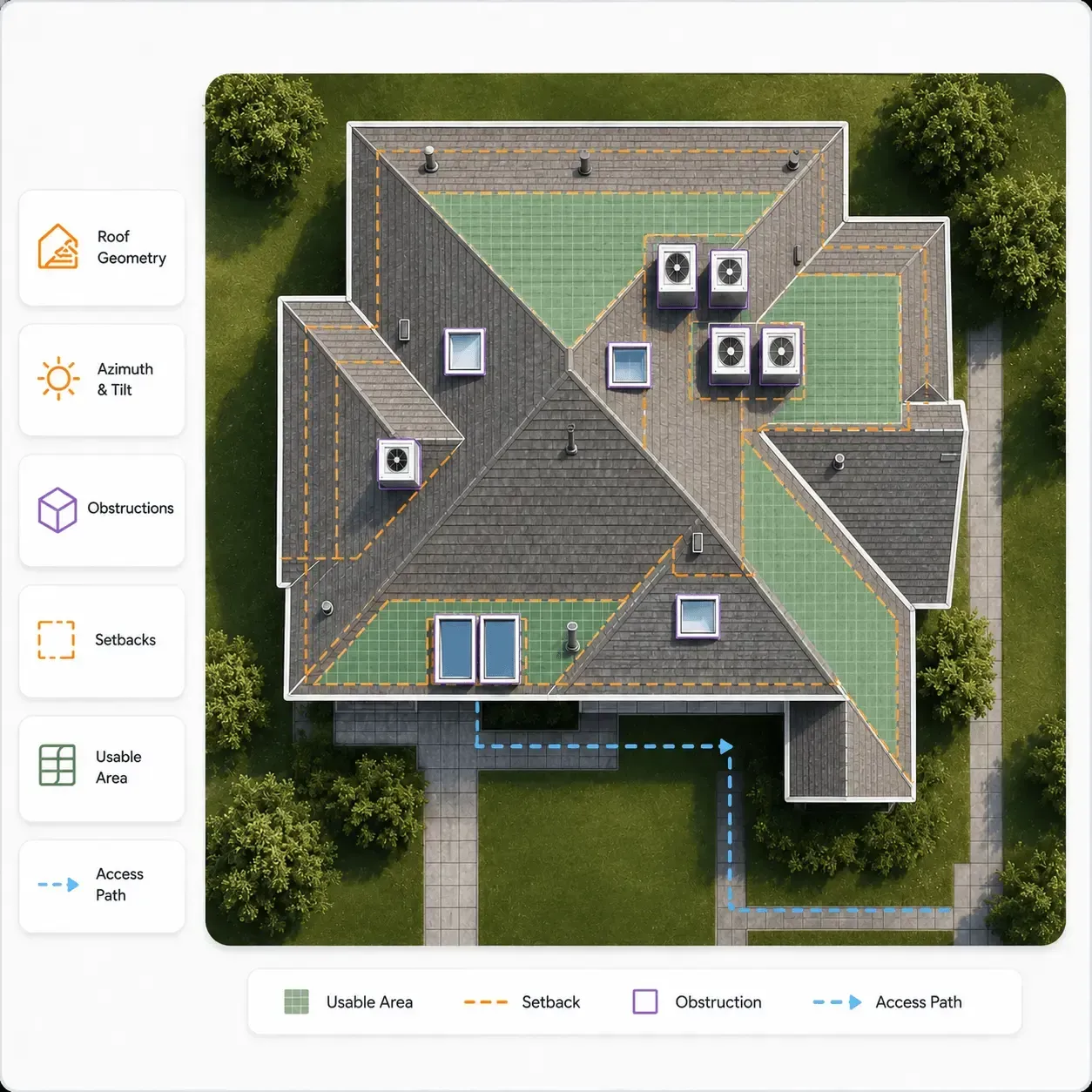
Sunbase Solar Design Software helps designers define the physical installation area before creating the PV layout.
- Model individual roof planes or ground-mount boundaries.
- Set roof dimensions, pitch and orientation.
- Automatically calculate azimuth and tilt or adjust them manually.
- Mark trees, HVAC units, headrooms, skylights, vents and parapets.
- Apply setbacks, access pathways and restricted zones.
- Identify the usable area available for module placement.
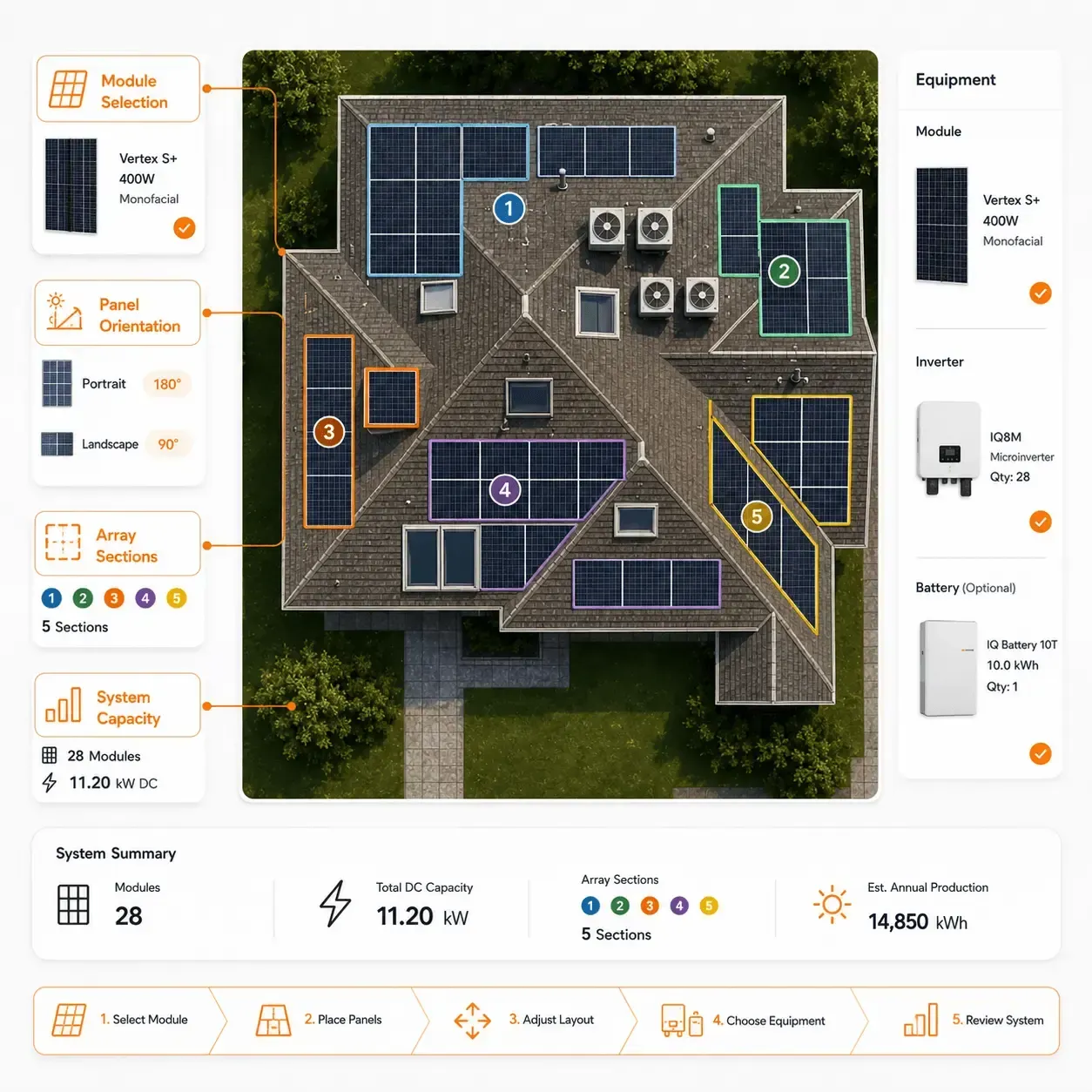
Panel Layout and Equipment Selection
Build the PV Layout and Configure the System
Sunbase Solar Design Software helps designers create a practical module layout using the selected equipment and available installation area.
- Select the module model, dimensions and wattage.
- Place panels in portrait or landscape orientation.
- Add, remove or reposition modules across different roof planes.
- Maintain spacing around setbacks, pathways and obstructions.
- Review module count and total DC system capacity.
- Configure inverters, batteries and other system components.
- Compare layout options before approving the system design.
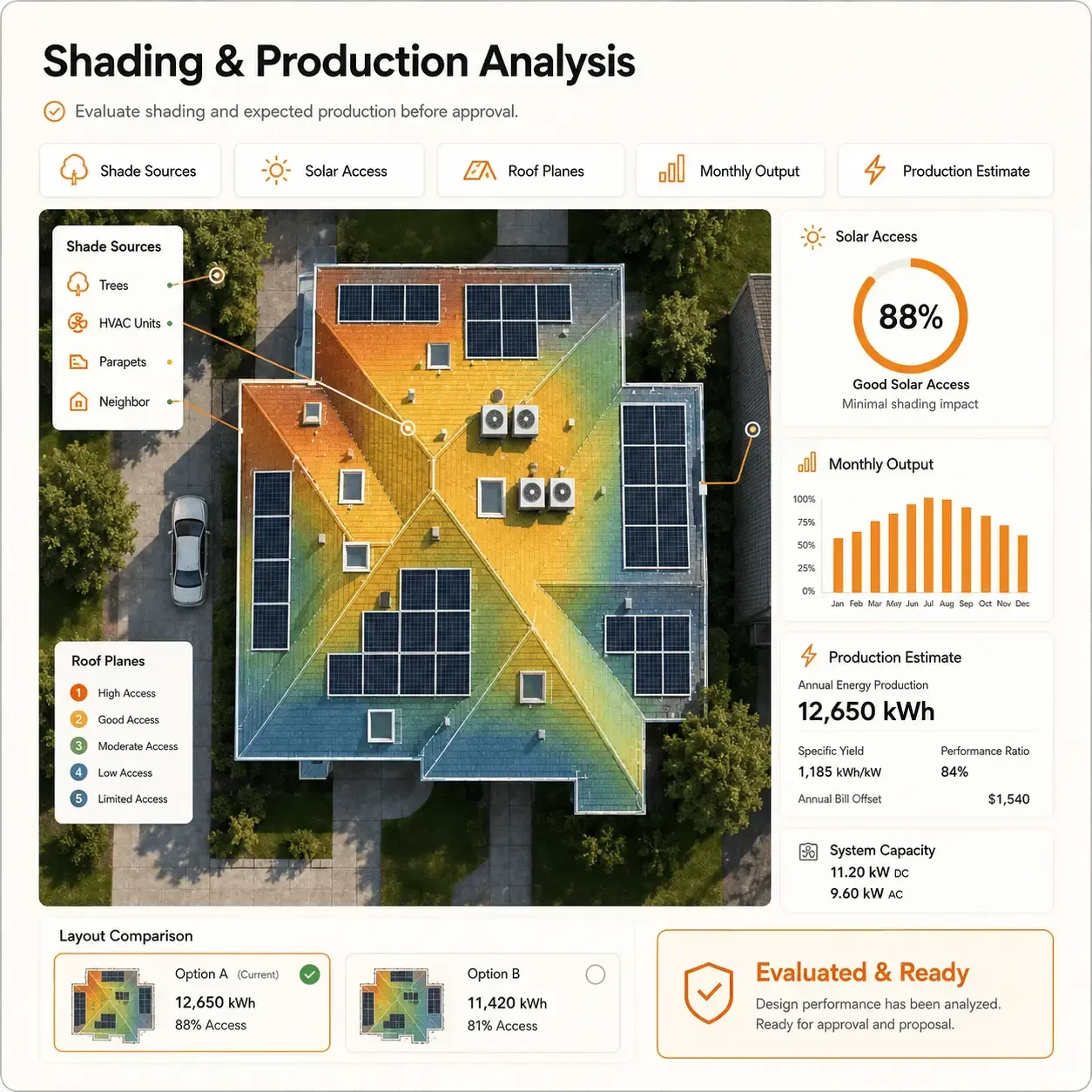
Shading and Production Analysis
Evaluate Solar Access and Expected Energy Production
Sunbase Solar Design Software helps designers assess how the proposed system is expected to perform before the design is approved.
- Review shading from trees, buildings, HVAC units, parapets and roof structures.
- Compare solar access across different roof planes and array sections.
- Use azimuth, tilt, module layout and system capacity in the production estimate.
- Evaluate how equipment and site conditions affect expected generation.
- Compare alternative layouts to improve system performance.
- Use approved production results for proposals and customer discussions.
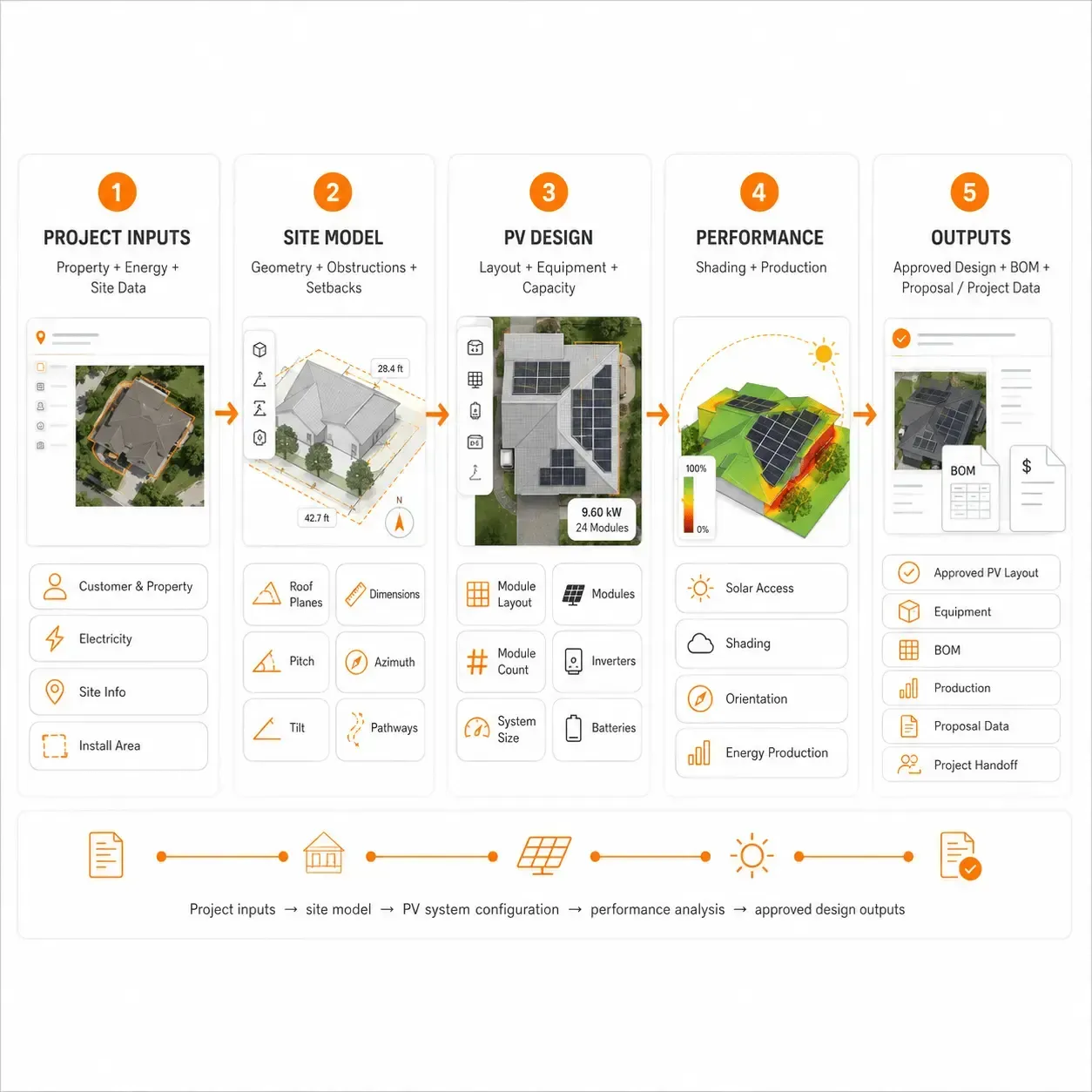
Technical Design Inputs & Outputs
See What Goes Into a Sunbase Solar Design
Sunbase Solar Design Software brings site conditions, system requirements, equipment and performance information together to create a structured PV system design.
Site & Project Inputs
Customer & Property Data | Electricity Consumption | Site Information | Available Installation Area
Roof & Site Modelling
Roof Planes | Dimensions | Pitch | Azimuth | Tilt | Setbacks | Pathways | Obstructions | Canopy / Ground Boundaries
PV System Configuration
Module Layout | Module Count | System Capacity | Modules | Inverters | Batteries | Equipment Configuration
Shading & Production
Solar Access | Shading Conditions | Array Orientation | System Capacity | Estimated Energy Production
Design Outputs
Approved PV Layout | System Size | Equipment | BOM | Production Estimate | Design Visuals | Proposal Data | Permitting / Engineering Handoff
Design Outputs for Permitting and Engineering Handoff
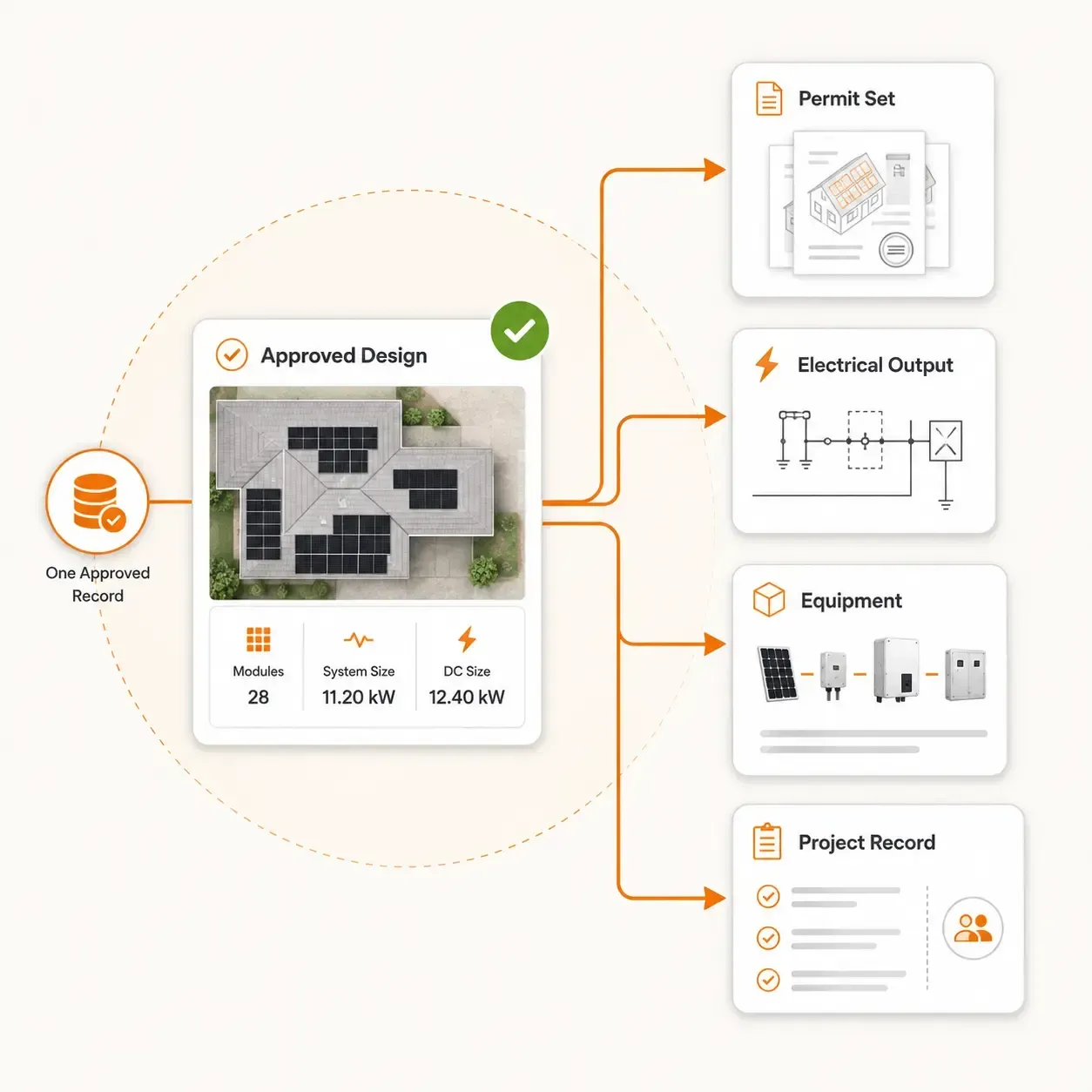
Use the Approved Solar Design in Permit and Project Workflows
Sunbase Solar Design Software keeps the approved PV design connected to the outputs required for permitting, technical review and downstream project execution.
- Carry forward the approved layout, module count and system size.
- Keep equipment selections and system configuration connected.
- Use approved design data in permit-related project documentation.
- Support electrical and technical design outputs from the same project record.
- Update downstream outputs when the approved design changes.
- Maintain one approved version across design, sales and project teams.
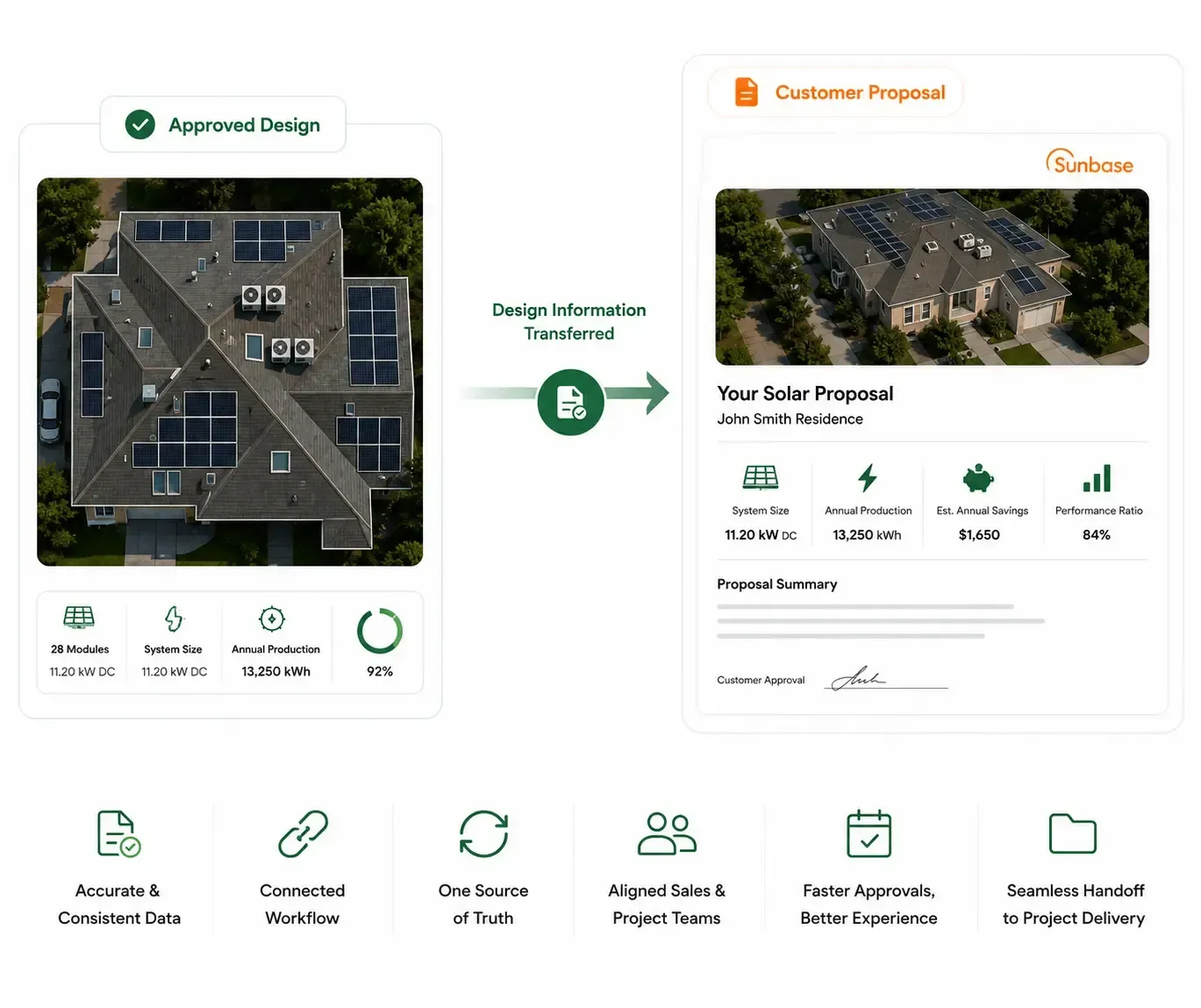
Design-to-Proposal Workflow
Turn the Approved Design Into a Customer Proposal
Sunbase Solar Design Software keeps the approved design connected to the proposal workflow, reducing repeated data entry between design and sales teams.
- Carry forward the module count, system size and equipment selection.
- Use approved production estimates in the customer proposal.
- Keep layout images, shading results and system details connected.
- Update proposal information when the design is revised.
- Maintain one approved version for sales and project teams.
- Move accepted designs into project delivery with the required system information.
Designed for Different Solar Projects
One Design Platform for Residential, Commercial and EPC Workflows
Sunbase Solar Design Software adapts the design process to the scale, site conditions and approval requirements of each project.
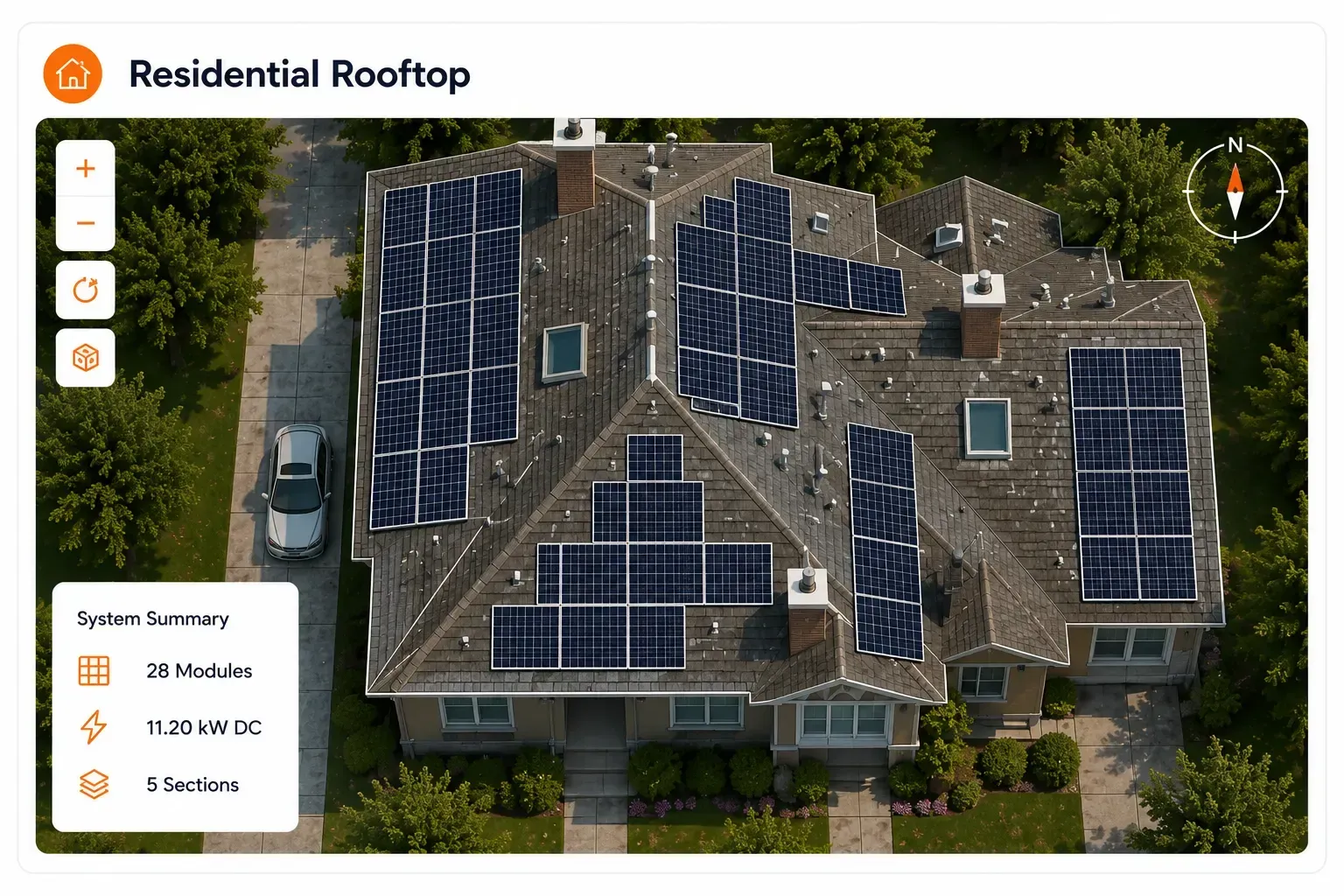
Create accurate rooftop layouts across multiple roof planes while accounting for chimneys, vents, setbacks, shading and household energy usage.
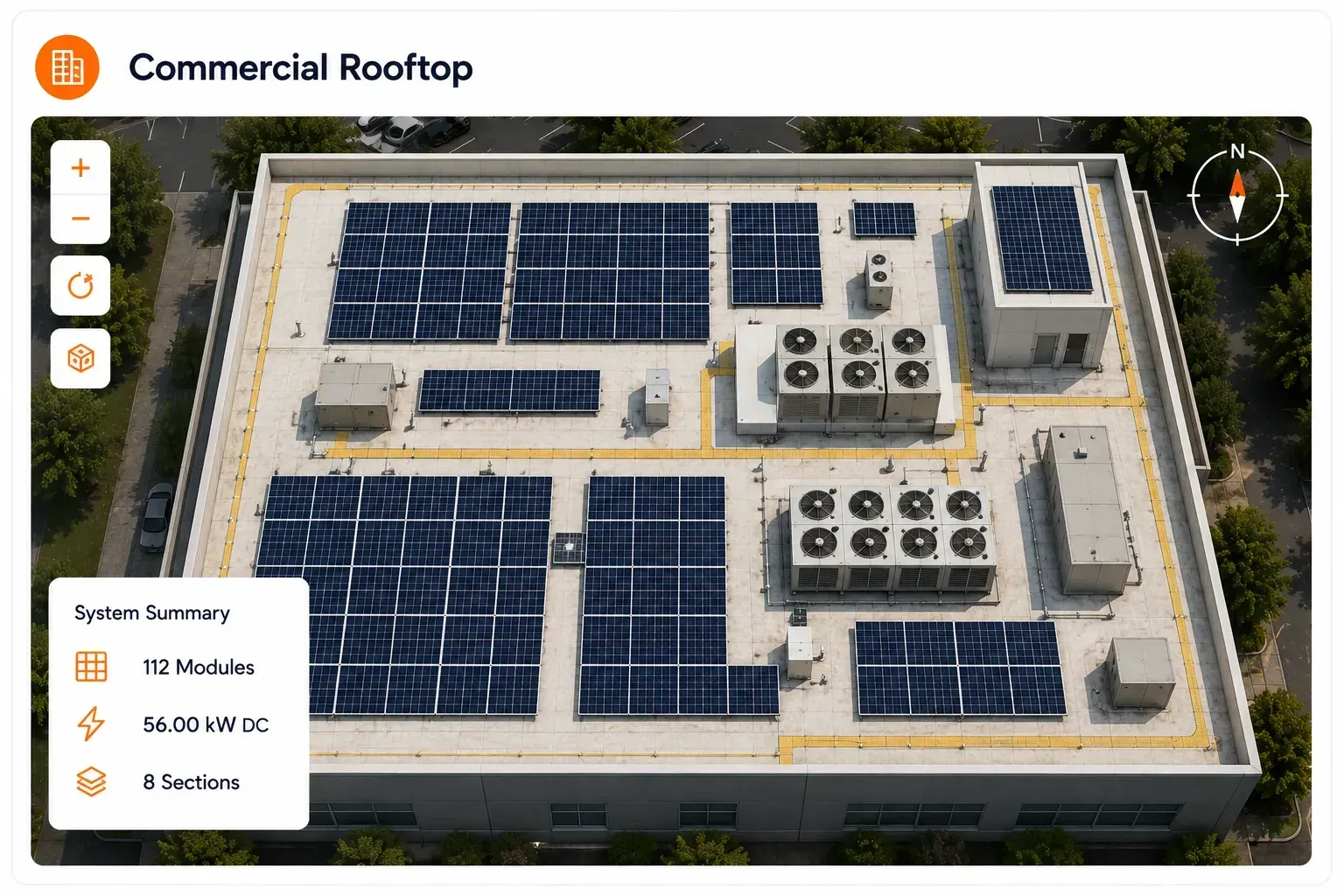
Plan larger rooftop systems around HVAC units, parapets, headrooms, access pathways and multiple array sections.
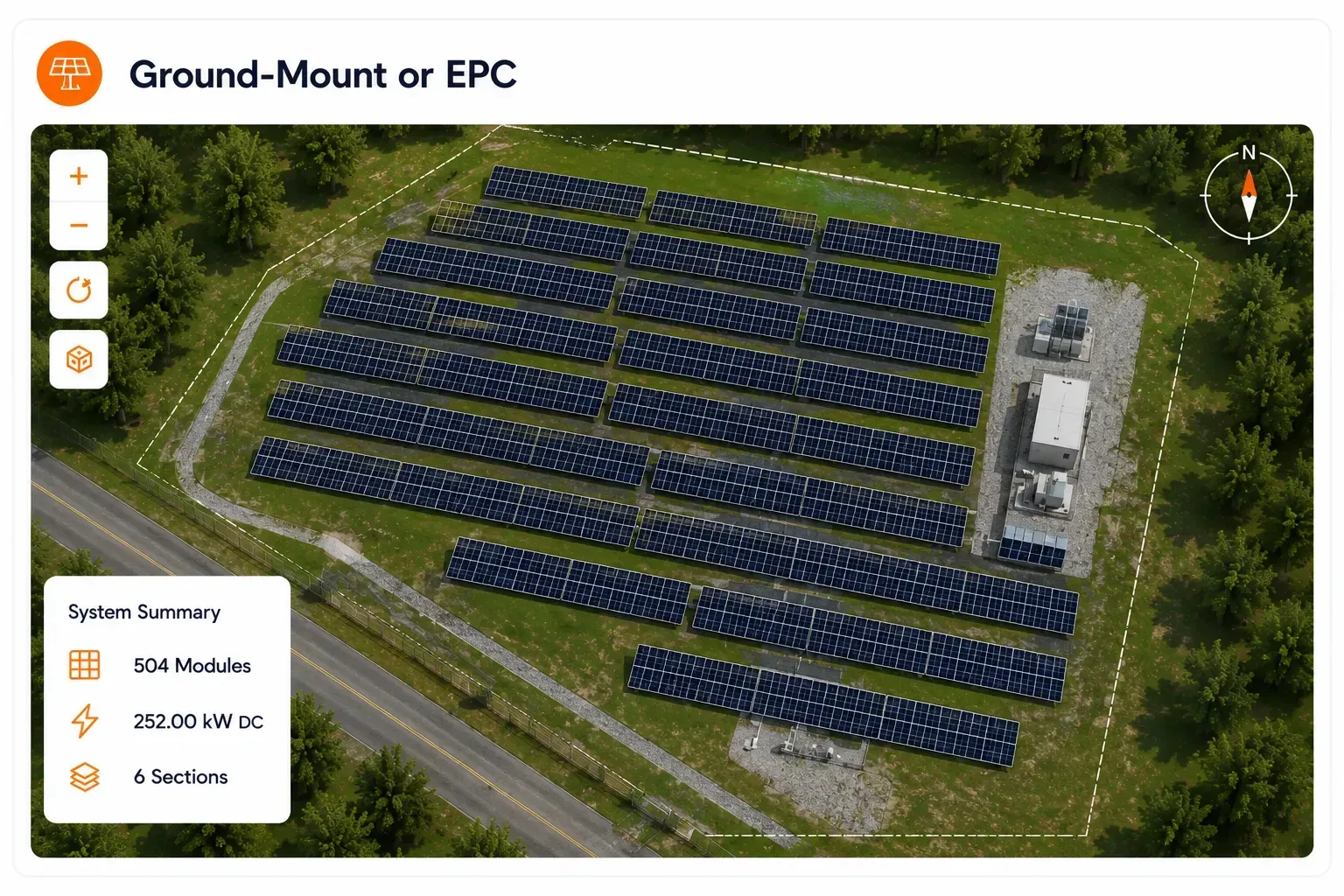
Manage larger or more complex designs with ground areas, multiple equipment configurations, design revisions and structured approvals.
Sunbase Solar Design software vs Standalone solar Design Tools
More Than a PV Layout Tool
Many solar design tools focus primarily on creating PV layouts and estimating production. Sunbase Solar Design Software connects the design with customer information, proposals and project delivery.
Sunbase Solar Software makes solar design part of one connected project workflow rather than a separate design task.
Primarily focused on PV layout and production modelling.
- Project and site information may require manual entry.
- Capabilities vary for rooftop, canopy and ground-mount designs.
- Equipment and design revisions may remain in separate files.
- Approved system details may need to be transferred into proposal or project tools.
- Sales, design and operations may work from different project records.
- Creates residential and commercial rooftop PV layouts.
- Supports solar canopy designs with pillars and structural placement.
- Plans ground-mount arrays within defined site boundaries.
- Models roof geometry, azimuth, tilt, setbacks and obstructions.
- Configures modules, inverters, batteries and system capacity.
- Evaluates shading and expected energy production.
- Uses customer, utility and property information already stored in Sunbase.
- Carries approved layouts, equipment and production data into proposals and project delivery.
Technical Design & Engineering
Configure Solar Design Around Your Engineering Requirements
Sunbase Solar Design Software supports a configurable technical design workflow, allowing solar teams to define the site inputs, system parameters, engineering assumptions and outputs required for their projects.
Site & Imagery Inputs
Work with the property, imagery, drawings, measurements and site information available for the project.
Roof & Site Geometry
Create and adjust roof planes, dimensions, pitch, azimuth, tilt, boundaries, setbacks and usable installation areas.
Shading & Solar Access
Configure shading analysis around the site model, array orientation and surrounding conditions to evaluate solar access and expected performance.
Obstructions & Site Conditions
Model project-specific objects and restricted areas that influence module placement and system performance.
Examples:
Trees, vents, skylights, HVAC units, parapets, headrooms, pathways and other site obstructions.
Equipment Configuration
Configure the system around the equipment and electrical requirements of the project.
Examples: Modules, inverters, batteries, equipment combinations, system capacity and other project-specific electrical parameters.
Engineering & Design Outputs
Generate and maintain the technical information required for downstream workflows.
Outputs can include: PV layout, system size, equipment information, BOM, shading results, production estimates, energy analysis and approved design data.
Production Modelling
Use project location, system configuration, equipment and configurable performance assumptions to estimate expected energy production.
Structural & Canopy Modelling
Model non-rooftop installation structures and configure the physical parameters that influence PV placement and orientation.
Permitting & Project Handoff
Keep the approved design information connected as the project moves into proposal, permitting, engineering review and project delivery.
Implementation
Set Up Sunbase Solar Design Software Around Your Design Workflow
Sunbase Solar Design Software
plans start from
$59 per user per month, with final pricing based on team size, selected modules and workflow requirements.
01
Flexible Configuration
Choose the Sunbase solar software capabilities required for solar design, proposals and project delivery instead of following a fixed software package.
02
Workflow Review
Map how project information moves from site assessment and design assignment through review, approval and proposal preparation.
03
Platform Setup
Configure users, roles, design stages, approval steps, notifications and reporting around your process.
04
Train and Launch
Prepare existing project information, train the relevant teams and launch the agreed design workflow.
Implementation time depends on your team size, existing data, selected modules, workflow complexity and integration requirements.
Solar design software faqs
Frequently Asked Questions About Solar Design Software
Sunbase Solar Design Software
plans start from
$59 per user per month, with final pricing based on team size, selected modules and workflow requirements.
Ready to Improve Your Solar Design Workflow?
Model the site, create the PV layout, evaluate shading and production, and keep the approved design connected with the project using Sunbase Solar Design Software.
Plans start at $59/user/month · No long-term contracts required · Cancel any time