
Solar businesses generate leads via ads, referrals, canvassing, and partnerships. The main challenge for solar companies is converting demand into signed proposals through an efficient sales process.
Follow-ups slow down, project info scatters across CRM tools, spreadsheets, and solar design software, and solar sales teams waste time switching between systems instead of selling solar systems.
Customers expect fast responses, clear explanations, and detailed solar proposals that outline systems, costs, savings, financing options, and long-term value from solar panels.
This gap between customer expectations and internal processes causes many solar deals to fall apart. An advanced solar sales funnel, using solar sales software, improves speed, clarity, and efficiency from lead to close.
How Can Solar Companies Build an Advanced Sales Funnel From Lead Capture to Signed Proposal?
At first glance, many solar companies appear to be in good shape. Lead volume is steady, sales teams stay busy, and the solar industry continues to grow alongside renewable energy adoption.
Pipelines look full, calendars stay packed, and activity feels healthy. Yet conversion rates often stall, sales cycles stretch longer than expected, and promising opportunities fade away.
These losses rarely stem from pricing, panels, or pitch quality. More often, operational friction, manual tasks, delayed follow-ups, and disconnected tools disrupt momentum.
Improving a solar sales funnel isn't about working harder; it's about redesigning how information, decisions, and actions flow between people, tools, and systems within a scalable solar sales software platform.
In addition, you’ll learn how real-time data helps managers forecast revenue, coach sales reps more effectively, and scale operations without increasing complexity.
By the end, you’ll understand why one connected platform consistently outperforms fragmented tools for solar companies focused on growth, efficiency, and predictable sales performance.
Key Takeaways
- An advanced solar sales funnel replaces manual handoffs and disconnected tools with a structured, automated flow that keeps deals moving from lead capture to signed proposal without delays.
- Solar sales software improves conversion rates by enabling faster follow-ups, consistent qualification, and timely engagement when buyer intent is highest.
- Centralizing leads, project data, and sales activities into one platform reduces errors, shortens sales cycles, and prevents opportunities from falling through the cracks.
- Automation doesn’t replace solar sales reps; it removes repetitive tasks so they can focus on high-value conversations and confident decision-making.
- Faster, more accurate proposal generation builds customer trust, protects profit margins, and significantly improves close rates.
Curious How Solar Sales Software Actually Improves the Sales Process?
Instead of trying to imagine how automation fits into your sales process, many solar companies prefer seeing a real solar sales funnel in action.
Watching how leads move from capture to proposal inside a single solar sales software platform often makes the impact clear immediately.
Schedule a demo to see how lead management, sales automation, and proposals work together in one solar sales software.
What Does a Modern Solar Sales Funnel Look Like for Solar Companies in 2026?
A modern solar sales funnel is no longer a loose checklist managed through memory, inboxes, and spreadsheets. Instead, it operates as a connected system powered by solar software that guides every step from lead capture to signed proposal without manual handoffs.
As renewable energy demand grows, customers expect solar companies to operate with the same speed and professionalism as other major purchases.
By 2026, funnels built on disconnected tools will struggle to meet those expectations or scale as sales volume increases. This makes structure and automation no longer optional; they're foundational.
1. Lead capture, qualification, site assessment, proposal, and close
Each stage of the solar sales process builds on the one before it. Information collected during lead capture supports qualification, which feeds accurate site assessments, solar design, and proposal creation.
When sales teams aren't required to re-enter data or chase missing information, errors decrease, and momentum stays intact.
This continuity shortens sales cycles and improves overall sales performance.
2. Why speed and consistency now matter more than pitch quality
Even the strongest solar sales pitch loses impact when follow-ups arrive late or proposals take days. Buyers increasingly compare solar companies based on responsiveness, clarity, and execution speed.
Consistent workflows signal professionalism and reliability. In today's solar industry, execution often outweighs persuasion.
Automation is increasingly central to modern solar sales, and this breakdown in The Complete Solar Sales Guide explains how solar companies are redesigning funnels for speed, scale, and consistency.
Why Are Traditional Solar Sales Funnels Failing Solar Businesses?
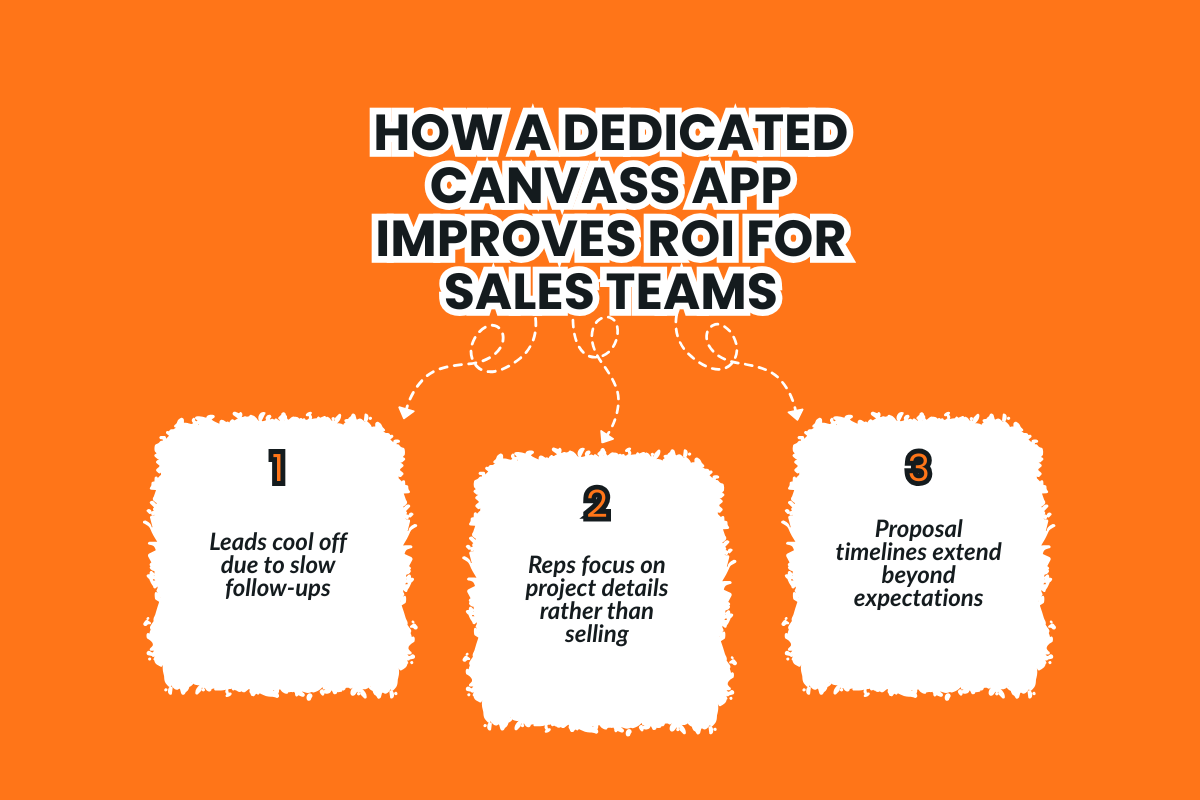
Traditional solar sales funnels were designed for slower markets with fewer leads and simpler processes.
Manual follow-ups and one-off proposal creation worked when deal volume was low. As solar companies scale, those approaches break down quickly.
Disconnected CRM tools, spreadsheets, and proposal systems create bottlenecks that sales reps must manually resolve. Leads stall, project details get lost, and proposal timelines stretch.
These inefficiencies reduce conversion rates and quietly increase operating costs. Consolidating workflows through solar sales software helps prevent fragility as teams and deal volume grow.
1. Leads are going cold due to slow follow-ups
Manual follow-ups rely heavily on individual habits and memory. Even short delays reduce engagement and give competitors an opening.
But sales automation ensures every lead receives timely contact through text messages, emails, and scheduled tasks, protecting early interest when buyer intent is highest.
2. Sales reps are chasing project details instead of selling
When project details live across multiple tools, sales reps spend more time coordinating than engaging customers. This slows momentum and hurts morale.
Solar sales software centralizes customer relationship management, project management, and tracking so reps can focus on conversations that actually move deals forward.
3. Proposal timelines are stretching longer than expected
Disconnected solar design and proposal tools increase design time and revision cycles. Each delay weakens buyer intent and creates risk. Faster, automated proposal generation helps maintain trust and keeps deals moving.
Why Do Sales Teams Need Solar Sales Software to Stay Competitive?
Solar sales software has become essential in a fast-moving market where buyers expect quick responses, clear explanations, and accurate proposals with transparent costs and financing options.
Sales teams now manage higher lead volumes, more complex projects, and tighter profit margins than ever before.
Now, using sales automation doesn't remove the human element of solar sales; it eliminates the friction that slows it down. By centralizing data and automating routine tasks, sales reps gain more time to engage customers and make confident decisions.
1. Speed-to-lead and automated follow-ups
Speed-to-lead is one of the strongest drivers of solar sales performance. Buyer interest is highest in the first few minutes after an inquiry, and delays often mean lost deals.
Automated lead scoring and instant follow-ups through text and email help sales teams respond immediately. Prospects feel acknowledged right away, conversations start sooner, and conversion rates improve without adding extra pressure on reps.
2. Predictable workflows for revenue forecasting
As solar businesses grow, tracking deals manually becomes unreliable. Solar sales software brings structure to the pipeline by
standardizing stages and tracking progress in real time.
Sales managers can clearly see which deals are moving, where opportunities are stalling, and what revenue is likely to close.
This visibility makes forecasting more accurate and helps teams address issues before they impact results.
3. Reduced burnout across sales teams
Manual sales operations quietly drain time and morale. Sales reps spend hours updating CRM systems and managing follow-ups rather than selling.
Automation handles those repetitive tasks in the background. As a result, sales reps spend more time building relationships and closing deals, while teams maintain performance without longer hours or additional headcount.
How Does Solar Sales Software Improve Lead Management and Sales Efficiency?
Lead capture sets the tone for the entire solar sales process. When intake is inconsistent, confusion follows, especially as lead volume grows across ads, referrals, canvassing, and partners.
Sales reps often inherit incomplete details, messy data, or unclear ownership, slowing engagement from the start. Solar sales software consolidates leads into a single platform that acts as a reliable system of record.
CRM data, project details, and sales activities live together, preventing missed opportunities, reducing handoff errors, and improving efficiency across the funnel as the business scales.
1. Centralized intake across all lead sources
When leads are scattered across inboxes, spreadsheets, and disconnected CRM tools, sales reps waste time searching for information instead of engaging prospects.
This fragmentation increases the risk of duplicate follow-ups and missed leads. Centralized intake consolidates leads into a single location, improving response times, accountability, and the customer experience.
2. Automated lead routing and assignment
Manual lead assignment delays engagement and creates uneven workloads. Solar sales software automatically routes leads based on territory, availability, or predefined rules.
Field sales reps receive complete context instantly, enabling faster, more confident follow-ups and consistent lead handling.
3. Instant follow-ups that boost conversion rates
Speed matters in solar sales, where buyer intent peaks immediately after inquiry. Automated texts and emails engage customers right away, reinforcing professionalism.
Consistent speed-to-lead becomes a competitive advantage that improves contact and conversion rates and builds early trust.
For a deeper look at centralized lead management, read How Solar CRM Transforms Lead Management, which provides a thorough explanation of the process.
How Does Sales Automation Improve Qualification and Sales Readiness?
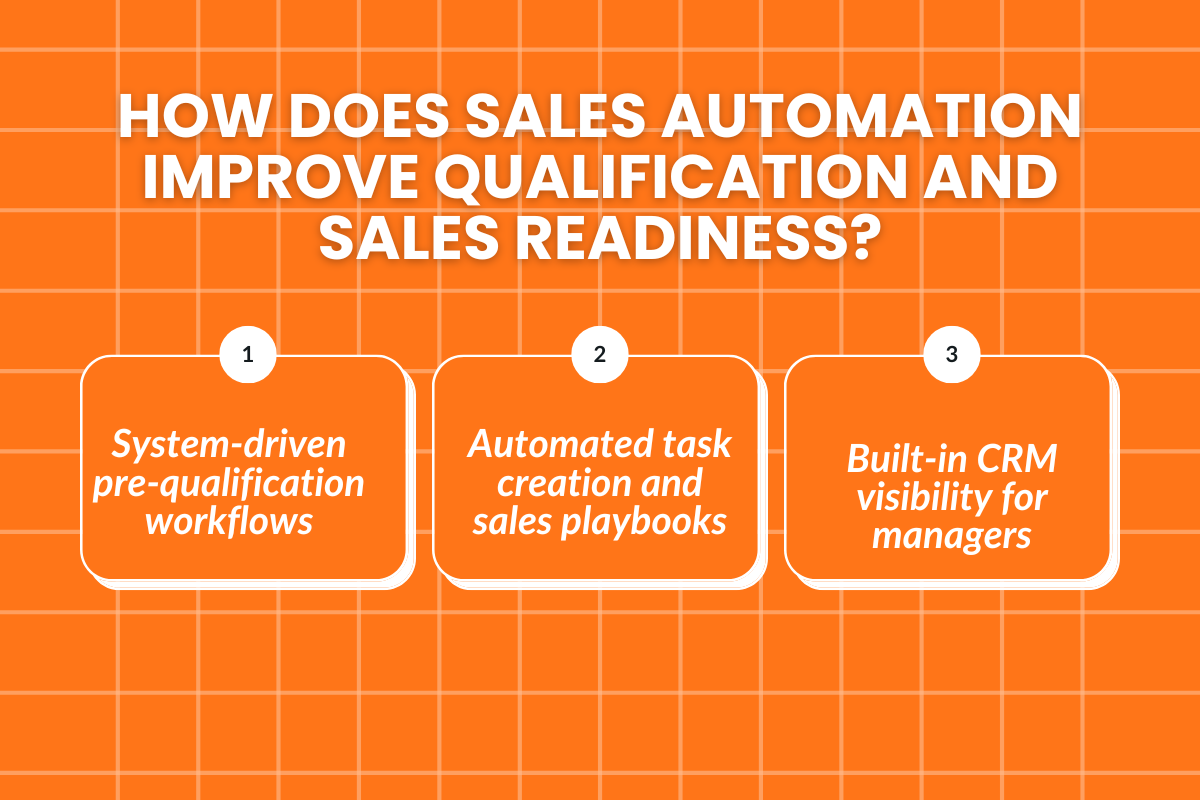
Not every lead entering the funnel is ready to buy. Without structure, sales reps chase low-intent prospects while serious buyers wait. As lead volume increases, inconsistent qualification becomes costly.
Sales automation standardizes how leads are evaluated and advanced, helping reps focus on high-quality opportunities.
Let's understand how it improves qualification and sales readiness:
1. System-driven pre-qualification workflows
Automation captures key details before a sales rep ever makes contact. Information like budget range, roof ownership, energy usage, and expected timelines is collected upfront.
Sales reps receive clear readiness signals, allowing more intelligent prioritization and stronger conversations.
2. Automated task creation and sales playbooks
Once a lead qualifies, tasks are automatically triggered. Calls, site assessments, and follow-ups follow predefined playbooks.
Reps don’t have to remember what comes next. Nothing slips through the cracks, sales cycles shorten, and execution stays consistent across the team.
3. Built-in CRM visibility for managers
Managers get real-time visibility into lead status, activity levels, and deal movement. Instead of reacting after deals stall, they can step in early with targeted coaching.
This leads to better decisions, stronger sales conversations, and a team that stays aligned on priorities rather than guessing what to work on next.
How Does Solar Sales Software Reduce Proposal Time and Improve Accuracy?
Proposal delays are one of the most common reasons solar deals lose momentum. Missing information, disconnected tools, and manual data entry slow everything down and increase the risk of errors.
Solar sales software solves this by carrying accurate data from the first interaction straight into design and proposal workflows. Instead of rebuilding information at every step, teams work from the same verified inputs.
With integrated visualization, 3D layouts, and shading analysis, proposals come together faster and with far less back-and-forth. Clear, accurate proposals keep buyers engaged, build trust early, and protect margins by reducing costly mistakes.
1. Digital site surveys and aerial imagery
Digital surveys and aerial imagery capture roof details quickly, eliminating the need for repeated site visits. Integrated design tools use this data to accelerate engineering and minimize errors, enabling faster proposal delivery.
2. Seamless handoff to solar design and proposals
When sales data flows directly into design and proposal tools, rework drops dramatically. Sales and design teams operate from a single source of truth, reducing miscommunication and duplicate effort.
Proposals go out faster, require fewer revisions, and reflect more accurate system designs and pricing from the start.
Many solar companies achieve their most significant efficiency gains at the proposal stage; this blog explains why every solar business needs a proposal tool.
How Does Proposal Automation Help Solar Sales Teams Close More Deals?
In solar sales, the proposal is often the moment of decision. Proposal automation helps ensure that the moment builds confidence instead of hesitation.
When buyers receive a clear, professional proposal that explains what they’re getting, how it’s priced, and why it makes sense, decisions come faster. Proposal automation improves the overall customer experience by reducing delays, eliminating confusion, and presenting information in a way that’s easy to understand and trust.
1. One-click custom proposals with accurate pricing
Automated templates pull data directly from CRM, design, and pricing tools. This removes manual entry, reduces errors, and keeps pricing consistent.
Sales reps spend less time formatting documents and more time walking customers through the proposal and answering real questions.
2. Real-time updates and version control
Any change to the system design, pricing, or financing automatically updates the proposal. Everyone involved always sees the latest version.
This eliminates confusion during negotiations and helps maintain trust by ensuring there are no outdated numbers or surprise changes.
3. E-signatures and financing options
E-signatures remove friction at the final step, allowing customers to move forward immediately instead of waiting on paperwork.
Integrated financing options help buyers compare payment plans directly within the proposal, making decisions easier and keeping deals moving without unnecessary back-and-forth. Together, they keep momentum high and shorten sales cycles.
How Can Solar Companies Improve Sales Performance Using Real-Time Data?
1. Funnel analytics and performance tracking
Real-time funnel analytics reveal exactly where leads stall or drop off. Conversion rates, stage durations, and activity levels highlight bottlenecks that slow down deals.
With this visibility, teams can quickly adjust workflows, messaging, or follow-up strategies to keep opportunities moving through the pipeline.
2. Sales velocity and rep performance insights
Performance reports show which reps close deals faster, which stages take the longest, and what behaviors drive results.
This data turns coaching into a focused, actionable process. Instead of generic feedback, managers can give specific guidance that helps reps improve consistently and predictably.
3. Scaling operations without increasing complexity
As lead volume and team size grow, real-time visibility becomes even more critical. A unified platform keeps data organized and accessible, even across multiple markets or regions.
Sales leaders maintain control without adding layers of manual tracking, allowing the business to scale efficiently without operational chaos.
Teams using integrated solar sales software often see measurable improvements in sales performance, and this perspective on Can Solar Software Double Your Sales During a Downturn? Provides helpful real-world context.
What Are the Key Features That Make Solar Sales Software a Game Changer?
The real value of solar sales software lies in how effectively it supports daily selling, not in the number of tools it includes.
High-performing solar companies focus on software that reduces friction, improves execution speed, and maintains consistency across the entire sales process.
The most impactful platforms typically offer:
1. Centralized Lead and Customer Management
- A Single Source of Truth for Every Lead: All customer details, conversations, documents, and project data are stored in one place. This eliminates confusion caused by scattered emails, spreadsheets, and disconnected tools.
- Clear Ownership and Accountability: Each lead is clearly assigned, tracked, and time-stamped throughout the funnel. There’s no ambiguity around who owns follow-ups or next steps.
2. Speed-to-Lead Automation
- Instant Lead Capture and Follow-Ups: New inquiries trigger immediate responses through text or email, engaging prospects while interest is highest. This prevents leads from cooling off while reps are busy or offline.
- Consistent Engagement Without Manual Work: Automated sequences ensure follow-ups happen on time without reps needing reminders. Every lead receives consistent communication regardless of workload or time of day.
3. Built-In Qualification and Sales Readiness Signals
- Structured Pre-Qualification Questions: Key information like roof ownership, energy usage, budget range, and project timeline is collected early. This filters out low-intent leads before they consume sales time.
- Clear Priority Indicators for Sales Reps: Leads are scored or flagged based on readiness signals, helping reps prioritize high-intent opportunities. This prevents chasing unqualified prospects while serious buyers wait
4. Integrated Design, Shading, and Proposal Workflows
- Seamless Transition From Lead to Proposal: Customer and site data flows directly into design and proposal tools without re-entry. This removes handoff delays between sales and design teams. Proposals move faster because everyone works from the same accurate information.
- Fewer Errors and Faster Turnaround: Integrated workflows reduce mismatched data, outdated designs, and version confusion. Errors that usually surface late are caught early.
5. Built-In Financing and E-Signatures
- Flexible Financing Options in One Place: Cash, loan, lease, and PPA options are presented clearly within the proposal. Buyers can compare choices without additional calls or documents.
- Faster Deal Closure: E-signatures eliminate delays caused by printing, scanning, or manual approvals. Buyers can move forward the moment they’re ready.
One Platform vs Disconnected Tools: Why One Platform Wins for Solar Businesses
Most solar companies find that their tech stack becomes messy with separate tools for lead management, proposals, CRM, and spreadsheets. While functional individually, manual data transfer causes delays, errors, and missed follow-ups, harming sales.
This is where the difference between using one platform and juggling disconnected tools becomes impossible to ignore.
| Aspect | One Platform | Disconnected Tools |
|---|---|---|
| Lead Management | All leads captured, tracked, and updated in one place | Leads scattered across inboxes, CRMs, and spreadsheets |
| Sales Workflow | Automated, consistent workflows across sales teams | Manual handoffs and inconsistent processes |
| Proposal Speed | Faster proposal generation using shared project data | Delays caused by switching tools and re-entering data |
| Data Accuracy | Single source of truth for customer and project details | High risk of outdated or conflicting information |
| Manager Visibility | Real-time dashboards for sales performance and pipeline | Limited visibility until reports are manually compiled |
| Scalability | Easy to add reps, markets, or products without chaos | Complexity increases with every new tool or hire |
For growing solar businesses, choosing one platform over fragmented tools directly impacts efficiency, sales performance, and long-term scalability.
When solar sales software operates as one connected system, teams move faster with fewer mistakes. Disconnected tools, on the other hand, make growth more complicated than it needs to be.
In a Nutshell
Solar sales software brings structure where chaos once lived. By centralizing lead management, automating follow-ups, standardizing qualification, and accelerating proposal delivery, solar companies can move faster without sacrificing accuracy or customer experience.
The most successful solar businesses aren’t winning because they have more leads or better pitches. They’re winning because their sales funnel is built to scale.
When data flows seamlessly, actions happen on time, and proposals arrive quickly and clearly, customers feel confident, teams stay focused, and growth becomes predictable instead of stressful.
Why Sunbase?
Sunbase is for solar companies needing structured yet flexible workflows. It supports real-world sales processes rather than generic CRM tools, ensuring speed, visibility, and consistency.
Standardized workflows, accurate proposals, and performance tracking simplify onboarding and reduce manual tasks, enabling teams to focus on customer engagement and confidently close deals.
This makes Sunbase especially effective for solar businesses focused on improving efficiency, boosting sales performance, and closing more deals without adding complexity. Explore what changes when your funnel finally runs as one system.
Book a demo today and see how it fits into your sales workflow.
FAQs
1. What is solar sales software, and how does it help solar companies grow?
Solar sales software helps solar companies manage leads, automate follow-ups, generate accurate proposals, and track sales performance. Centralizing customer relationship management, project management and tracking, and sales automation improves efficiency, reduces manual tasks, and supports scalable growth.
2. How does solar sales software improve conversion rates and close more deals?
Many solar companies use sales software to boost engagement and conversion rates by enabling faster responses, automated follow-ups, accurate proposals, and real-time data. These tools help reps engage customers promptly and close deals efficiently.
3. Why do solar companies struggle without sales automation?
Without sales automation, solar companies rely on manual workflows, spreadsheets, and disconnected CRM tools. This leads to slower ups, poor lead management, reduced efficiency, and missed opportunities as lead volume increases.
4. How does solar sales software support sales reps and field sales reps?
Solar sales software improves productivity by automating data entry, managing leads, and providing mobile access. Field sales reps can update project details, generate proposals, track leads, and engage customers directly from the field.
5. Can solar sales software improve project management and proposal accuracy?
Yes, solar sales software integrates project management, solar design, and proposal generation into a single platform. This reduces errors, shortens design time, and ensures customers receive accurate proposals they can trust.
6. How does solar sales software help managers make better decisions?
Solar sales software provides real-time dashboards, performance tracking, and custom reports. Managers gain visibility into sales activities, conversion rates, and bottlenecks, enabling data-driven decision-making across sales teams.
One Platform.
Zero Chaos.
Run Your Entire Business in One Platform
Sunbase replaces your CRM, proposals, scheduling, job tracking, and reporting tools — all inside one clean, connected platform.
About Sunbase
The All-In-One Platform to Run Your Entire Business
Sunbase helps you organize operations, streamline daily workflows, and manage everything - from first customer contact to final project deliver- in one connected system.
Our Mission
- Organize your business.
- Optimize your workflow.
- Automate your dailytasks
Why Businesses Choose Sunbase
One Connected Workflow
Replace scattered tools and manual processes with a single platform that brings together your team, tasks, customers, jobs, and performance data.
🌎 Global Presence
Serving the United States, Canada, India, LATAM, Australia, and 10+ international markets.
👥 11,000+ Users
Trusted by contractors, installers, project managers, sales teams, and field technicians.
🏗️ Built for All Sizes
From small contracting teams to fast-growing enterprises, Sunbase adapts to your workflow.
Stop Managing Your Business Manually. Automate It.
Sunbase automates workflows, reduces mistakes, and helps your team get more done - without hiring extra staff or juggling multiple tools.
Still Managing Your Business Across Multiple Tools?
Bring your CRM, proposals, projects, and operations into one platform built for contractors.

