
Think about it, a solar proposal that looks less like a contract and more like a personalized roadmap, clear savings, a 3D roof model, and financing options the homeowner can tweak on the spot.
That’s where the industry is headed. Today’s buyers expect speed, transparency, and a visual experience; tomorrow’s winners will be the teams that integrate accurate data, automated calculations, and interactive visuals into every solar proposal.
This blog explores how integrating advanced technology can revolutionize solar proposals, making them more effective, accurate, and customer-friendly.
How Technology Is Shaping the Future of Solar Proposals
Solar proposals are evolving from static PDFs into interactive, data-rich sales tools that build customer trust and accelerate decision-making. Integrated platforms now combine real-time energy modeling, shading analysis, 3D visuals, financing options, and CRM workflows so proposals are accurate, personalized, and easy to understand.
This matters because homeowners decide based on clarity and timing. A polished, data-driven proposal removes doubt and shortens the sales cycle.
Modern solar proposals also provide analytics to track engagement and A/B test content, helping teams continuously improve conversion rates. In short, the right integrations turn proposals from paperwork into a conversion engine.
Key Takeaways
- Modern Solar Proposals must be accurate, visually appealing, and interactive to reduce homeowner hesitation and speed decision-making.
- Real-time data and automation reduce calculation errors and drastically shorten proposal turnaround time.
- 3D visuals, shading analysis, and interactive financing options make proposals easier to understand and compare.
- Integrations (CRM, financing, permitting) and analytics let teams track engagement and continuously improve proposal success.
- Compliance and permit workflows are supported by software but still require local validation, software reduces friction, not legal risk.
The Solar Industry is Changing Faster Than You Think
While you're still sending PDFs, forward-thinking installers are wowing customers with next-gen proposals. It's not just about solar panels anymore; it's about the entire customer journey. See how it starts with proposals.
Overview of Solar Proposals

A solar sales proposal serves as a comprehensive plan that outlines the specifics of a solar project, including cost estimates, energy savings, installation timelines, and system performance projections.
These proposals are crucial for both sales teams and customers, as they provide the detailed information needed to make informed decisions. A well-crafted solar proposal can differentiate a company from its competitors, building trust and confidence in prospective customers.
The Need for Technological Integration
Despite their importance, creating effective solar proposals can be challenging. The lack of real-time data integration can lead to inaccuracies, and the one-size-fits-all approach fails to meet the growing demand for personalized solutions for a specific solar system and a solar installer.
These challenges highlight the need for technological integration, such as solar proposal software, to enhance the proposal process.
Integrating digital tools can streamline the proposal creation, enhance data accuracy, and provide a more engaging customer experience. This technological shift improves efficiency and meets the evolving expectations of customers who seek transparency, customization, and speed.
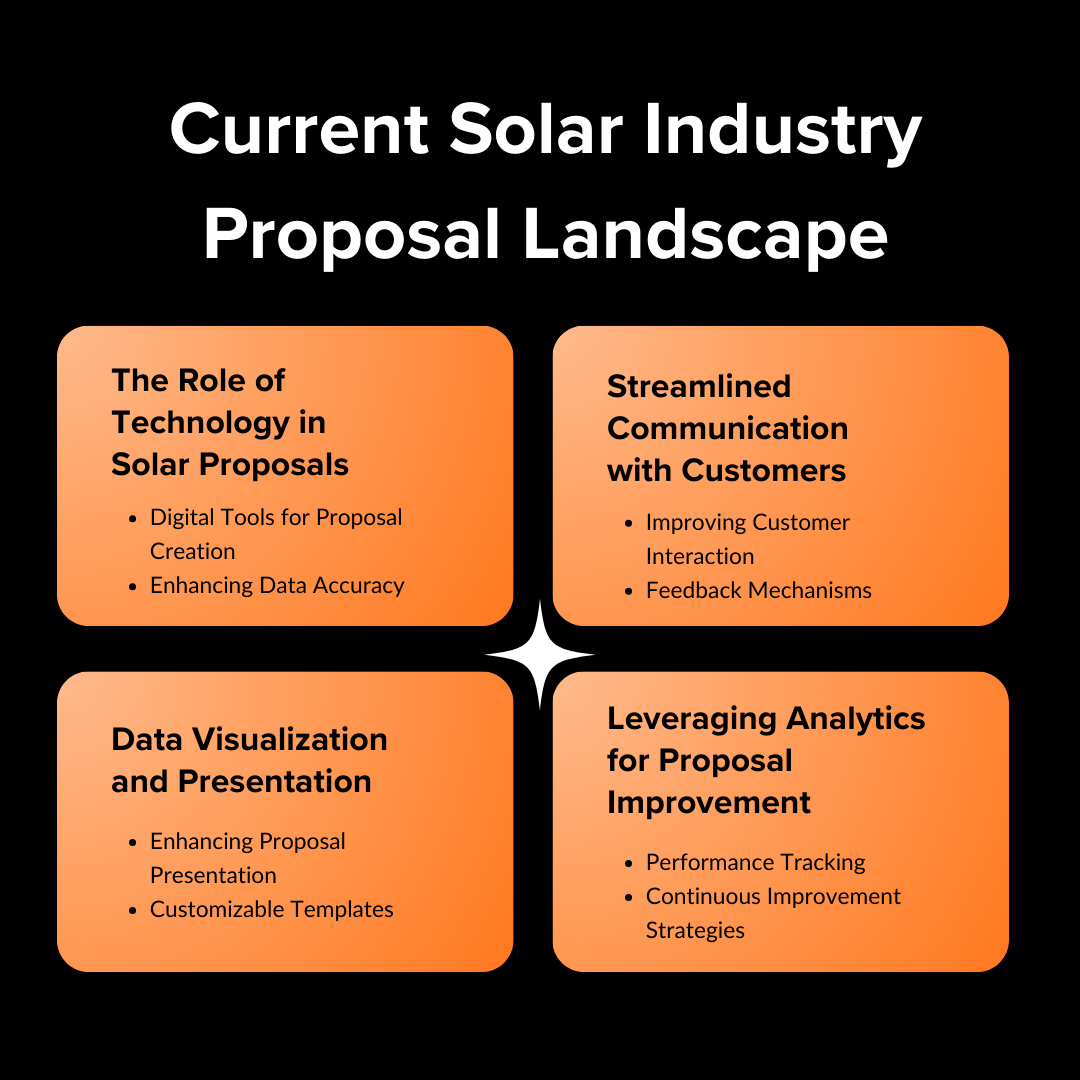
Understanding the Current Solar Industry Proposal Landscape
Traditional Proposal Processes
Conventional methods of creating solar proposals typically involve using spreadsheets and manual calculations.
Sales teams and solar installers gather data from various sources, enter it manually, and create static documents that outline project details, including the installation process, energy production, financial analysis, etc., but lack efficient sales management tools.
While this process provides the necessary information, it is often slow, labor-intensive, and limited in scope. The inability to quickly update or customize proposals can result in lost opportunities and dissatisfied customers.
Changing Customer Expectations
Today’s customers expect more from their solar proposals. They demand transparency in pricing and performance projections, customized solutions tailored to their specific needs, and a quick turnaround time, all while addressing concerns about rising electricity costs.
These evolving expectations drive the need for renewable power companies to adopt more sophisticated tools that can deliver detailed, personalized, and visually appealing proposals efficiently.
1. The Role of Technology in Solar Proposals
a. Digital Tools for Proposal Creation
Solar Proposal Software Solutions
There are numerous software solutions available that simplify the creation of a solar proposal template.
These platforms offer features such as drag-and-drop interfaces, pre-built templates, and integration with design tools, making it easier to create professional and comprehensive proposals.
Customization Features
Advanced proposal software provides customization options that allow sales teams to tailor proposals to each customer’s unique needs.
These tools can include personalized energy usage assessments, customized solar design options, financial options, and project timelines, ensuring that each proposal is relevant and compelling.
b. Enhancing Data Accuracy
Real-Time Data Integration
Integrating real-time data into proposals can significantly enhance their accuracy.
By incorporating up-to-date information on energy consumption, site conditions, and local regulations, solar professionals can utilize these tools to provide more precise estimates and projections.
This real-time integration ensures that the proposals reflect the most current and relevant data, increasing their reliability.
Automated Calculations for Solar Design
Automation tools can perform complex calculations to optimize energy savings, return on investment (ROI), and financing options using real-time data inputs. These automated calculations reduce the risk of human error and speed up the proposal creation process, allowing sales teams to deliver detailed and accurate proposals quickly
Find out for yourself: Manual vs. Automated Proposal Management: Which One Saves You More Money?
2. Streamlined Communication with Customers
a. Improving Customer Interaction
Client Portals
Dedicated client portals enhance the customer experience by providing a centralized platform where customers can access their proposals, track project progress, and communicate with sales teams.
These portals offer transparency and convenience, enabling customers to stay informed and engaged throughout the proposal process.
Interactive Proposal Features
Interactive features such as diagrams, simulations, and virtual tours help customers visualize their solar systems and understand the benefits more clearly.
These interactive elements make the proposals more engaging and easier to comprehend, improving the overall customer experience.
b. Feedback Mechanisms
Incorporating Customer Feedback
Technology can facilitate the collection of customer feedback during the proposal stage, allowing companies to refine their offerings based on customer input.
This iterative process ensures that proposals meet customer expectations and address any concerns promptly.
Follow-Up Automation
Automated follow-up emails and notifications keep customers engaged throughout the decision-making process.
These automated systems can send reminders, provide additional information, and address any questions, ensuring that customers remain informed and interested.
3. Data Visualization and Presentation
a. Enhancing Proposal Presentation
Visual Tools and Infographics
Visual aids such as charts, graphs, and infographics can make complex data more digestible and engaging. These tools help customers understand the technical and financial aspects of the proposal, making it easier for them to make informed decisions.
3D Modeling and Simulations for Solar Panels
Advanced modeling software allows customers to visualize their solar installation in real-world settings. These 3D models and simulations provide a realistic view of how the solar panels will look and perform, enhancing the customer’s confidence in the project.
b. Customizable Templates
Branding Opportunities
Customizable templates enable companies to maintain brand consistency while personalizing proposals. These templates can incorporate company logos, color schemes, and messaging, ensuring that each proposal reflects the company’s brand identity.
Pre-Built Content Libraries
Content libraries with pre-built elements allow sales teams to assemble proposals based on successful previous projects quickly. This repository streamlines proposal creation and ensures all relevant information is included.
4. Leveraging Analytics for Proposal Improvement
a. Performance Tracking
Analyzing Proposal Success Rates
Analytics tools can track which proposal elements lead to successful conversions for sales reps, providing valuable insights into what works and what doesn’t.
Customer Behavior Insights
Understanding how customers interact with proposals can inform future strategies. Analytics can reveal which parts of the proposal customers spend the most time on, what questions they ask, and where they drop off, helping companies improve the proposal process.
b. Continuous Improvement Strategies
A/B Testing Proposals
A/B testing different proposal formats or content can determine what resonates best with customers. This testing method allows companies to experiment with various approaches and select the most effective ones.
Iterative Feedback Loops
Creating feedback loops using analytics ensures continuous improvement in proposal strategies. Companies can make iterative adjustments that enhance the effectiveness of their proposals by regularly reviewing performance data and customer feedback.
Must Read: A Complete Guide to Using Solar Proposal Software: From Quoting to Contract
How Sunbase Solar Proposal Software Elevates the Entire Proposal Experience
Creating a solar proposal isn’t just a sales task anymore; it’s a customer experience moment. And that’s exactly where Sunbase Solar Proposal Software makes a difference. It doesn’t simply speed up proposal creation; it transforms the entire journey from first contact to final approval.
Sunbase brings automation, accuracy, and design intelligence into one platform so your team can build proposals that are faster, cleaner, smarter, and far more persuasive. Instead of juggling 5 different tools, Sunbase centralizes everything: solar design, pricing, financing, compliance checks, and customer communication into a single, streamlined workflow.
Here’s what sets Sunbase apart:
- Automated Financial + Energy Modelling:
No more spreadsheets. Sunbase calculates ROI, payback periods, system sizing, and savings projections instantly with real-time data. - Customizable & Brand-Perfect Proposals:
Build stunning proposals that use your brand colors, logos, layouts, and messaging — every customer gets a polished, personalized presentation. - Integrated Solar Design Tools:
Generate accurate layouts, shading analysis, and performance simulations without switching software. - Multiple Financing Options in One Click:
Present loans, cash offers, PPAs, incentives, and rebates dynamically based on the customer’s profile and location. - E-Signatures & Auto-Fill for Faster Closures:
Customers can sign instantly. No delays, no back-and-forth, no friction. - Real-Time Collaboration & Client Portals:
Keep customers in the loop with live updates, chat, and proposal access, boosting transparency and trust.
In short, Sunbase turns every proposal into a professional, interactive, and highly compelling experience that accelerates decision-making and boosts close rates.
You now understand what's coming. Discover more about: How to Reduce Soft Costs in Solar: The Impact of Proposal and Design Tools.
In a nutshell
As Solar expert Jane Doe states, "In today's competitive market, a well-crafted solar proposal can make all the difference. It’s not just about the numbers; it’s about creating a compelling story that resonates with customers."
The future of solar proposals lies in seamlessly integrating technology to enhance the customer experience. These innovations meet customers' evolving expectations, streamline the proposal process, and ultimately drive business growth.
Embracing these technological advancements will position solar companies at the forefront of the industry, enabling them to deliver superior proposals that win more projects and delight customers.
You've Seen the Future. Now It's Time to Build It With Sunbase
You are one click away from making your solar proposals stand out! Stop imagining what next-gen proposals look like.
Get your personalized demo and experience the future of solar sales today. Sunbase makes it real.
FAQ's
1. What makes a modern solar proposal different?
Modern proposals combine accurate production models, visuals (3D/AR), financing comparisons, and personalized financial timelines. They’re interactive and integrated with CRMs, enabling faster approvals and fewer follow-ups.
2. Can Solar Proposal Software guarantee compliance with local permitting?
No software guarantees legal approval. Good platforms automate document generation and flag common local requirements, but installers must verify and submit permits per local authority rules.
3. How do visuals improve customer decisions?
3D models, shading maps, and production charts translate technical data into clear, relatable benefits—helping homeowners see expected energy, savings, and aesthetics instantly.
4. What integrations should I expect in proposal tools?
Look for CRM sync, financing partners, solar design tools (PV layout), utility rate/incentive feeds, e-signature, and basic permitting/document generation.
5. How do I measure proposal performance?
Use engagement tracking (opens, time spent, actions taken), proposal-to-sign conversion rate, time-to-close, and A/B testing results to identify high-performing content and format.
One Platform.
Zero Chaos.
Run Your Entire Business in One Platform
Sunbase replaces your CRM, proposals, scheduling, job tracking, and reporting tools — all inside one clean, connected platform.
About Sunbase
The All-In-One Platform to Run Your Entire Business
Sunbase helps you organize operations, streamline daily workflows, and manage everything - from first customer contact to final project deliver- in one connected system.
Our Mission
- Organize your business.
- Optimize your workflow.
- Automate your dailytasks
Why Businesses Choose Sunbase
One Connected Workflow
Replace scattered tools and manual processes with a single platform that brings together your team, tasks, customers, jobs, and performance data.
🌎 Global Presence
Serving the United States, Canada, India, LATAM, Australia, and 10+ international markets.
👥 11,000+ Users
Trusted by contractors, installers, project managers, sales teams, and field technicians.
🏗️ Built for All Sizes
From small contracting teams to fast-growing enterprises, Sunbase adapts to your workflow.
Stop Managing Your Business Manually. Automate It.
Sunbase automates workflows, reduces mistakes, and helps your team get more done - without hiring extra staff or juggling multiple tools.
Still Managing Your Business Across Multiple Tools?
Bring your CRM, proposals, projects, and operations into one platform built for contractors.

