
Solar design optimization maximizes a system's energy yield, drastically reducing the overall environmental footprint. By accurately calculating factors like panel tilt, azimuth, and row spacing, optimized systems require fewer panels to produce the same amount of power.
Every kilowatt of clean energy starts with one critical decision: the design. A well-optimized solar design doesn't just determine where panels are placed; it influences energy production, system efficiency, installation costs, and the long-term environmental impact of every project.
Even the highest-quality solar panels can't perform at their full potential if the system is poorly designed. That's why solar companies are moving beyond manual planning and embracing modern solar design software.
With intelligent layout optimization, shading analysis, performance simulations, and accurate energy forecasting, these platforms help installers maximize every rooftop while reducing design errors and project delays.
In this guide, you'll learn how solar design software optimization contributes to a more sustainable future, the challenges traditional design methods create, and how the right software can help you build cleaner, more efficient solar systems.
Key Takeaways
- Solar design optimization helps solar energy systems generate more clean electricity.
- Solar design optimization reduces greenhouse gas emissions by using less energy to create the same amount of power.
- Optimized systems are not only better for the environment, but they can also save you money in the long run.
How Does Solar Design Optimization Support a More Sustainable Future?
Every solar project has the same goal: generate as much clean energy as possible. But achieving that goal depends on more than installing high-quality panels. The way a solar system is designed directly affects its energy output, resource efficiency, carbon footprint, and long-term environmental impact.
This is where solar design optimization makes a difference. By using advanced solar design software to analyze shading, roof geometry, panel placement, and energy production, solar professionals can create systems that generate more electricity with fewer resources.
The result is not only better-performing installations but also a meaningful contribution to a cleaner and more sustainable future.
What Challenges Do Businesses Face with Traditional Solar Design Methods?
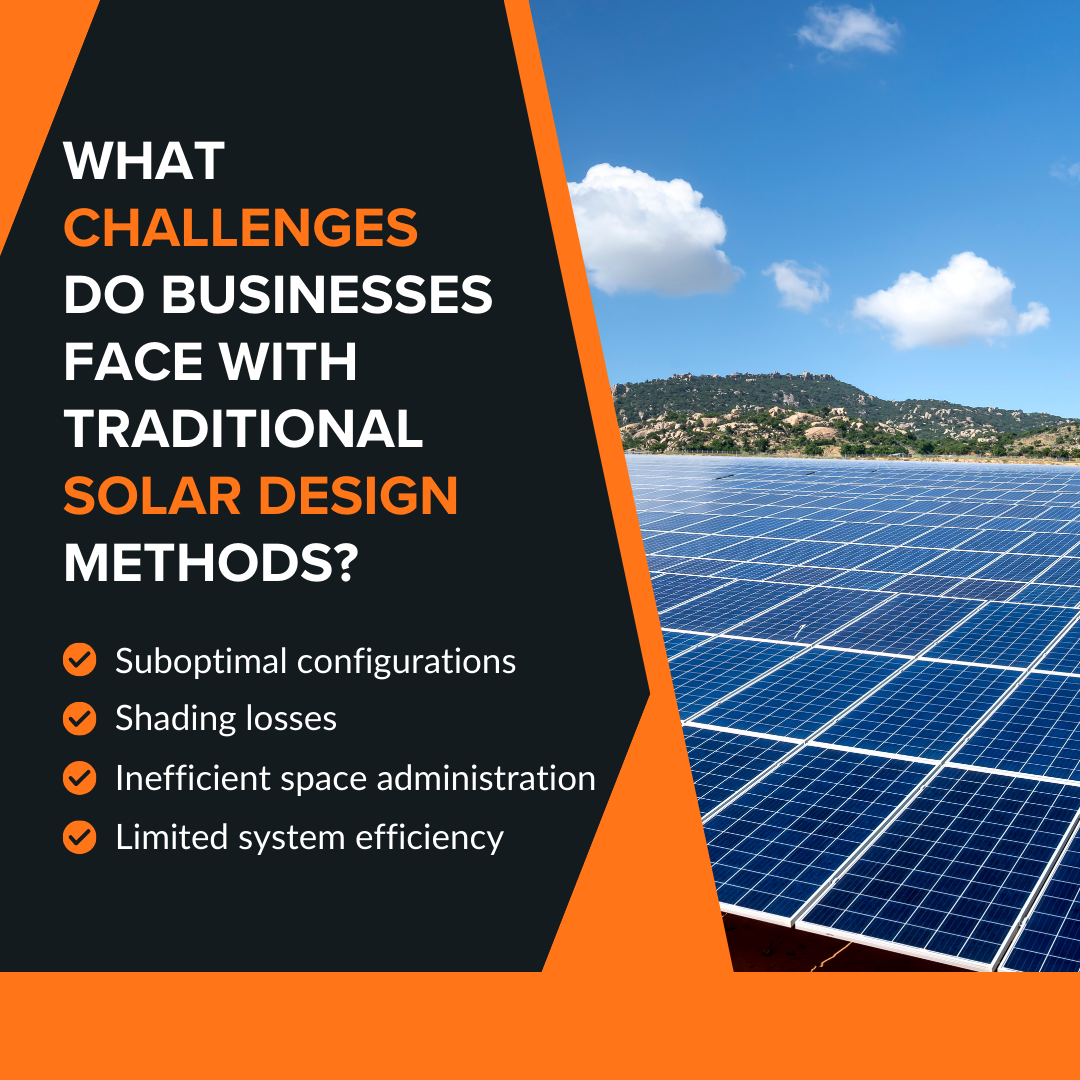
Imagine a solar panel system randomly placed on a roof, with panels scattered in shady corners and facing less-than-ideal directions. This, unfortunately, is how many solar systems are designed.
Traditional methods often lead to:
1. Suboptimal Configurations
Solar panels that are not set up efficiently significantly reduce electricity generation and system performance. For instance, panels placed under shade or facing the wrong direction produce less electricity.
2. Shading Losses
Solar panels placed improperly can cause shading losses and reduced energy production, impacting the system's performance and lowering its overall output.
3. Inefficient Space Administration
Poor planning can waste usable rooftop space, resulting in wasted space and resources and reduced energy production.
4. Limited system efficiency
Outdated methods fail to maximize the environmental and economic benefits of solar energy. This affects the overall environmental and economic benefits of solar power.
What is Solar Design Optimization?
Solar design optimization is refining photovoltaic (PV) system designs to achieve maximum efficiency, performance, and sustainability.
This involves thorough analysis, strategic placement of PV panels, and the use of advanced solar software to address challenges such as shading losses, roof constraints, and temperature coefficients while maximizing system performance.
Why is Solar Design Optimization Important?
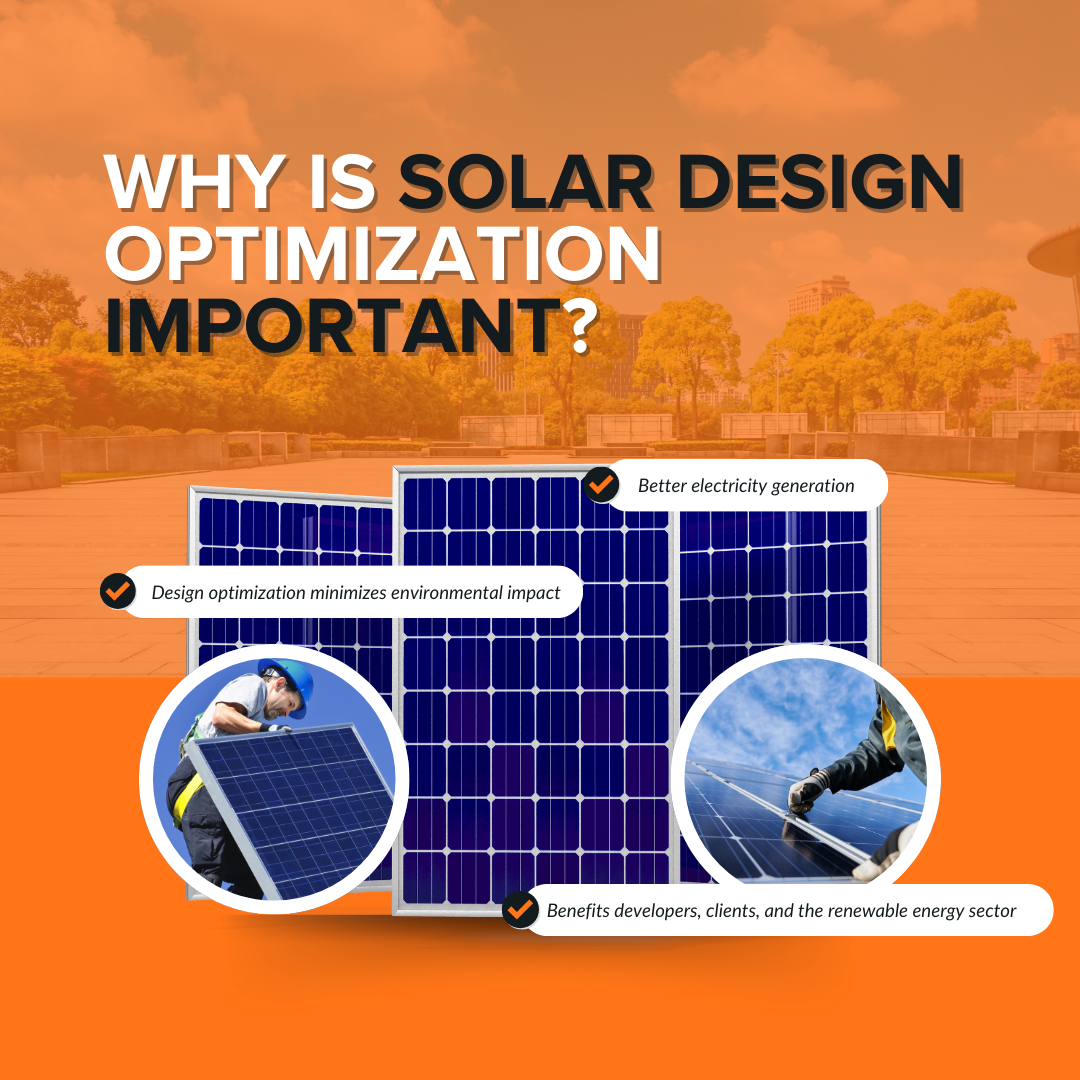
Solar design optimization is more than just getting the most bang for your buck. It's about maximizing the environmental benefits of solar energy. Here's how:
- The importance of system efficiency: The more electricity your solar panels generate, the less reliance there is on fossil fuels and greenhouse gas emissions.
- How design optimization minimizes environmental impact: By capturing more sunlight and reducing energy losses, optimized systems require fewer solar panels to generate the same amount of electricity.
- This translates to a smaller environmental footprint throughout the system's entire lifecycle, from manufacturing to operation.
Benefits for Everyone: Developers, Clients, and the Renewable Energy Sector
Solar design optimization isn't just good for the environment, it benefits everyone involved:
- Developers: They can offer their clients more efficient systems, leading to higher customer satisfaction and positive word-of-mouth.
- Clients: They can enjoy greater electricity production, lower energy bills, and the satisfaction of knowing they're making a bigger environmental impact, contributing to a more sustainable future, and reducing the risk of future climate-related disasters like the LA Forest Fires.
- The renewable energy sector: As a whole, it benefits from solar power's increased efficiency and environmental performance, making it a more attractive option for a sustainable future.
How Solar Design Optimization Benefits Sustainable Energy Efforts
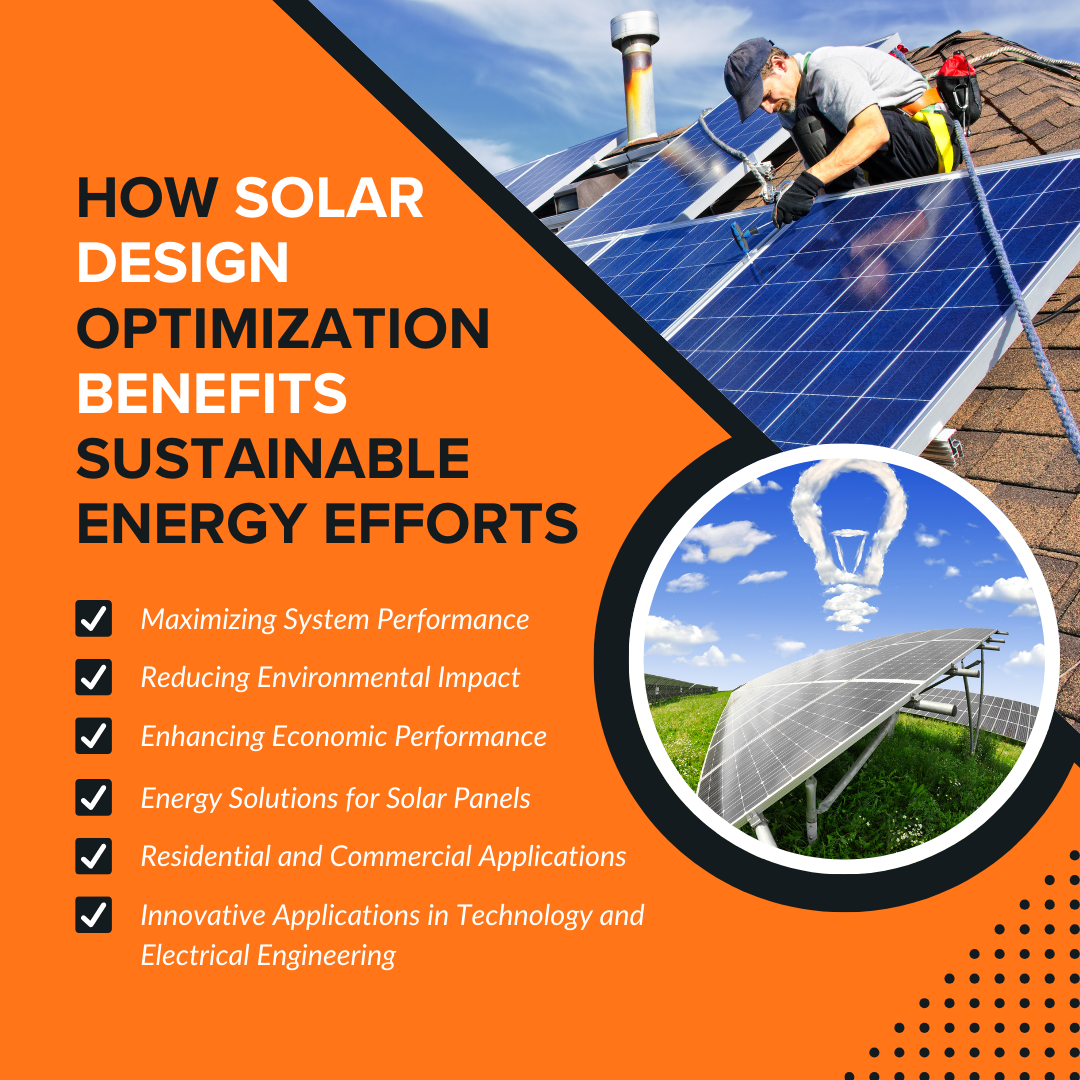
Solar design optimization is key to making sustainable energy better and more efficient. It helps solar systems work at their best by improving everything from how panels are placed to how much energy they produce.
Getting the most out of solar energy benefits developers and users by making clean energy more affordable and effective. Let’s examine how solar design optimization supports a greener, more energy-efficient future.
1. Maximizing System Performance
Optimized systems are designed to operate at peak efficiency, generating maximum electricity possible from available sunlight.
This translates to a higher energy yield and a greater contribution to renewable energy generation while reducing waste, saving resources, and lowering environmental impact.
2. Reducing Environmental Impact
By increasing the efficiency of solar power systems, we reduce the need for fossil fuels, significantly decreasing greenhouse gas emissions. This directly contributes to our fight against climate change and improving air quality.
3. Enhancing Economic Performance
While the initial investment in optimized design might be slightly higher, the long-term benefits, such as increased energy production and reduced maintenance costs, can highly improve the system's economic performance.
4. Energy Solutions for Solar Panels
Solar design optimization finds applications across various sectors, from residential rooftop systems to large-scale commercial and industrial solar farms.
This approach maximizes energy production while minimizing costs and environmental impact.
5. Residential and Commercial Applications
The requirements for solar design vary greatly, from rooftop home installations to large-scale solar farms for businesses and industries.
Optimized designs ensure maximum energy production and reduced environmental impact to meet the unique needs of each application.
6. Innovative Applications in Technology and Electrical Engineering
Advancements in technology, such as artificial intelligence and machine learning, are being used to improve solar design optimization tools. This allows for more precise analysis and predictions, leading to even greater efficiency gains.
More about Innovative Technologies: Advanced tools and software, including technologies developed with the support of organizations like the National Aeronautics and Space Administration, help with precision in electrical engineering and system configuration. These innovations help achieve efficient, high-performance solar systems.
Find out how advanced Solar CRM Workflows for High-Volume Sales Teams help to achieve these high-performance solar systems.
Why Sunbase is the Go-To Partner for Solar Design Optimization?
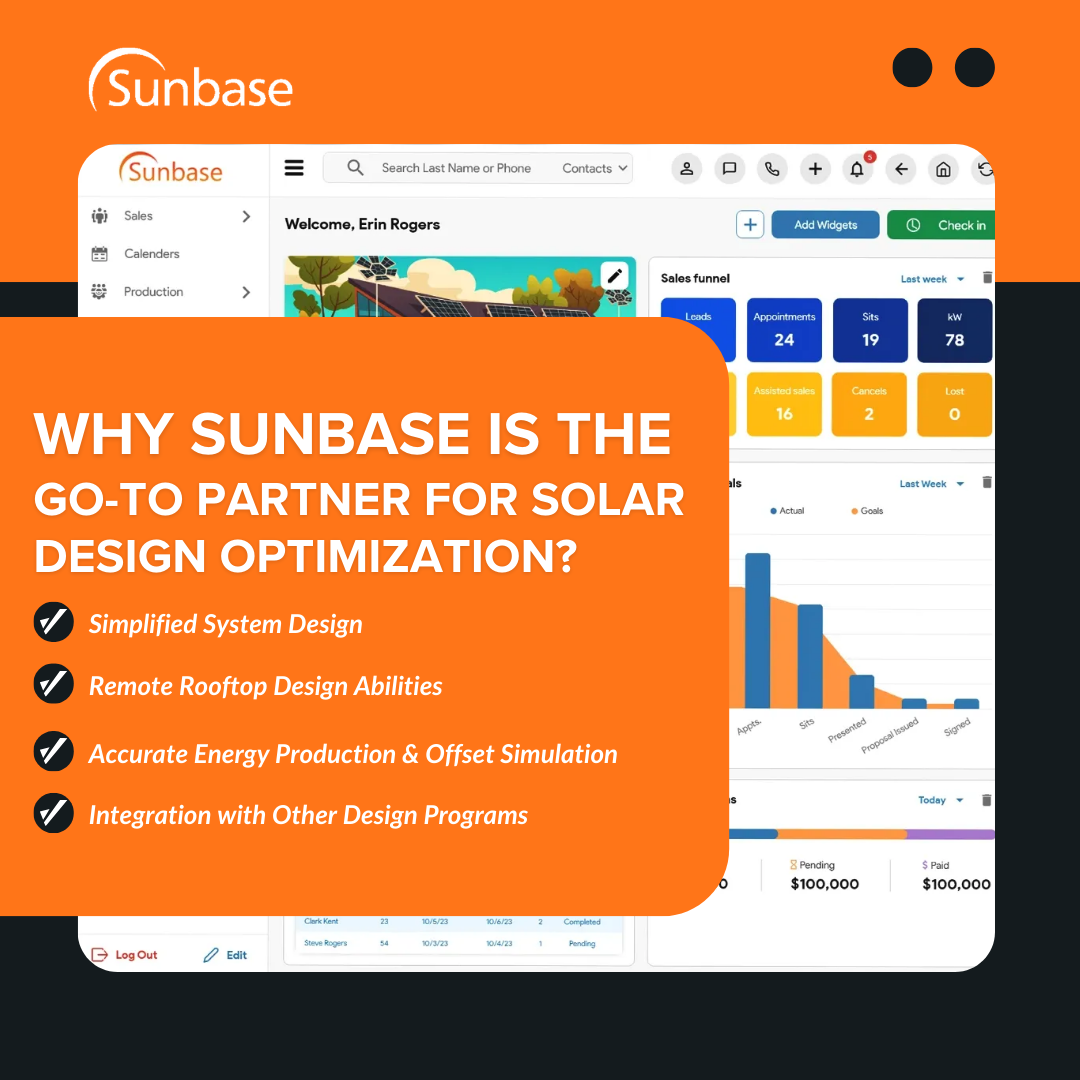
Sunbase Solar Design Software is designed to solve complex design problems that solar installers, project managers, and solar companies face daily. Below are some reasons why Sunbase makes design optimization a walk in the park.
1. Simplified System Design
Sunbase makes making a design much easier by helping you create professional PV layouts in minutes.
You can draw solar arrays, place panels, and position system components like inverters, meters, and battery walls with accuracy with the help of our software.
2. Remote Rooftop Design Abilities
With the help of Sunbase, you can accurately perform site assessments without stepping out of your home.
Our remote design tools allow you to measure and check rooftops without a site visit easily. By using satellite imagery and advanced mapping technology; you can evaluate rooftops, draw proposed installation areas, and accurately place solar panels remotely.
This feature improves your workflow, saves time and resources, and provides quick and accurate design solutions for your customers.
3. Accurate Energy Production & Offset Simulation
Our software allows you to simulate the performance of the PV panels designed in real-time, helping you obtain quick system performance estimates.
Sunbase uses advanced algorithms to predict energy production and system productivity based on your design’s parameters.
This helps you provide your customers with data-backed insights into their potential energy savings and monthly usage bills, giving them confidence in the proposed system's abilities.
4. Integration with Other Design Programs
Sunbase integrates with CAD platforms and works seamlessly alongside solar project management software, helping design, sales, and operations teams collaborate efficiently from system planning through installation.
Sunbase ensures compatibility with industry-standard programs, allowing you to collaborate with engineers, architects, and other stakeholders. This feature improves the flexibility and professionalism of your designs, making them ready for construction.
Beyond creating optimized PV layouts, Sunbase also functions as solar proposal software, allowing installers to generate professional proposals with accurate production estimates and customer-ready designs from a single platform.
Conclusion
Solar design optimization is not just a technical process; it's a crucial step towards a more sustainable future with the right solar design software.
By maximizing the efficiency and output of solar energy systems, we can reduce our reliance on fossil fuels and combat climate change, thereby mitigating the risks of future climate-related disasters like the current LA Forest Fires.
Every optimized solar design creates a ripple effect: higher energy production, lower environmental impact, happier customers, and more successful projects. The question isn't whether design optimization matters; it's whether your current workflow is helping you achieve it.
See how Sunbase Solar Design Software simplifies PV design. Book a personalized demo today and experience how smarter solar design can help your team deliver better projects, faster.
FAQs
1. How does solar design optimization improve electricity generation?
It improves system configuration, reduces shading losses, and utilizes advanced tools to ensure solar panels operate at their maximum capacity and produce more energy.
2. How can Sunbase help with solar design optimization?
Sunbase provides cost-effective, tailored solar solutions that maximize energy production, improve system efficiency, and reduce environmental impact through advanced technology and expertise.
3. How much does solar design optimization cost?
The cost of solar design optimization varies depending on factors such as project size, complexity, and the specific services required.
4. What factors have the biggest impact on solar design optimization?
Several factors influence solar design optimization, including roof orientation, panel tilt, shading from nearby objects, local weather conditions, system sizing, and equipment selection. Modern solar design software evaluates these variables to maximize energy production while minimizing performance losses.
5. What features should I look for in solar design software?
Look for features such as 3D modeling, remote site assessment, shading analysis, energy production simulations, proposal generation, CAD export, CRM integration, and project management capabilities. These features help streamline the entire solar design and sales process.
One Platform.
Zero Chaos.
Run Your Entire Business in One Platform
Sunbase replaces your CRM, proposals, scheduling, job tracking, and reporting tools — all inside one clean, connected platform.
About Sunbase
The All-In-One Platform to Run Your Entire Business
Sunbase helps you organize operations, streamline daily workflows, and manage everything - from first customer contact to final project deliver- in one connected system.
Our Mission
- Organize your business.
- Optimize your workflow.
- Automate your dailytasks
Why Businesses Choose Sunbase
One Connected Workflow
Replace scattered tools and manual processes with a single platform that brings together your team, tasks, customers, jobs, and performance data.
🌎 Global Presence
Serving the United States, Canada, India, LATAM, Australia, and 10+ international markets.
👥 11,000+ Users
Trusted by contractors, installers, project managers, sales teams, and field technicians.
🏗️ Built for All Sizes
From small contracting teams to fast-growing enterprises, Sunbase adapts to your workflow.
Stop Managing Your Business Manually. Automate It.
Sunbase automates workflows, reduces mistakes, and helps your team get more done - without hiring extra staff or juggling multiple tools.
Still Managing Your Business Across Multiple Tools?
Bring your CRM, proposals, projects, and operations into one platform built for contractors.