
Solar Proposal Software
for Customer-Ready Solar Proposals
*Contact us for a quote based on your team size
definition
WHAT IS SOLAR PROPOSAL ?
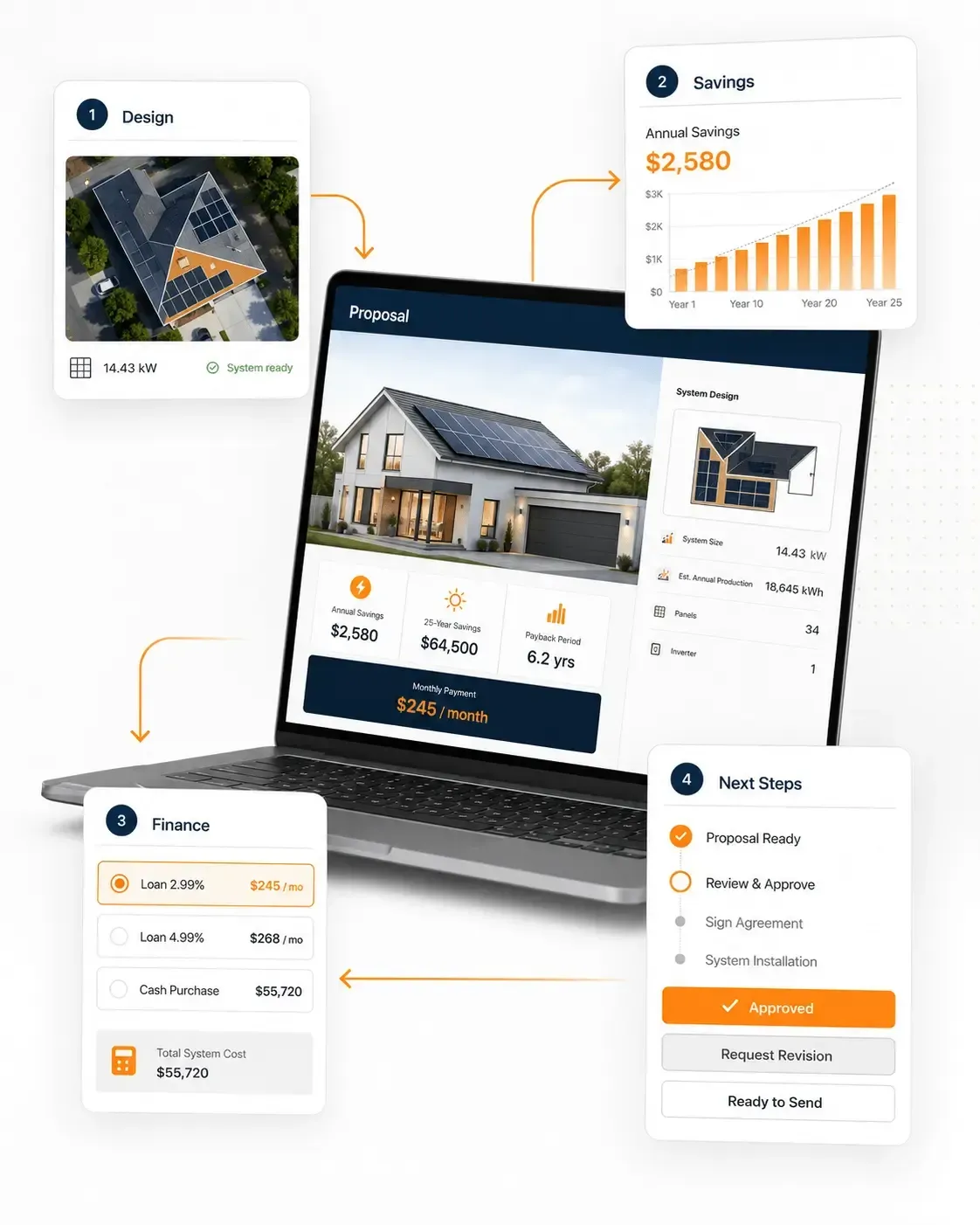
A solar proposal is a customer-facing project document that brings together the proposed PV system design, expected energy production, equipment, project scope, pricing and financial returns so the customer can evaluate and approve the solar project.
WHERE SUNBASE solar PROPOSAL software FITS
Why Solar Proposals Need More Than a Generic Document
A solar proposal has to explain both
what system is being offered and why it makes financial sense. A generic document template usually cannot connect the technical design, energy performance and commercial assumptions behind the offer.
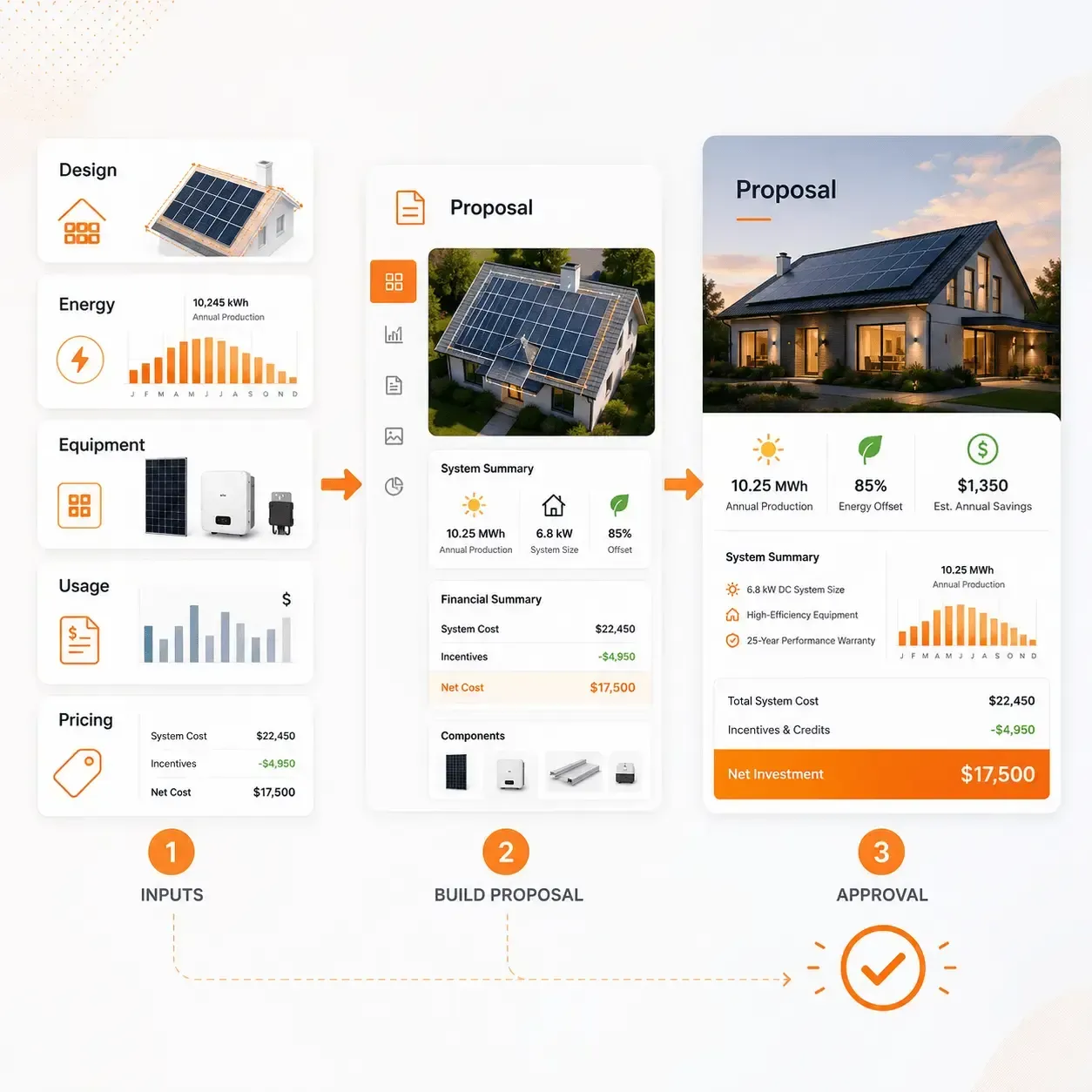
Sunbase Solar Proposal Software keeps the commercial proposal connected to the approved project information, including:
- System size and PV layout.
- Selected modules, inverters and batteries.
- Estimated energy production.
- Customer electricity requirements.
- Pricing and payment options.
- Project scope and included services.
- Proposal revisions and approval status.
This helps customers evaluate the system, expected performance and financial outcome from one consistent project record rather than separate files and calculations.
Complete Solar Proposal Workflow
Build the Proposal From Approved Project Information
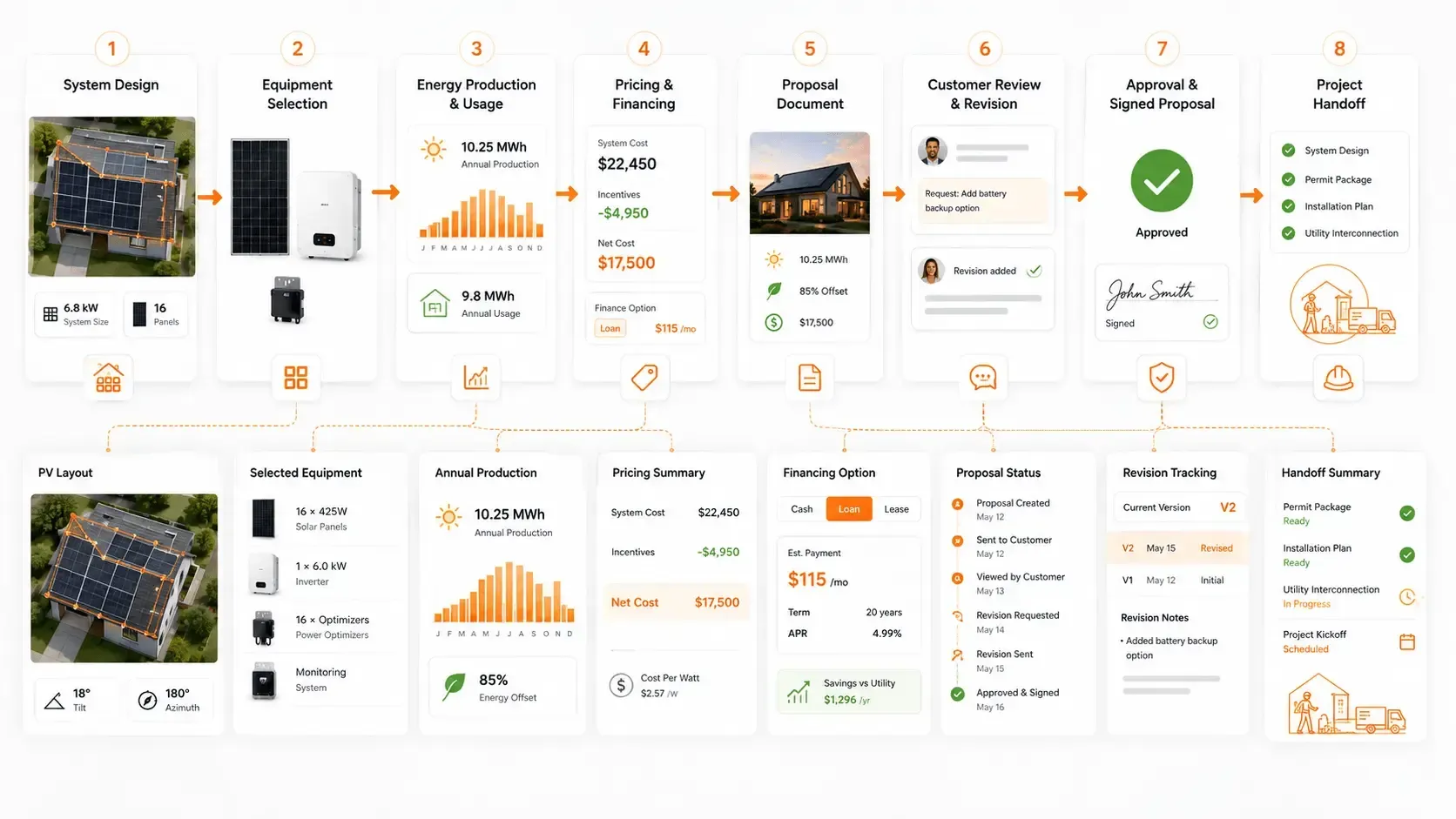
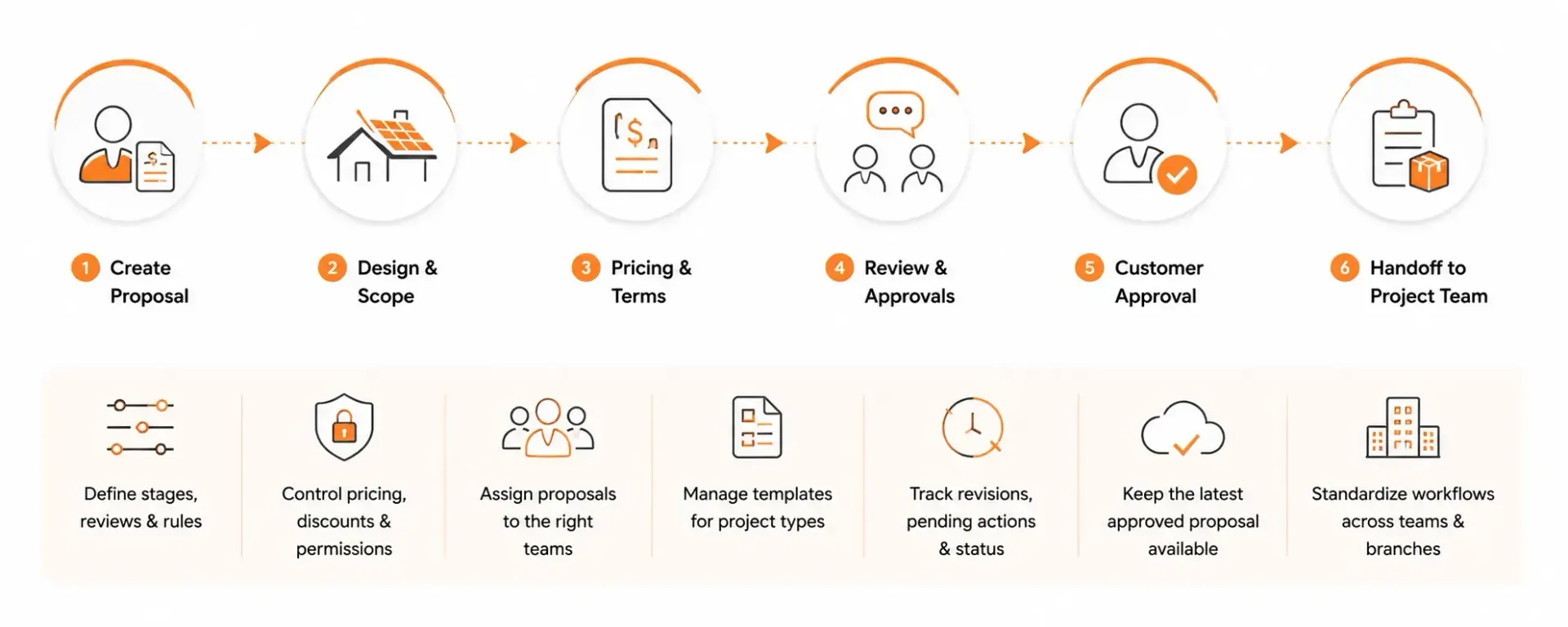
Sunbase Solar Proposal Software gives sales teams a structured path from approved design data to customer approval.
Approved Design → Pricing → Proposal → Review → Approval → Project Handoff
SUNBASE Solar Proposal SOFWTARE Capabilities
Build Proposals With the Information Customers Need to Decide
Sunbase Solar Proposal Software brings system design, performance, equipment and financial information together in one customer-ready proposal.
PV System Design
Present the approved panel layout, system size, array configuration and key design information.
Shading Analysis Report
Include shading and solar-access information to show how site conditions influence expected system performance.
Energy Production
Present estimated system generation and expected energy performance based on the approved PV design.
Roof & Site Report
Include roof geometry, usable installation area, obstructions, setbacks and relevant site conditions.
Equipment & BOM
Show the selected modules, inverters, batteries and bill of materials (BOM) associated with the proposed system.
Pricing & Financing
Present system cost, payment options, financing terms, incentives and other applicable commercial information.
Energy Consumption & Solar Offset
Show the customer’s electricity consumption, proposed solar generation and expected energy offset so they can understand how the system relates to their actual usage.
Savings, Cash Flow & ROI
Show projected electricity savings, cash flow, payback and return on investment using the project’s financial assumptions.
Proposal & Approval
Combine the technical and financial information into a branded proposal, manage revisions and track customer approval.
Design-to-Proposal Connection
Bring Approved Design Data Into the Proposal
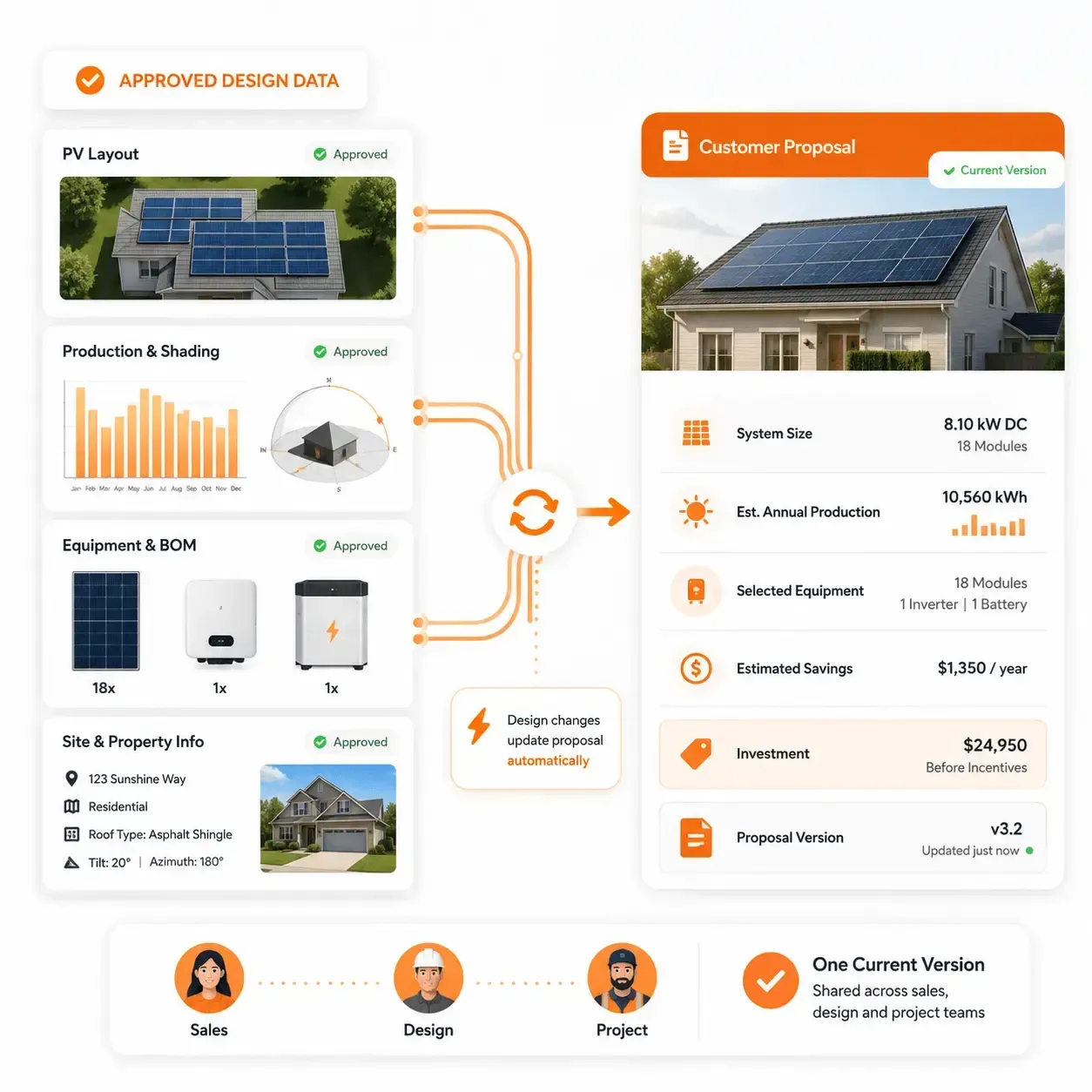
Sunbase Solar Proposal Software keeps the customer proposal connected to the approved PV design, so sales teams do not need to rebuild system information manually.
- Carry forward the approved PV layout and system capacity.
- Use shading and production results from the design.
- Include selected modules, inverters, batteries and BOM details.
- Keep roof and site information connected to the proposal.
- Update proposal values when the approved design changes.
- Maintain one current version across sales, design and project teams.
Energy Performance & Savings
Show How the Proposed System Performs
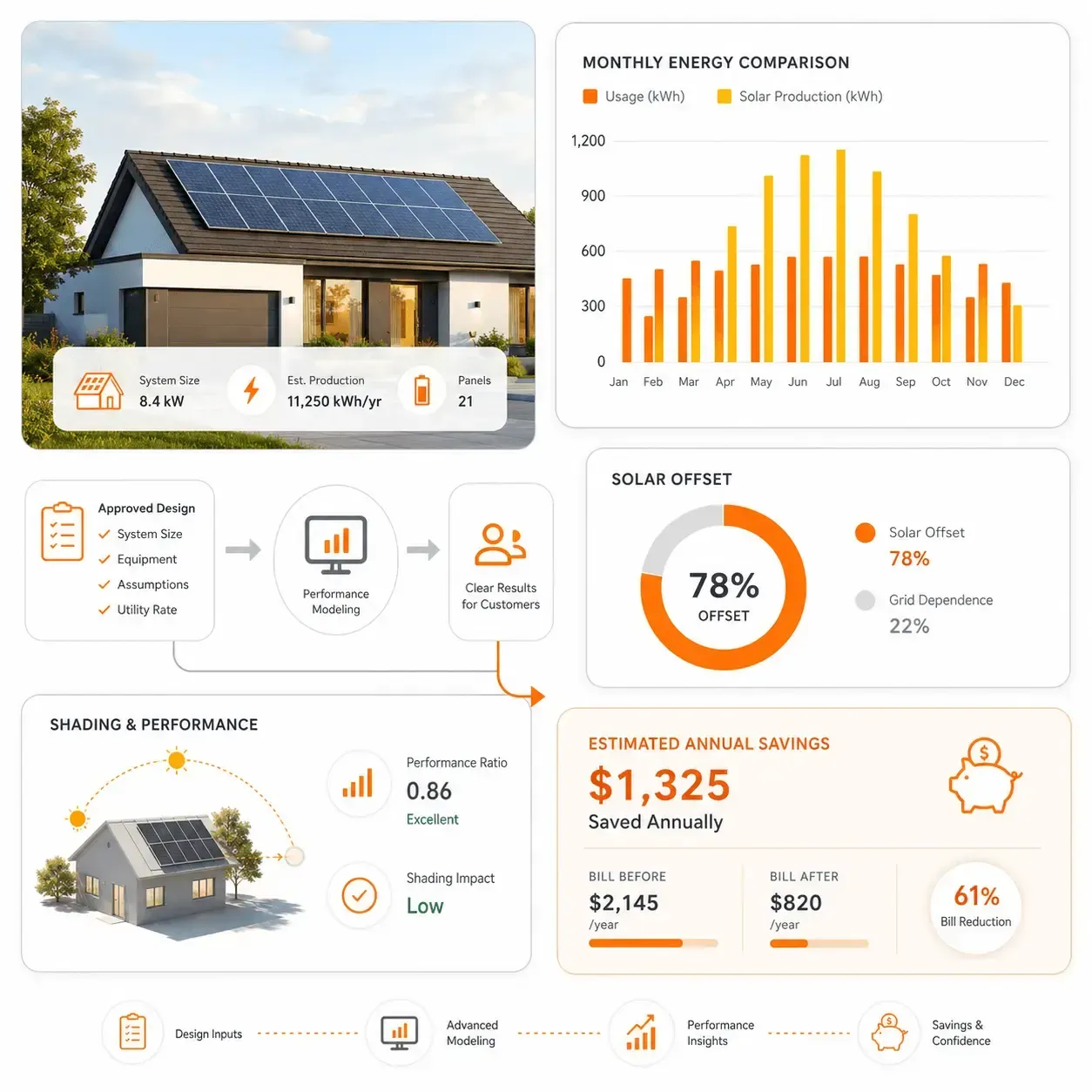
Sunbase Solar Proposal Software helps customers understand how the proposed system relates to their current electricity usage and expected solar generation.
- Show historical electricity consumption and utility usage.
- Present estimated annual solar production.
- Compare energy usage with expected solar generation.
- Show projected solar offset and grid dependence.
- Include shading and system-performance results where relevant.
- Present expected savings using the project’s approved assumptions.
Pricing & Commercial Options
Present the Complete Financial Offer Clearly
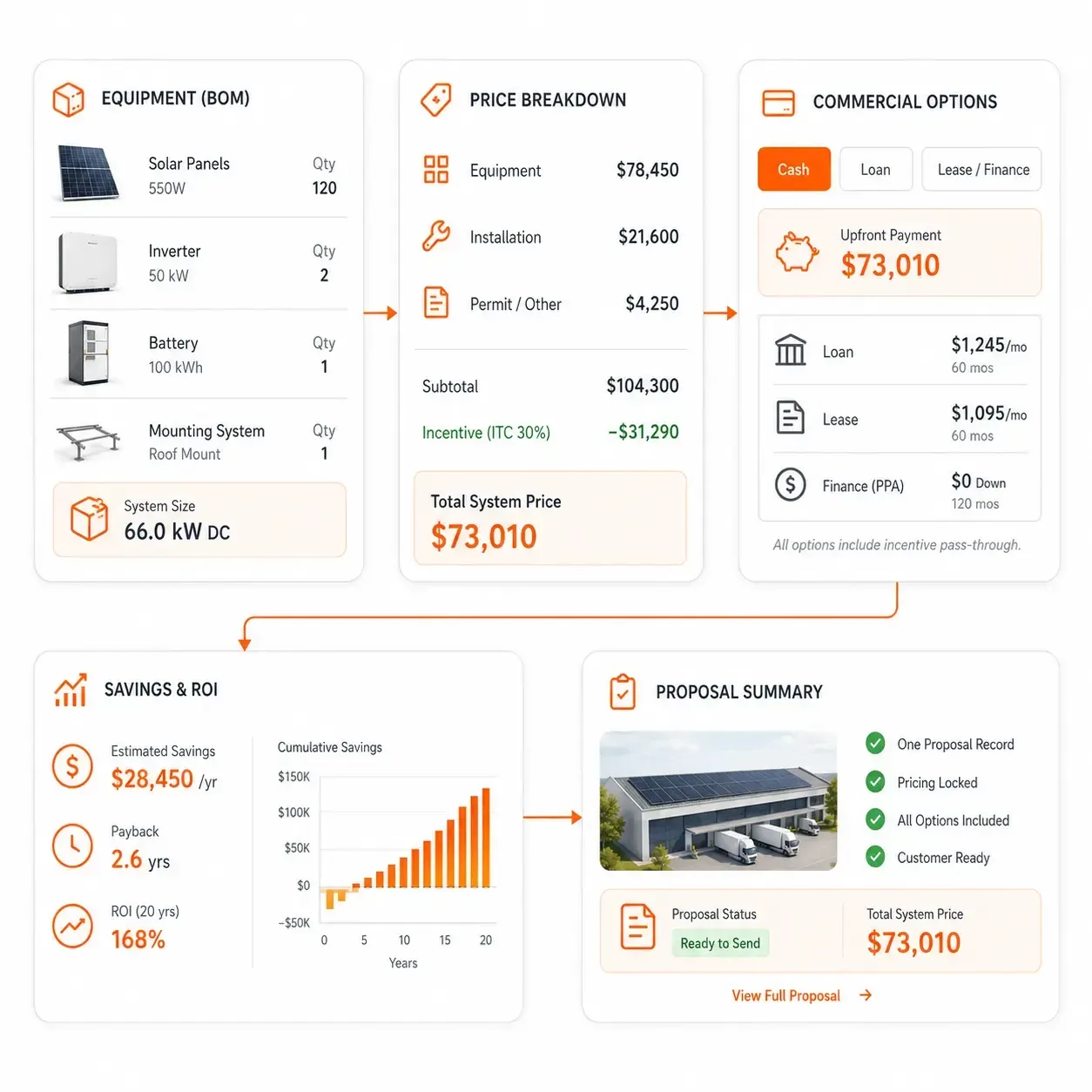
Sunbase Solar Proposal Software brings system pricing, equipment and financial options into the same proposal so customers can evaluate the full offer in one place.
- Show system price, taxes, incentives and applicable discounts.
- Present cash, loan or other available payment options.
- Include selected modules, inverters, batteries and BOM details.
- Show projected savings, payback period, cash flow and ROI.
- Configure assumptions and commercial terms for each project.
- Keep pricing aligned with the approved system design and proposal version.
Branded Customer Proposals
Present the Proposal in a Clear Customer-Ready Format
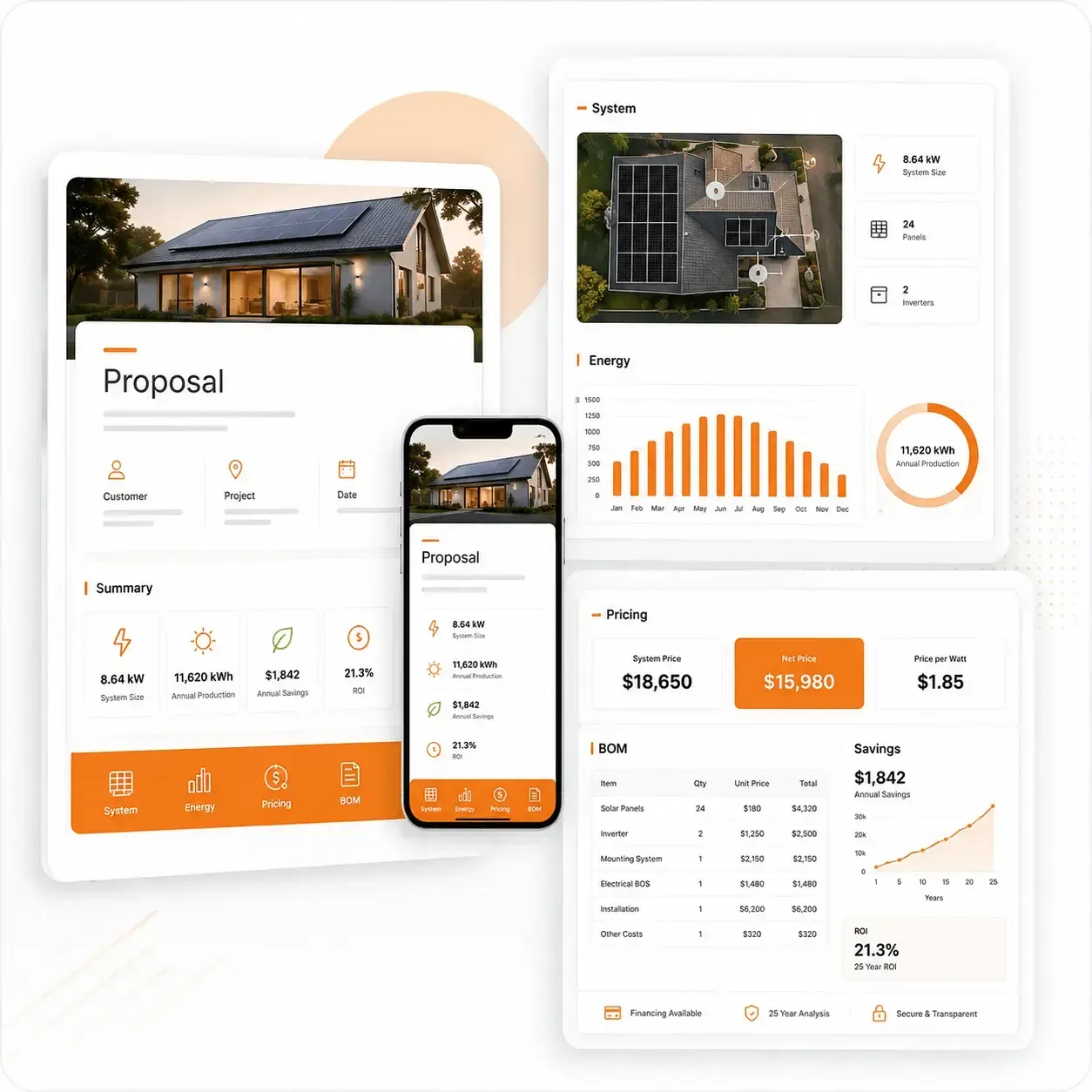
Sunbase Solar Proposal Software helps teams turn technical and financial project information into a proposal that is easier for the customer to review and understand.
- Add company branding, project details and customer information.
- Present PV layout, system capacity and equipment clearly.
- Include production, shading and roof-report information.
- Show pricing, financing, savings, cash flow and ROI in one document.
- Organise sections around the company’s sales process.
- Keep the proposal connected to the latest approved project information.
Revisions & Customer Approval
Keep Every Proposal Version and Approval Connected
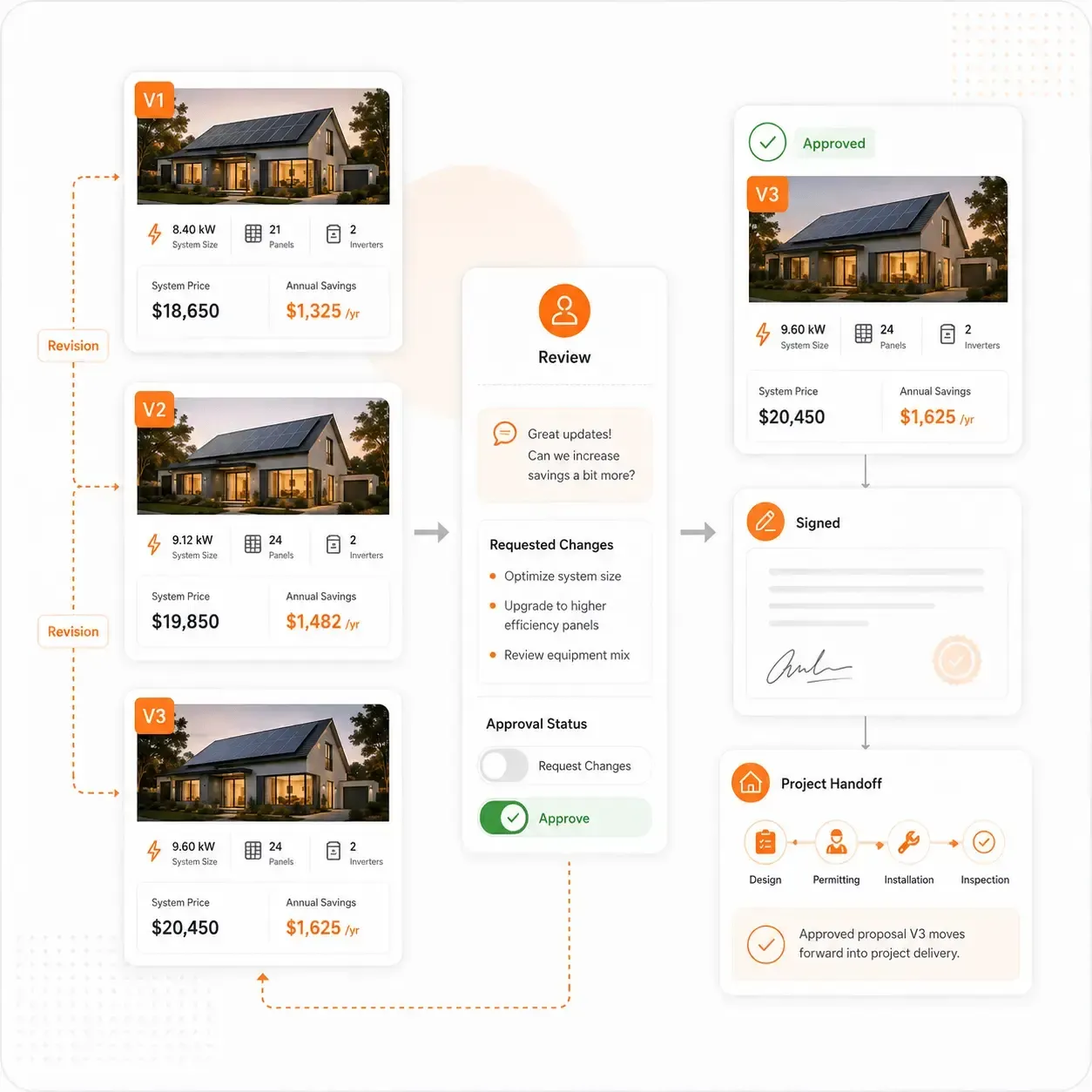
Sunbase Solar Proposal Software helps teams manage proposal changes without losing track of the version presented to the customer.
- Revise system size, equipment, pricing or financial assumptions.
- Keep updated proposals connected to the same customer and project.
- Track proposal status from preparation through customer review.
- Record approvals, signed documents and customer decisions.
- Keep the final approved proposal available to sales and operations.
- Carry accepted system and commercial details into project delivery.
SUNBASE SOLAR PROPOSAL SOFTWARE Configuration & Team Collaboration
Configure the Proposal Workflow Around Your Sales Process
SUNBASE Solar Proposal Use Cases
Create Proposals for Different Solar Project Types
Sunbase Solar Proposal Software can adapt proposal content to the scale, economics and technical requirements of different solar projects.
Residential Solar
Present system size, roof layout, production, financing, savings and payback in a clear homeowner-focused format.
Commercial Solar
Include larger system configurations, energy usage, demand offset, cash flow, ROI, equipment and project-specific commercial terms.
Solar EPC Projects
Prepare detailed proposals with system design, BOM, production, project scope, pricing, financial assumptions and approval requirements.
Sunbase Solar Proposal Software vs Standalone Proposal Tools
More Than a Solar Proposal Generator
Standalone proposal tools often focus on building and sending the proposal document. Sunbase Solar Proposal Software keeps the proposal connected to the approved design, financial assumptions and project workflow.
Sunbase Solar Proposal Software turns the proposal into a connected stage of the solar project rather than a separate sales document.
Standalone Proposal Tools
- Proposal data may need to be entered manually.
- Design, shading and production results may come from separate systems.
- Pricing and financial calculations may be maintained outside the proposal.
- Revisions can create multiple disconnected versions.
- Approved information may need to be transferred again after the sale.
- Uses approved PV design and system capacity.
- Connects shading, production and roof-report information.
- Includes equipment, BOM and battery details.
- Presents pricing, financing, cash flow, payback and ROI.
- Keeps revisions and customer approval within the project record.
- Carries accepted technical and commercial information into project delivery.
SUNBASE SOLAR PROPOSAL SOFTWARE Implementation
Configure Sunbase Solar Proposal Software Around Your Sales Process
Sunbase Solar Proposal Software pricing starts from
$59 per user per month. Final pricing depends on team size, selected modules and the workflow your company needs.
01
Proposal Setup
Configure proposal templates, pricing logic, financial assumptions, approval stages and user permissions around your sales process.
02
Design & Financial Data
Connect approved system design, production, BOM, equipment, pricing, savings and ROI information to the proposal workflow.
03
Team Configuration
Set up sales, design and management roles so the right users can prepare, review and approve proposals.
04
Training & Launch
Prepare existing proposal data, train the relevant teams and launch the agreed workflow.
Implementation time depends on your team size, existing data, selected modules, workflow complexity and integration requirements.
Ready to Simplify Your Solar Proposal Workflow?
Turn approved project information into clear, customer-ready proposals with
Sunbase Solar Proposal Software.
Plans start at $59/user/month · No long-term contracts required · Cancel any time