
Sustainable Construction Project Management: Balancing Environmental Impact and Budget
Sustainable construction is no longer just about reducing environmental impact; it has become a business priority for companies looking to improve long-term efficiency, reduce operating costs, and meet evolving regulatory expectations.
However, balancing sustainability goals with project budgets remains one of the industry's biggest challenges.
Effective construction project management plays a critical role in helping teams evaluate costs, coordinate resources, and implement sustainable strategies without compromising profitability.
As developers and contractors adopt greener building methods, success depends on making informed decisions throughout every stage of a project. With the right
construction project management approach, businesses can improve resource planning, reduce waste, and maximize the long-term value of sustainable investments.
Key Takeaways
- Sustainable construction requires balancing environmental responsibility with financial feasibility.
- Lifecycle Cost Analysis (LCCA) helps evaluate the long-term value of sustainable investments.
- Prioritizing high-impact sustainability initiatives delivers stronger financial and environmental outcomes.
- Technology, collaboration, and strategic planning help reduce costs while improving project performance.
The Challenges of Sustainable Construction
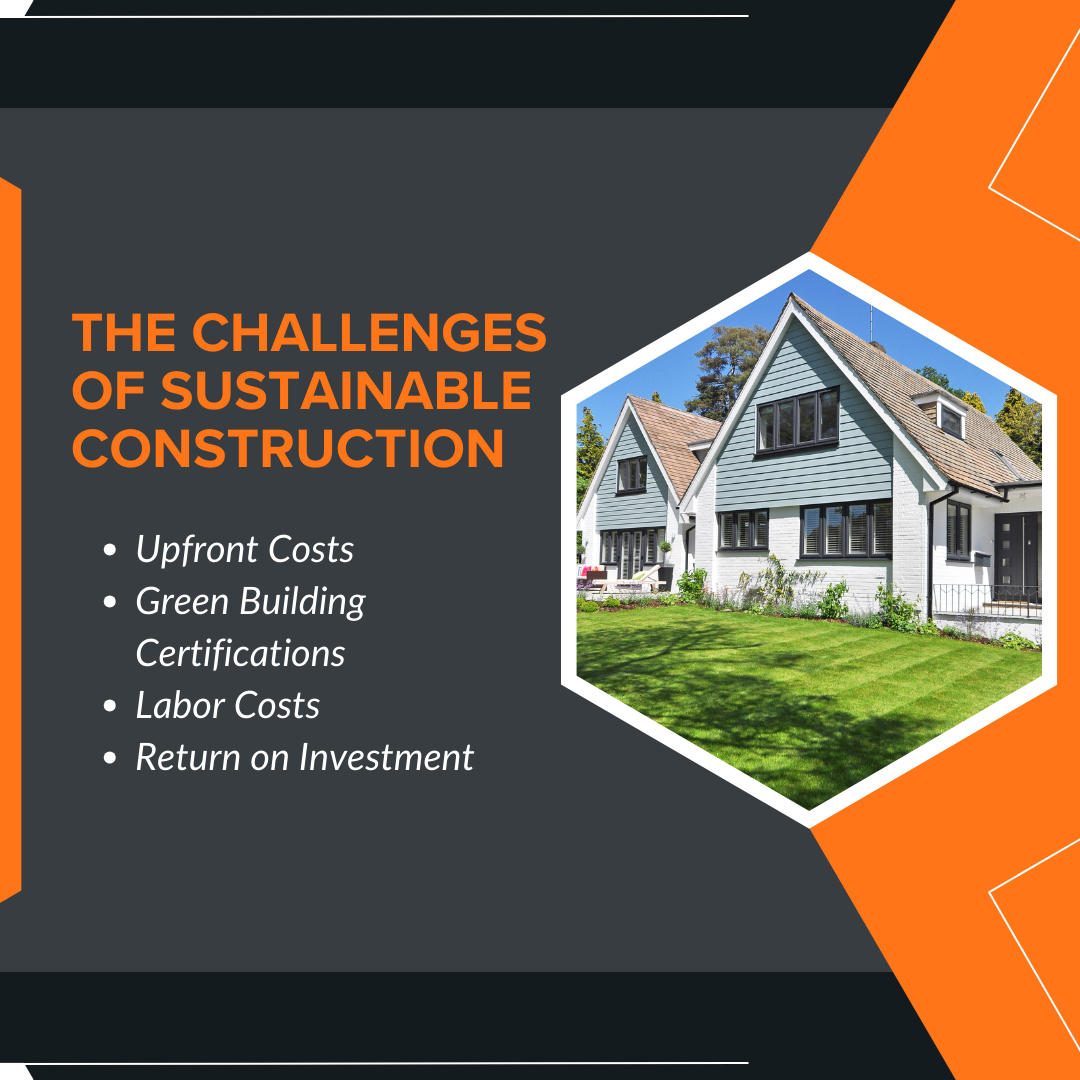
Sustainable construction practices offer numerous environmental and social benefits, but they often present significant challenges that can hinder their widespread adoption.
One significant challenge is managing carbon emissions, a major contributor to climate change. These challenges primarily revolve around the increased costs of incorporating sustainable elements into building projects.
1. Upfront Costs
Sustainable construction materials, such as recycled steel, bamboo, and low-VOC paints, are often expensive. This is due to limited supply and demand, significant research and development investments, and the need to meet specific environmental and sustainability standards.
For example, recycled steel may cost more than virgin steel due to the additional processing required to reclaim and reuse it.
2. Green Building Certifications
Achieving certifications for green buildings like LEED or BREEAM involves meeting rigorous standards.
These often require specialized design and engineering, the use of more expensive materials and equipment, and the costs associated with third-party verification.
For instance, installing solar panels, a common requirement for LEED Gold certification, can significantly increase upfront construction costs.
3. Labor Costs
Sustainable construction often necessitates specialized skills and knowledge, which leads to higher wages for skilled labor and the need for training and certification costs. Furthermore, project delays can occur if skilled labor is in short supply, increasing overall costs.
For example, installing a complex geothermal heating and cooling system may require specialized technicians, increasing labor costs compared to a conventional HVAC system.
4. Return on Investment
While sustainable buildings often offer long-term cost savings through reduced energy consumption and lower maintenance costs, the initial investment can be a significant barrier for many developers.
Energy efficiency, which reduces energy consumption and operational costs, is key to achieving these long-term cost savings.
This is due to a focus on short-term profits, uncertainty about long-term benefits, and a lack of awareness and education about the potential long-term benefits of sustainable construction.
For instance, a developer may prioritize a conventional office building over a more energy-efficient one, even if the long-term operating costs would be lower because sustainable buildings require a higher upfront investment.
Strategies for Balancing Sustainability and Cost
Sustainability in construction is no longer a luxury; it’s a necessity. Each construction project must be carefully planned to incorporate sustainable practices without compromising economic viability.
However, integrating eco-friendly practices often comes with a higher initial investment, raising concerns about financial viability.
This challenge necessitates a strategic approach that balances environmental responsibility with financial prudence.
1. Lifecycle Cost Analysis (LCCA)
LCCA is a crucial tool that goes beyond initial construction costs. It considers the building's entire lifespan, including operational costs such as energy consumption, water usage, and maintenance, as well as end-of-life costs such as demolition and material disposal.
By evaluating these costs comprehensively, LCCA can reveal that seemingly expensive sustainable options may result in significant long-term savings.
Accurate lifecycle cost analysis starts with reliable project estimates. Construction estimation and takeoff software gives contractors a clearer understanding of material quantities and project costs, making it easier to compare sustainable alternatives and forecast their long-term financial impact.
For example, while high-performance windows may have a higher upfront cost, they can significantly reduce energy bills over the building's lifetime, making them a cost-effective investment.
2. Prioritize High-Impact Strategies
Not all sustainability measures are equal. By focusing on the strategies with the most significant potential for cost savings, environmental impact, and decreasing dependency on natural resources, construction companies can maximize their return on investment.
For instance, investing in high-performance windows and insulation can significantly reduce energy consumption, greenhouse gas emissions, and heating/cooling costs, offering a substantial return on investment compared to other, less impactful measures.
3. Explore Innovative Financing Mechanisms
The initial investment in sustainable construction can be a significant hurdle. However, a range of innovative financing mechanisms can help bridge the gap. Green bonds, which are specifically designed to finance environmental projects, can provide access to capital.
Governments can also incentivize sustainable construction through tax breaks, subsidies, and other financial incentives. These mechanisms can make sustainable projects more financially viable for developers.
4. Embrace Prefabrication and Modular Construction
Prefabrication and modular construction offer several cost-effective and sustainable development advantages. These methods can reduce on-site waste, improve efficiency by allowing for off-site manufacturing and controlled conditions, and minimize on-site labor costs.
Furthermore, modular construction can facilitate easier transportation and assembly, reducing the environmental impact of construction logistics.
5. Collaborate with Suppliers and Contractors
Collaboration is one of the foundations of effective
construction project management. Working with suppliers and contractors who specialize in sustainable building practices helps teams source environmentally responsible materials, reduce waste, and identify cost-effective solutions early in the project.
These specialized companies often have access to innovative materials and techniques, and their expertise can help optimize the design and construction process, leading to cost savings and improved sustainability outcomes.
6. Educate Stakeholders
Raising awareness among all stakeholders, including clients, investors, and the general public, is crucial for driving demand for sustainable construction.
Managing Multiple Construction Sites? See How Sunbase’s Construction Software Helps with Multi-Location Support?
Clear communication is essential when educating clients, investors, and project stakeholders about sustainable initiatives. A construction CRM helps centralize project updates, customer conversations, and documentation, making it easier to keep everyone informed throughout the project lifecycle.
Education can help dispel misconceptions about the costs and benefits of sustainable buildings, demonstrate the long-term value proposition, and create a more supportive market for sustainable construction practices.
The Future of Sustainable Construction
The future of sustainable construction is bright, fuelled by continuous advancements in technology and a growing market demand.
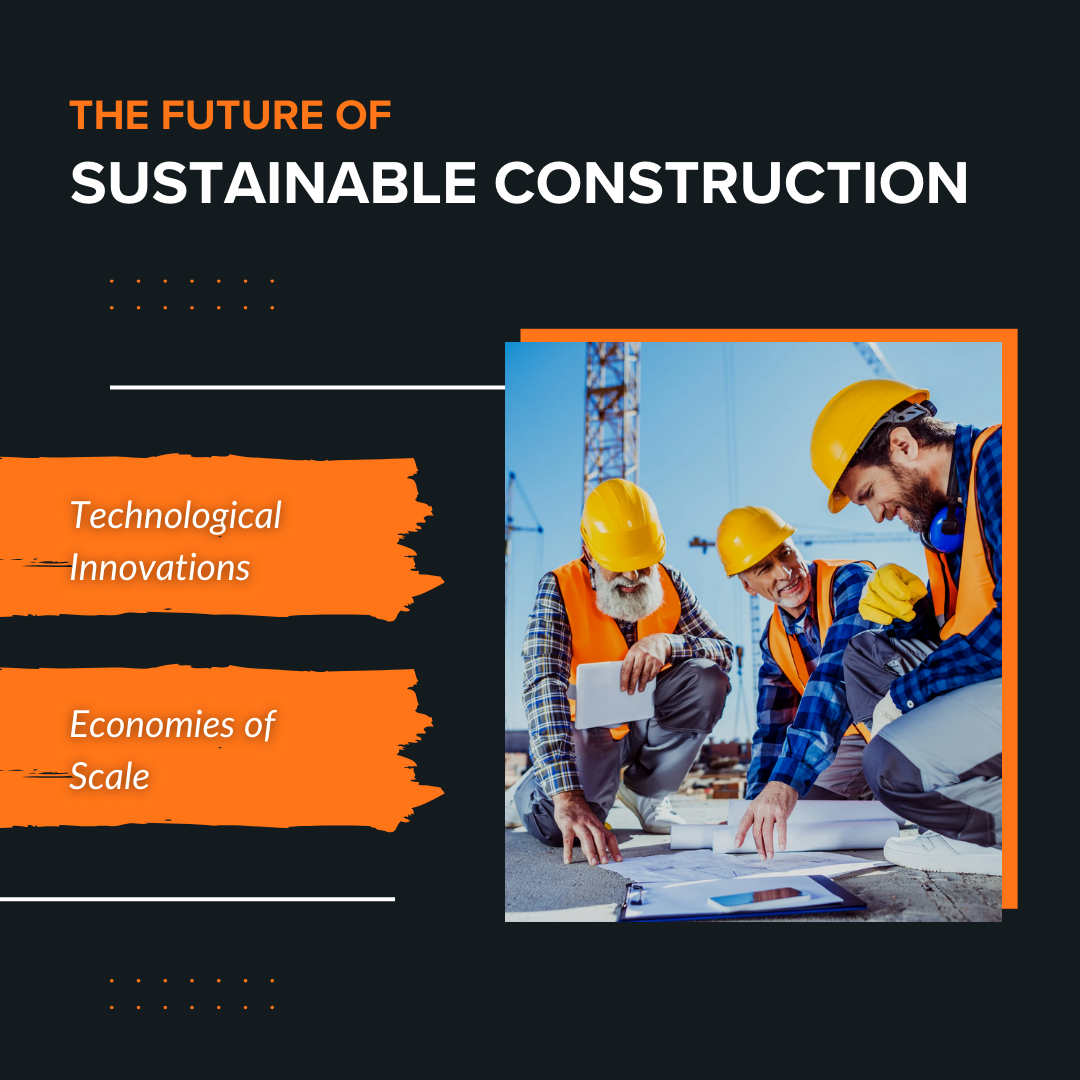
1. Technological Innovations
Ongoing research and development are leading to significant breakthroughs in sustainable building materials and technologies. These innovations pave the way for more efficient and scalable sustainable building practices.
Alongside advancements in sustainable materials and renewable energy, modern construction software is helping contractors improve planning, monitor resource usage, and make better decisions that support both project efficiency and environmental goals.
For instance, advancements in renewable energy technologies, such as solar panels and wind turbines, have made them more efficient and cost-effective.
2. Economies of Scale
As the demand for sustainable buildings increases, economies of scale will be crucial in reducing costs.
Mass production of sustainable materials and the development of standardized building systems will increase efficiency and reduce manufacturing costs.
Conclusion
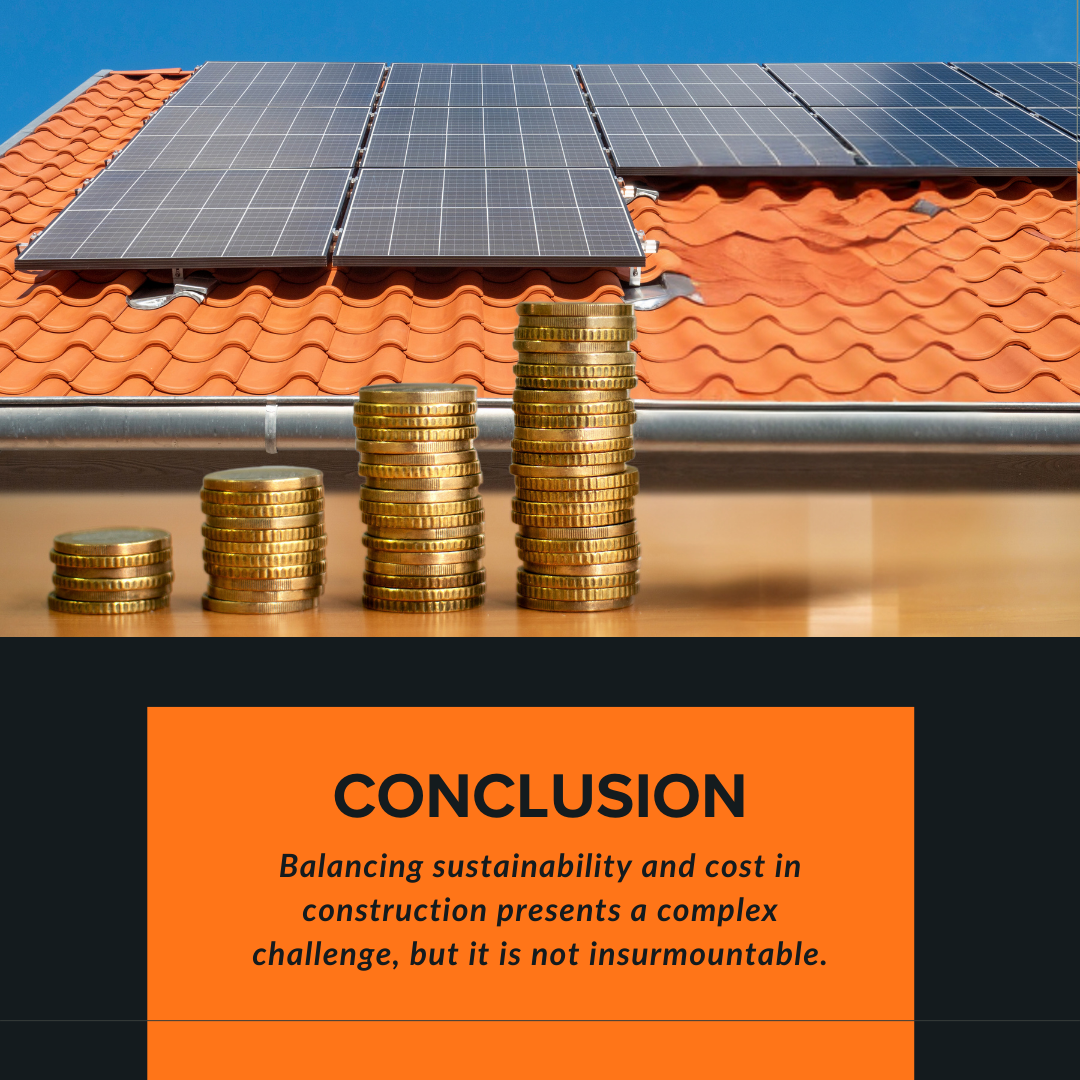
Balancing sustainability with project costs becomes increasingly challenging when construction teams rely on short-term budgeting instead of evaluating a project's long-term value.
Without careful planning and informed decision-making, businesses may overlook opportunities to improve efficiency, reduce operating costs, and achieve meaningful environmental benefits.
By combining lifecycle cost analysis, strategic resource planning, innovative construction methods, and strong collaboration, construction companies can create projects that are both environmentally responsible and financially sustainable. A structured approach helps maximize the return on sustainable investments while supporting long-term business success.
If you're looking to improve sustainable project planning and execution, explore Sunbase Construction Project Management.
As an all-in-one platform, Sunbase helps construction businesses manage projects, coordinate teams, streamline workflows, improve collaboration, and gain better visibility across every stage of the construction lifecycle- all from a single connected system.
FAQs
Q1. How do you convince clients to invest in sustainable construction?
Focus on long-term savings, present LCCA, showcase successful case studies, highlight green building certifications, and explore innovative financing options.
Q2. What are the most cost-effective ways to incorporate sustainability?
Prioritize energy efficiency, utilize renewable energy, implement water conservation, choose sustainable materials, reduce waste on-site, and embrace prefabrication/modular construction.
Q3. Is sustainable construction always more expensive than traditional methods?
Not always. While some sustainable options may have higher upfront costs, smart planning and efficient design choices can keep budgets under control. In many cases, long-term savings from lower energy use and maintenance help balance or even outweigh the initial investment. This makes sustainability a strategic decision rather than just an added expense.
Q4. What trade-offs do construction teams face when adopting sustainable practices?
Teams often have to balance cost, performance, and timelines. Choosing eco-friendly materials or processes may impact budgets or procurement timelines, so decisions need to align with both project goals and financial constraints. Finding the right balance is key to ensuring sustainability does not compromise project delivery.
Q5. How can project planning influence the success of sustainable construction?
Early planning plays a crucial role because it allows sustainability to be built into the design rather than added later. When considered from the start, it becomes easier to optimize resources, reduce waste, and control costs while still achieving environmental goals. This proactive approach leads to more efficient and practical implementation of sustainable practices.
One Platform.
Zero Chaos.
Run Your Entire Business in One Platform
Sunbase replaces your CRM, proposals, scheduling, job tracking, and reporting tools — all inside one clean, connected platform.
About Sunbase
The All-In-One Platform to Run Your Entire Business
Sunbase helps you organize operations, streamline daily workflows, and manage everything - from first customer contact to final project deliver- in one connected system.
Our Mission
- Organize your business.
- Optimize your workflow.
- Automate your dailytasks
Why Businesses Choose Sunbase
One Connected Workflow
Replace scattered tools and manual processes with a single platform that brings together your team, tasks, customers, jobs, and performance data.
🌎 Global Presence
Serving the United States, Canada, India, LATAM, Australia, and 10+ international markets.
👥 11,000+ Users
Trusted by contractors, installers, project managers, sales teams, and field technicians.
🏗️ Built for All Sizes
From small contracting teams to fast-growing enterprises, Sunbase adapts to your workflow.
Stop Managing Your Business Manually. Automate It.
Sunbase automates workflows, reduces mistakes, and helps your team get more done - without hiring extra staff or juggling multiple tools.
Still Managing Your Business Across Multiple Tools?
Bring your CRM, proposals, projects, and operations into one platform built for contractors.